Consuelo Mack WealthTrack

Three big market shifts investors need to understand

Andrew Lo, director of the MIT Laboratory for Financial Engineering, says that there have been three "seismic shifts" in the markets over the past few years that investors must navigate.
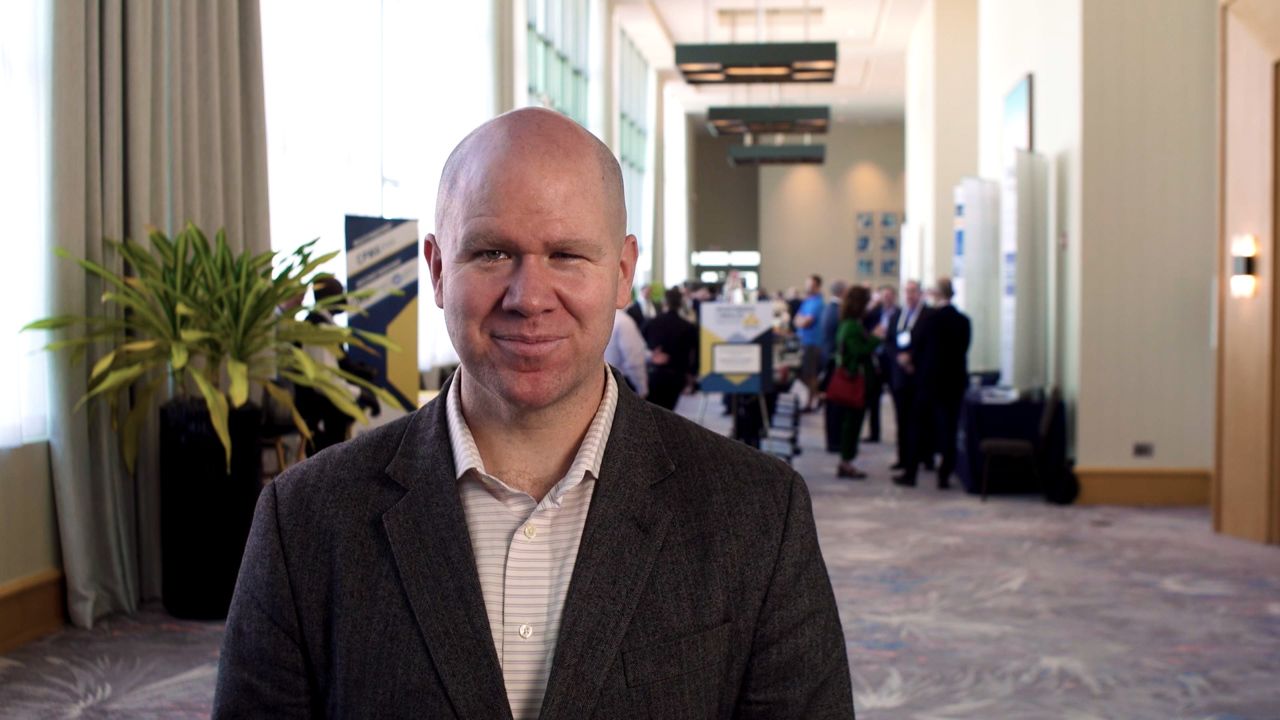
This week on Wealth Track, navigating the changes in the market, financial thought leader, MIT Finance Professor and hedge fund manager, Andrew Lo, guides us through the complexities and challenges of modern investing. Next, on Consuelo Mack Wealth Track. I began the interview by asking professor Lo to describe some of the biggest changes in the market that investors need to understand. There are 3 really big salesmanship that occurred over the last few years. The first is you've got this Macro factors that are at play that really did exist before the financial crises. You got-- -So, such as-- -Such as government intervention. -Yup. -So, the government is very much involved in changing the financial landscape, the Fed for example is involved in monetary policy, which will keep interest rates low and of course we know that Dodd-Frank Act of July 2010 is still yet to be completely implemented. You know, that act was 2319 pages long and there are a lot of things that still have yet to be put into practice. For example, the Volcker Rule that's supposed to be coming into play over the next couple of years. So, I think that a lot of the macro factors that we see today really didn't exist just a few years ago. -So, let me understand that because we've certainly seen other periods of time when the government has gotten involved, you know, in the economy and when it's gotten involved in regulating the market for instance usually is precipitated by financial crises. So, what's really different about at this time? -I think the difference is scale. I mean because really we had a financial crises of epic proportions. The last time something like this happened was 1929. -Right. -And then the aftermath of the great depression, we had a lot of new legislation and government was very heavily involved in changing things around, and so I think that we the exact same things going on right now. Lots of government intervention, lots of new rules, and not only that, but we see the landscape of global regulation changing. So, we're actually in some cases coordinating with the European Central Bank and other foreign authorities and other cases we're competing with them trying to see who can provide the most convenient kind of in a ways of doing business. -From an investor point of view, is that really changing, you know, what we should look for in the markets? Is it gonna change market behavior? -I think it already has changed market behavior. So, for example, the volatility of volatility is actually quite high. You know, last year, the S&P 500 had volatility that was relatively muted and most people argued that today volatility in the equity markets is relatively low, but that could change in a moment's notice, and we've seen the change in a moment's notice, so Greece is about to default or when there's problem in Spain or Portugal, so I think that right now, we're all on hair trigger and just waiting for the next year to drop. That's one big difference. Another difference is what the Fed is doing with interest rates, keeping it relatively low. That means that for people that are focusing on fixed income investment, pensioners, people about to retire, they're gonna have a much harder time being able to retire, but putting their money in safer assets. They've got to really keep their money in equity markets to some degree and many of them are not happy about that. The second point is that the technological advances that we pioneered in the financial system have really made it much more complex and it's much harder now to basically make this kind of macro forecast. You know, it used to be the case that when you said you wanted to achieve [unk] unemployment, you might another 18 months, 24 months with loose monetary policy and then you could slowly and gradually change that policy around. The problem is that our economy is just so much faster and more complex that it's not at all clear that we can micromanage at the way used to, and so what I fear is that by trying to keep people out of risky assets or interest the assets -Right. -Even though they want to stay out of risky assets, You're ultimately trying to force a round peg with square hole and there may be a day of reckoning when at the point where the Fed decides to take off that stimulus, you get a massive reaction that goes back, you know, risk less assets, and then we're gonna see much more dislocation than we have otherwise. -You said there was another third big change in the markets that we need to understand. -Well, the third big change is that the world is a much larger poll of investors than before. So, for example today, the population of the planet is about 7 billion. -Uh-huh. -Just a hundred years ago, that number was 1.5 billion. So, in a space a century, we've actually increased the population by a factor of 4, which is really astonishing when you think about that and that has very, very significant repercussions for both individual investors as well as for macro policy. It means for example that we're much more likely to step on each other's toes because there are many more people that are really driving hard to get that little extra bit of return. It also means that from job market perspective, things are a lot more competitive nowadays than before. It used to be the case that we produce TVs in the United States. We produce the world's best TVs and now of course a lot of those jobs have gone overseas, but the benefit is that we can now by flat panel screen TVs for under $500, which is really remarkable. So, that kind of global competition has changed the landscape in which we operate as citizens and that's something that, I think, people need to used to. The world is moving a lot faster. It's a lot more complex and we actually need to be more informed as financial consumers.


Related Videos

Join the Discussion