
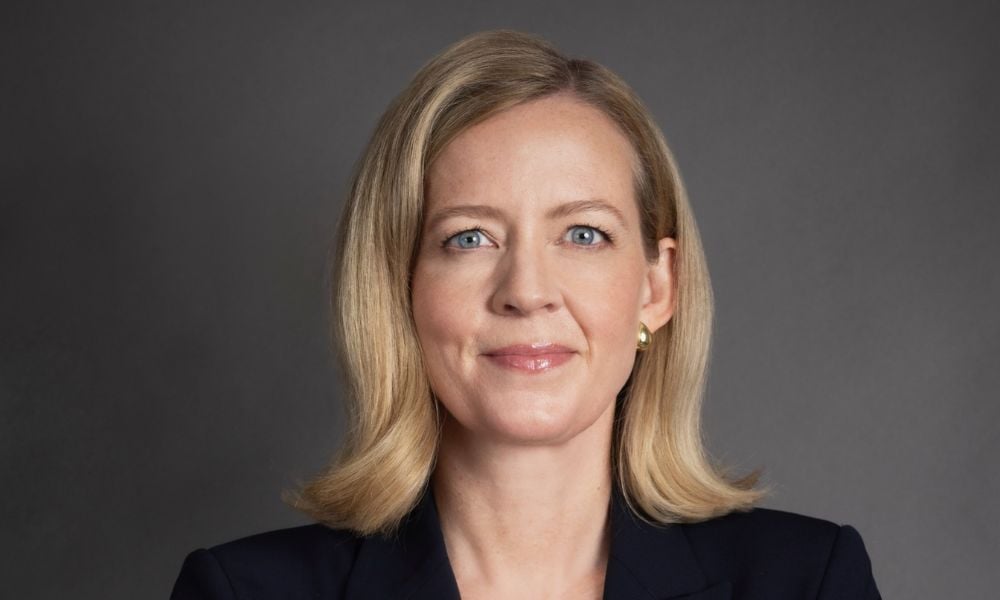
Susie Cranston has been CEO of Cresset for roughly three months, after two years as the firm's president and chief operating officer. In that time, the Chicago-based multi-family office has grown from about $40 billion in assets under management to $250 billion – a steep growth trajectory that's backed by a long-term view on leadership, according to Cranston.
"The founders really wanted to build a 100-plus-year company, so it was really important for them to have a succession plan that we could repeat over generations," Cranston told InvestmentNews, explaining the transition from Eric Becker and Avy Stein, who founded the firm after decades spent as private equity executives and entrepreneurs.
She described her shift to CEO as a "glide path" designed to be seamless for employees and clients alike, though the role itself came with an adjustment her previous C-suite experienced hadn't fully prepared her for.
"Until you sit in the CEO seat, there is always at least one other person in the organization who's kind of a decision partner with you," she said. "When you become the CEO, you have to live with every decision and the outcome of that you have to own."
Before joining Cresset, Cranston spent years in the wirehouse world, most recently as president and COO at JPMorgan's private wealth business; there, she helped grow assets from $30 billion to $275 billion following its acquisition of First Republic Bank. Having worked in both channels, she sees a widening structural gap between wirehouses and registered investment advisors as one of the defining shifts in wealth management today.
"Everybody is a fiduciary in the RIA space," Cranston said, noting that assets under management in the RIA channel as a whole are now on par with the wirehouse channel as part of a broader client-driven shift across the wealth industry.
Within the ultra-high-net-worth space specifically, she said bank regulations prevent wirehouses from offering services like filing taxes or full bill-pay that ultra-high-net-worth families increasingly expect from a single provider.
"You're expecting the wealthy family to be the glue in that situation," she said. "If you have means and you don't have to be the glue, then you're going to [take your business elsewhere]."
Cranston cited research showing more than 500,000 people now have a net worth above $30 million – the floor for ultra-high-net-worth individuals – a level of wealth creation she said is disproportionately tied to entrepreneurship and private business ownership.
The opportunity for ownership has also been a major driver of RIA growth. Within Cresset, Cranston says clients and employees own an 80% stake, which has helped mint more than 100 millionaires among staff in the firm's nine years. With that model, she says employees are more invested in the firm's long-term success.
According to one widely cited report from McKinsey – where Cranston began her career – the ongoing wave of retirements will leave the industry effectively short of roughly 100,000 financial advisors within the next 10 years. While the same research report suggested AI could solve the shortage, Cranston isn't so confident, particularly when it comes to family offices managing sensitive, judgment-heavy work.
"I am not a believer that humans can be entirely out of the loop, especially when it comes to interpersonal dynamics and the type of sensitive issues that are so close to people's hearts," Cranston said.
With traditional training pipelines – like large analyst classes at major accounting firms – largely gone, Cranston said Cresset is investing directly in developing junior talent, including through AI tools such as AI coaches and systems that sit in on meetings to give instant feedback. And similar to how Wall Street training programs had historically served as the incubators for next-gen advisors, she argued establishing the advisory workforce of the future will take institutional-level effort.
"If you don't have the scale to make those kinds of investments, it's going to be really hard to be well positioned," Cranston said.
When asked to consider what operational muscles family offices would need most over the next decade, Cranston cited AI-driven productivity and in-house talent development. The boutique nature of multi-family offices have always made them operationally demanding – "the idea of a family office is we want things done the way that works best for our family" – but she argued AI changes the calculus by allowing firms to combine bespoke service with shared best practices and economies of scale.
Like many other players in the wealth business – including LPL, Raymond James, SEI, and most recently, Cerity Partners – Cresset has a dedicated AI leader. Kelly Wagman, who holds a doctorate in artificial intelligence from the University of Chicago, director of business enablement at Cresset. Her mandate, according to Cresset's website, is "l[to lead] initiatives to help advisors and teams harness artificial intelligence to enhance client service and drive business outcomes.
Drawing a comparison to the dot-com era, Cranston said every business leader – not just technology teams – needs to understand how AI will reshape their part of the business. "If you were the Blockbuster of the story, then things fell apart," she said.
On that note, she said Cresset is making strategic AI bets by working on multiple systems and collaborating with a number of AI partners to try out on the its platform. Scale-wise, Cranston sees Cresset as "a bit of a Goldilocks size" to develop its AI infrastructure.
"If the firm is too big, it's hard to roll out best practices; it''s hard to quickly move on technology," she said. "If you're too small, you can't afford it. So you've got to be in this sweet spot that I feel like Cresset [has gotten] to be."

Headed by former InvestCloud, Envestnet and Microsoft executives, Singularity takes ownership positions in established advisory firms as growth strains in-house operations.

Somerville-based firm departs LPL to gain planning resources and technology it says would have taken years to build independently.

The fee promotion runs through 2028 as hundreds of RIAs custody with Fidelity below its new $100 million asset minimum

The four wirehouse firms lost 1,449 experienced advisors and recruited 932 in the first six months of the year, according to Diamond Consultants.

The fast-growing custodian's new charitable accounts, run with sponsor Endaoment, undercut typical DAF fees as incumbent platforms post record giving.
Knighthead Life entered the market with a competitive MYGA. A strong launch earned advisor confidence and paved the way for FIAs.
As AI makes financial information more accessible than ever, Lana Hock explains why human judgment, trust, and empathy remain the qualities clients value most in a financial advisor

