
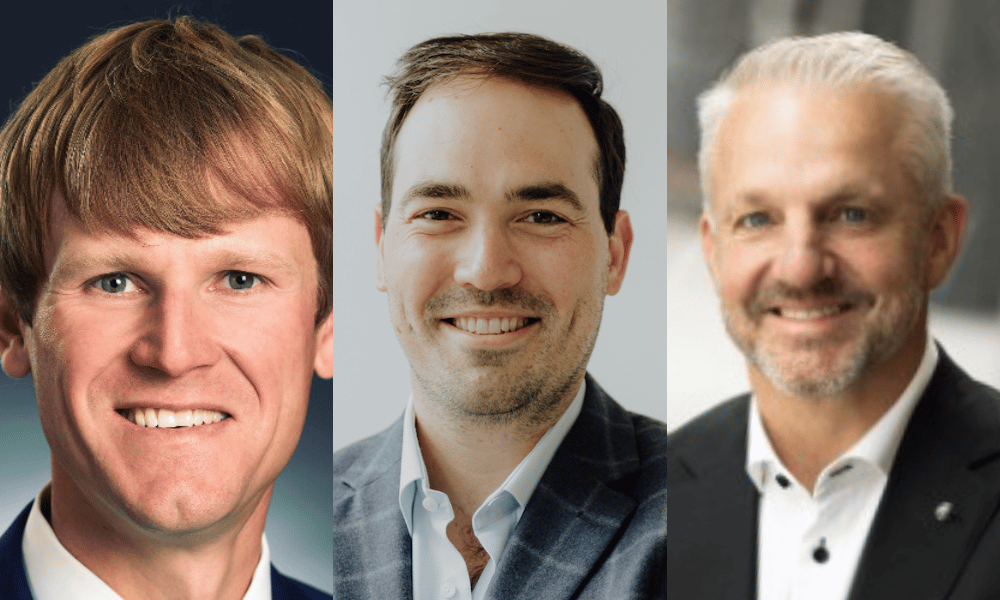
The migration toward independence in financial advice has never been stronger. More than 17,000 advisors joined the RIA channel from other channels in 2025 alone — more than double the figure recorded in 2021 — while wirehouses lost a net 1,864 advisors to other channels during the same year, according to data released in January by AdvizorPro. Independent and hybrid RIAs now manage approximately 27% of all industry assets, up from 21% in 2014, according to a February 2026 Cerulli Associates report. And the breakaway trend shows no signs of slowing: Cerulli estimated that about 9% of advisors, representing $3.1 trillion in assets, were expected to change firms in 2025, with the research firm noting that 71% of advisors said they would choose an independent channel if they were to switch.
This Fourth of July, three advisors who made that transition share what drove them to leave, what surprised them on the other side, and what they would tell any advisor still sitting on the fence.
Tim McEwen, president of Prairie Wealth Advisors — a Lincoln and Omaha, Nebraska-based independent RIA that manages more than $1 billion in client assets following the May 2026 merger of McEwen's former firm, The McEwen Group, with Prairie Wealth founder and CEO Craig Hundt's existing practice — spent more than two decades in the wirehouse and broker-dealer world, most recently at RBC Wealth Management, before making the move. He was not dissatisfied. The backing and resources of a larger institution had served his team well for years. But after COVID, he began to notice a widening gap between the firm's priorities and what mattered most to his clients and team.
"The biggest challenge was making sure the transition felt smooth and reassuring for the clients who had placed their trust in us," McEwen said. "It took time, patience, and a lot of careful attention to get every detail right. What has been most rewarding is the deep sense of peace that comes from knowing every decision we make is guided only by what's best for the families we serve."
The operational lift of going independent, McEwen adds, is frequently underestimated by advisors who have spent their careers inside large institutions.
"What I wish I had known earlier is how much lighter and more purposeful the work feels when you're truly independent and surrounded by people who share your values. Finding that kind of alignment with Craig and the Prairie Wealth team after years of conversations has been one of the most rewarding parts of this journey," McEwen said.
The Prairie Wealth merger is a timely example of a pattern playing out across the industry: advisors choosing to affiliate with an established independent RIA rather than launch from scratch, trading some autonomy for infrastructure and a ready-made succession framework.
Colin Walker, co-founder and financial advisor at CoFi Advisors — a Portsmouth, New Hampshire-based independent RIA affiliated with Integrated Partners, an LPL-affiliated hybrid RIA platform — wrestled with the independence decision for several years before making the move. He had built a successful practice inside a larger institution and worried about how clients would react to the change.
"We wanted the freedom to choose the best technology, investment solutions, and service model without being constrained by a single firm's platform," Walker said. "Ultimately, the decision wasn't about having more independence for ourselves — it was about creating a better experience for our clients and building a business that was fully aligned with their best interests."
The client reaction, when it came, surprised him. Rather than treating the transition as disruptive, clients who understood the rationale for the move responded with enthusiasm.
"Advisors often overestimate how difficult the client conversation will be. We found that clients appreciate honesty, transparency, and a clear explanation of how the transition benefits them. Looking back, the only thing we would have done differently is make the move sooner," Walker said.
Walker's experience tracks with what Cerulli's research has consistently found: the fear of client attrition during a transition is typically the primary barrier to independence, and it is also typically the barrier that proves least founded in practice. The team-building dimension has also exceeded expectations. "It's also been incredibly rewarding to build a stronger team and create a workplace where our employees have more opportunities to grow alongside the business," Walker said.
Brad Morgan, founder of Beyond Wealth Partners — a Cincinnati-based fee-only independent advisory practice operating through Savvy Advisors, where Morgan's team specializes in serving Procter & Gamble professionals and high-net-worth families — reframes what independence actually means for advisors coming out of larger RIA environments. For him, the move was not about abandoning resources. It was about gaining the structural freedom to build something that could outlast him as an individual practitioner.
"Partnering with Savvy gave us the infrastructure and technology to do that while allowing us to build Beyond Wealth Partners with an entrepreneurial mindset," Morgan said. "It gave me the best of both worlds: independence to build and the scale to serve clients at a high level."
The obstacle Morgan did not fully anticipate was legal. Many advisors who leave larger organizations — whether wirehouses, broker-dealers, or mega-RIAs — are subject to non-solicitation provisions, restrictive agreements, and garden-leave clauses signed years earlier as conditions of employment. The prospect of legal action, Morgan says, can make an otherwise clear-cut decision feel far more uncertain than it should.
"The most rewarding part has been watching our vision come to life — building a team around shared values and creating a firm that benefits both clients and advisors. We have the freedom to design the client experience, attract advisors who share our philosophy, and build an enduring business rather than simply maintain an individual practice," said Morgan.
Morgan's advice to advisors considering the move is pointed: clarity of purpose matters more than enthusiasm. "Be clear about why you're pursuing independence. If it's only about economics, you'll probably be disappointed because building a business is hard. If your goal is to create a better experience for clients, build a lasting firm, and have greater control over your future, the work becomes incredibly rewarding," he said.
Taken together, the three stories reflect what the industry data confirms: the shift toward independence is structural, not cyclical. The advisors who navigate it most successfully, each of them suggests, are those who are honest about what they want on the other side — and who invest as much in the transition itself as they do in the destination.

DeVoe data shows third-quarter RIA deals fell 19% as private equity-backed buyers increasingly target firms with $1 billion-plus in assets, says dealmaker Corey Kupfer.

Adhesion waives platform and tax management fees for capabilities as asset managers add alternatives and tax overlays to model offerings.

The Vanguard-bound RIA custodian is now letting advisors subscribe clients to late-stage private company SPVs from inside its platform.

The AI-native RIA is pitching 90-second client onboarding to independent firms weeks after landing $100 million Series C.

Founder Rick Kent moves to executive chairman, and Zach Mersberger has been named president of the $33 billion hybrid-RIA.
As AI makes financial information more accessible than ever, Lana Hock explains why human judgment, trust, and empathy remain the qualities clients value most in a financial advisor
Northern Trust’s Ken Lassner shows advisors how to convert volatility into after-tax portfolio gains

