
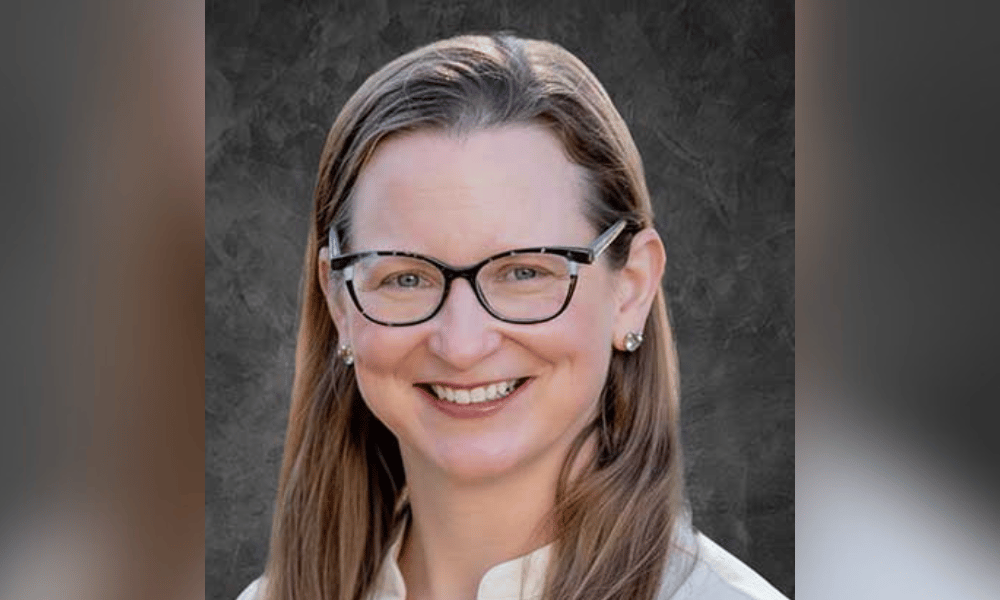
Mega-RIA Mercer Advisors has hired longtime Morgan Stanley executive Melissa Nims to be its new chief solutions officer responsible for integrating family office services to Mercer’s advisor teams across the country.
In her new role, Nims will be replacing Jeremiah Barlow, who has been promoted to Mercer’s newly-created chief commercial officer role. Nims had been with Morgan Stanley for the past 20 years, most recently as managing director and chief operating officer of investment solutions. Before joining Morgan Stanley in 2006, Nims worked at fellow wirehouse giant Merrill Lynch.
“It's been incredibly interesting watching [the RIA industry] from afar, because I think it's an incredibly exciting space, and there are obviously many different RIA firms delivering excellent client outcomes. So I think there's tremendous activity, and it's been a space that's growing and continuing to evolve,” Nims told InvestmentNews of her jump from the wirehouse model.
Denver-based Mercer Advisors manages $98 billion in client assets as one of the largest national RIA acquirers. The firm has over 1,500 employees across more than 110 advisory locations, whereas Morgan Stanley has around 15,000 advisors and 80,000 employees after making job cuts to roughly 3% of its workforce in March.
“I feel like I'm actually leveraging a lot of what I developed and built up over time at Morgan Stanley, albeit in a different framework of this fiduciary construct and a much more boutique-like culture,” said Nims. “Mercer in particular has been growing so quickly both through its M&A oriented activity, but also organically. The focus now is we've got these great expert service teams that we need to continue to scale and grow over time.”
Nims will oversee a team of over 250 Mercer staff responsible for bringing tax, estate, trust, insurance and business management expertise to Mercer’s local advisor teams. Regarding AI usage, Nims says that Mercer is “thinking about it in the lens of particularly tax,” adding that AI “won't replace any of the most complex advice and guidance, but some elements of the process where we could increase efficiency and help people focus on the value-added advice oriented pieces delivered to clients.”
Oak Hill Capital is the majority owner of Mercer, with minority stakes also held by private equity firms Genstar Capital, Altas Partners, and the Singaporean sovereign wealth fund GIC. Barlow, who has worked at Mercer for 13 years, is one of over 670 Mercer employees to hold equity in the RIA, which also launched its Women & Wealth advisory practice last month.
Barlow co-created Mercer’s product offerings for ultra-high-net-clients. In October of last year, Mercer president Daniel Gourvitch told InvestmentNews that UHNW services for clients with $25 million or more in investable assets was Mercer’s fastest-growing division.
“Mercer Advisors has built something differentiated in the industry, a national family office platform with boutique local delivery,” said Barlow in a statement. “At the core of our success is a relentless commitment to investing in new capabilities that expand the value we deliver to clients and finding new ways to reach more families."

The staking deal adds another former UBS team to Elevation Point’s roster as serial minority investors hit a record.

First-of-its-kind research finds hybrid RIAs are growing fastest, yet investors working with sometimes-only fiduciary advisors report the lowest loyalty.

Latest DeVoe reports highlights IBDs buying practices and building W-2 RIAs, while an RIA dealmaker say buyers now pay more in equity, not cash.

Self-employed clients can now make after-tax contributions and Roth conversions on the platform as the custodian deepens its RIA retirement push.

Jim Atwood and Phil Scott self-fund their wirehouse breakaway as rival firms sweeten pay to retain top producers.
Knighthead Life entered the market with a competitive MYGA. A strong launch earned advisor confidence and paved the way for FIAs.
As AI makes financial information more accessible than ever, Lana Hock explains why human judgment, trust, and empathy remain the qualities clients value most in a financial advisor

