
It's not a matter of if the Federal Reserve's next move will be to lower interest rates. It's fair to say the consensus on Wall Street is pretty clear on the direction.
The big question is when Fed Chairman Jerome Powell will begin the cutting process - and it’s not just President Trump demanding an answer. Financial advisors are also hearing it from concerned clients wondering what they should do about their fixed-income allocations.
Nonfarm payrolls increased by 147,000 in June, beating Wall Street’s forecast, and the unemployment rate held near recent levels at 4.1%, according to data released last week by the Bureau of Labor Statistics (BLS). Meanwhile, the consumer price index rose just 0.1% in May, though the annual inflation rate of 2.4% remains above the Fed’s 2% goal. Taken together, the data offered yet another set of mixed signals to Fed officials, who are weighing conflicting pressures from a potentially stalling labor market and the effects of new tariffs on consumer prices.
Put simply, Powell has been put on ice this summer even while he feels the heat from President Trump to move more quickly. Unfortunately, that’s not helping wealth managers who still need to advise clients on their fixed-income allocations, no matter the uncertainty clouding the situation.
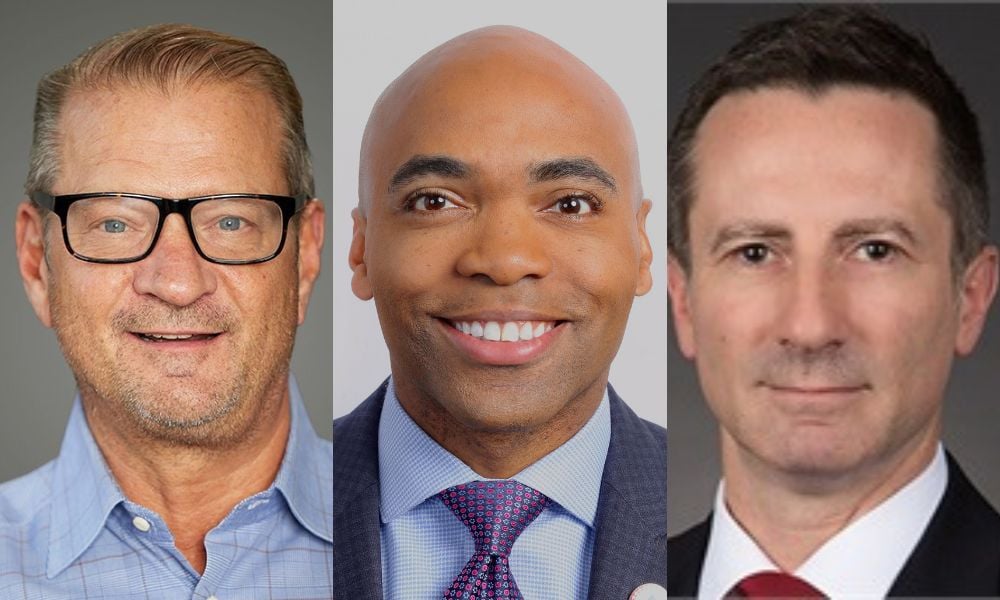
Delvin Joyce, financial planner at Prosperity Wealth Group, part of Prudential Advisors, said most of his clients are growth-oriented, so they tend to use fixed income as a tool for managing portfolio risk rather than for generating income. Given that, he’s recently started shifting some of his exposure from shorter-duration bonds to longer-duration assets that could benefit from price appreciation, if and when the Fed does start cutting rates.
“Candidly, the one constant in this market has been unpredictability. So rather than trying to predict the Fed, we’ve been staying grounded in our clients’ long-term goals and making sure their fixed-income allocation continues to support their overall strategy. It’s less about timing the perfect rate moves and more about staying aligned with what each client needs their portfolio to do,” Joyce said.
Josh Strange, president and founder of Good Life Nova, meanwhile, is encouraging clients to be nimble with their fixed-income allocations, focus on quality and favor bonds with below benchmark durations generally between 2 and 5 years.
“Though the yield curve has normalized, I don’t see how interest rates of longer duration bonds could come down meaningfully. It is much more likely that we see proportionately larger moves on the short to medium end of the curve,” Strange said.
Elsewhere, Skip Chatelain, financial advisor at Dorsey & Company, part of the Prospera Financial Network, said his approach has remained consistent: "We focus on what we can control, namely, aligning asset allocation with each client's current needs. Rather than trying to time the market, we emphasize maintaining a disciplined stock-to-bond ratio tailored to the client’s financial goals and risk tolerance.”
Eric P. Niedermeyer, chief investment officer at Tanner Creek Capital, part of Stifel Independent Advisors, said he generally doesn’t adjust fixed-income allocations based on rate cuts. He does, however, make duration, quality, and ETF investment strategy changes as needed.
“We don’t play a guessing game. We recommend a balanced investment strategy, focusing on mid-range bonds for longer-term investments and US Treasury cash for shorter-term investments, especially in high-tax states where interest is not taxed,” Niedermeyer said.
One of the more underrated tools for financial planners has been high-yield savings accounts, especially for emergency funds, according to Propsperity's Joyce. He said rates there have been very attractive in the past few years, so he’s leaned into that for short-term cash needs.
Nevertheless, as interest rates have gradually come down, Joyce has started to re-evaluate that approach, particularly for clients who are sitting on larger-than-average emergency reserves.
“In those cases, we’ve begun shifting a portion of that cash into short-duration fixed-income options that can offer better yield without taking on too much additional risk,” Joyce said.
Strange, meanwhile, is bullish on bonds, proclaiming they look better than they have for a long time.
“The biggest thing I’ve been telling clients: Don’t sit on hordes of cash. Banks are happy to be paying essentially nothing, and you’ve gotten used to it. But with the meteoric increase in rates that started in 2022, there is no reason you should settle for a 0% return on your bank cash,” Strange said.
Still, while he think bonds are certainly more attractive than they have been in years, Strange believes that risk assets, like equities, are the best place to capture long-term returns.
Moving on, Andrew Graham, founder and portfolio manager at Jackson Square Capital, is calling for a healthy three cuts of 25 basis points apiece in the second half of 2025, starting in September.
“It’s an allocation decision for us and pulling rate cuts forward and deeper results in a higher equity allocation using cash and fixed income as a source of funds,” Graham said.
Finally, Chatelain said he is “not positioning portfolios based on inflation forecasts or anticipated rate cuts.”
That said, he does see value on the short to intermediate end of the yield curve. As a result, he’s been incorporating short-term instruments, such as municipal bonds and short-duration bond funds, to enhance fixed income returns while managing interest rate risk.
One thing that advisors generally agree on is that whatever or whenever Chairman Powell does next with interest rates, it will be viewed by clients through a political lens.
“Many investors find it hard to look at policies at face value. Instead, they consider who proposed or supports them. We all have political beliefs, but those can’t play a key role in driving investment decisions because it could lead to mistakes that you’ll regret for years,” Strange said.
Chatelain maintains that market volatility remains a top concern for clients. And that too can become politicized.
“We recognize that policy decisions, along with geopolitical developments, can contribute significantly to that volatility. Our role is to help clients filter out the noise and stay focused on their long-term objectives. By grounding each portfolio in the client’s unique needs and goals, we help them navigate uncertainty with clarity and confidence,” Chatelain said.

DeVoe data shows third-quarter RIA deals fell 19% as private equity-backed buyers increasingly target firms with $1 billion-plus in assets, says dealmaker Corey Kupfer.

Adhesion waives platform and tax management fees for capabilities as asset managers add alternatives and tax overlays to model offerings.

The Vanguard-bound RIA custodian is now letting advisors subscribe clients to late-stage private company SPVs from inside its platform.

The AI-native RIA is pitching 90-second client onboarding to independent firms weeks after landing $100 million Series C.

Founder Rick Kent moves to executive chairman, and Zach Mersberger has been named president of the $33 billion hybrid-RIA.
As AI makes financial information more accessible than ever, Lana Hock explains why human judgment, trust, and empathy remain the qualities clients value most in a financial advisor
Northern Trust’s Ken Lassner shows advisors how to convert volatility into after-tax portfolio gains

