
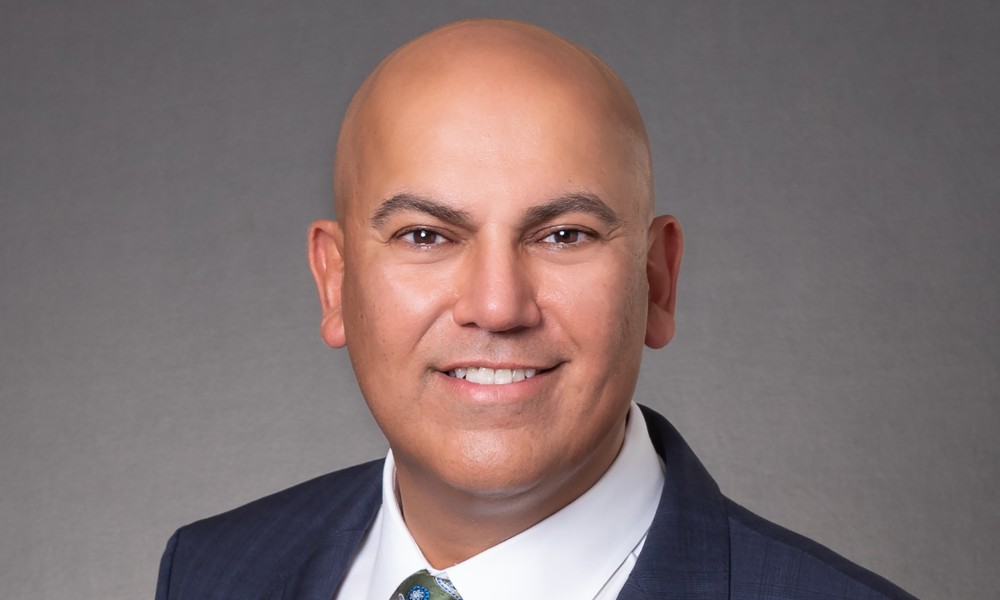
Five years ago, Monish Verma was making final preparations for the jump from wirehouse to RIA and worrying about how his clients at UBS would react.
At that time Verma was a senior vice president for wealth management at UBS, where he had worked since 2009. “One of the biggest concerns I had was to make sure that the clients would be comfortable with me doing a transfer - I was at a traditional wirehouse most of my career.” Verma, now the founding partner and CEO of Vardhan Wealth Management, told InvestmentNews.
However, Verma said that clients were very open to the move, which happened in May 2021, and after a conversation, understood why he was doing it. “They understood the custodian concept because we had discussions about it after I moved,” he said.
The newly-formed Vardhan Wealth Management, named after the Sanskrit words for “bestower of wealth” and “victory,” enjoyed plenty of success bringing former clients over. The Farmington Hills, Michigan-based company was able to bring over between 95% and 97% of Verma’s former client base within about four months of leaving UBS. However, that figure had jumped to 115% within six to eight months of the move. “We were getting more wallet share of current clients, and referrals from those clients,” Verma said.
“The biggest thing, I think, that resonated with them was the level of how we were becoming a fiduciary now, and what that really meant,” he added. “Even though we kind of acted in that role all along, they now fully understood it, and that kind of promoted some additional referrals.”
The Vardhan team, which at that time consisted of Verma and three staff members, worked for 21 days straight after making the move. “All of my teams were calling all our clients, then we called all our prospects, then we called all our centers of influence, and then we started over again,” he said. “So, we would go back to them and say, ‘now that we had our first call, what questions would come up from that, what are you thinking? Now that we have you in transfer, we wanted to come back to you and have a more in-depth conversation,’ things of that nature.”
Also, Vardhan was not on its own. Rather, the firm had chosen to affiliate with RIA Summit Financial.
“I spoke with, I would say, between 14 and 18 different firms, and I really resonated with Summit and ultimately obviously chose to work with them,” said Verma.
Summit’s technology, he explained, played a big part in his decision. “The tech stack was one of the compelling reasons we joined with Summit versus some of the other places we talked to because they had a very aggressive tech stack,” he said. “And since we have come over, they are growing and accelerating their tech stack pretty aggressively.”
Set against this backdrop, Vardhan harnesses an array of technologies, which include the “workhorse” of Salesforce for CRM, as well as eMoney for planning, and Addepar for aggregation reporting. “We have quite a compelling pool of tech that we can use that works well together,” he said.
There were other factors driving the move, too. “I wanted to have more autonomy on how I structured my team, how I paid them, and so I found that that was another compelling reason for me to move,” said Verma. “I just had some things that motivated me to want to be more independent and have more control over the direction and durability.”
“And then there are other things, for example, like being a 1099 versus a W-2, those have some tax advantages as a financial advisor, so that was important as well,” he added.
Almost five years later, Vardhan has enjoyed plenty of growth – the company has doubled its assets since leaving UBS and now has over $600 million in AUM. On the staffing side, Vardhan has grown from a four-strong team to seven people, with another advisor set to join the company next month.
Expansion is also on the cards, with Verma saying that Vardhan is talking to multiple teams, some of which have more than $100 million in assets. “We’re talking to a couple of teams like that, we’re also then talking to a couple of succession plans that are looking to come over,” he said. “We will buy their practice, and they will phase out in a short period of time, between one and three years.”
By the time he left UBS, Verma had racked up more than two decades in wealth management, having joined the wirehouse in 2009 from Morgan Stanley Smith Barney, where he began his career in 1995.
“I had a great experience in the wirehouse world, I wouldn’t say that there was anything negative,” he said. “I just wanted to organically grow as I had always been doing, for 26 years - now I am in the business 31 years.”
Verma was also conscious of the demographic shift in the advisory industry, marked by ageing leadership. The average age of a family office principal is 68, according to data from Deloitte Private.
“I saw the writing on the wall about the average advisor getting older, and that less advisors would manage more wealth,” he said. “I wanted to be able to do that productively and have a little bit more control over that process.”
“The only regret I have is that I didn’t do it sooner,” he added.

Founder Rick Kent moves to executive chairman, and Zach Mersberger has been named president of the $33 billion hybrid-RIA.

Three senior women in wealth management outline the ownership, capital and confidence gaps still holding top advisors back

Schwab's Claude integration blocks Anthropic from retaining advisor and client data for model training, even for users without enterprise plans.

“Today is as big a moment as I have seen in my career,” says Shirl Penney of Dynasty Financial Partners.

TradePMR's Scott Victoria says Robinhood Advisor Network's 25% revenue fee model better serves advisors than basis-point pricing in other RIA client referral programs.
As AI makes financial information more accessible than ever, Lana Hock explains why human judgment, trust, and empathy remain the qualities clients value most in a financial advisor
Northern Trust’s Ken Lassner shows advisors how to convert volatility into after-tax portfolio gains

