
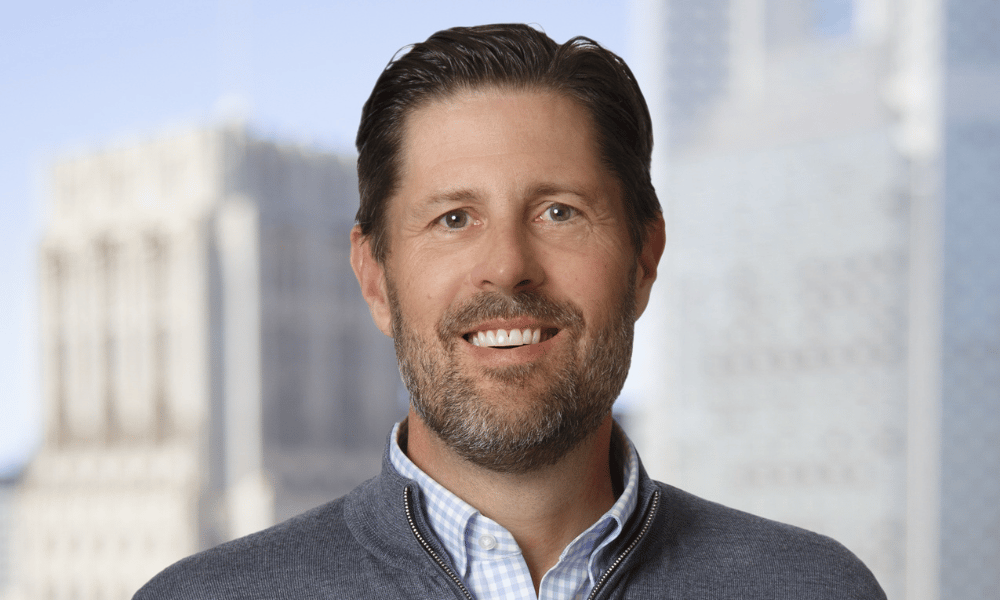
As RIA dealmaking races to a record pace and consolidators chase family office capabilities through acquisition, Baker Street Advisors is making a different bet: stay independent, stay organic, and let the experience built from 22 years of compounding carry it forward.
Chris Wilkens, CEO and executive committee partner, has spent two decades helping build the San Francisco-based firm into a multibillion-dollar operation with dozens of employees – without a single acquisition along the way.
In an interview with InvestmentNews, Wilkens pointed to the firm's "$21 billion AUM, 22-year history, [and] 70 people [employed]," noting how it has "grown organically from dollar one to this point over that period of time."
That track record puts Baker Street at odds with the dominant trend in wealth management, where large firms and aggregators are racing to build out ultra-high-net-worth capabilities – often by buying independent family offices outright.
Wilkens argues that the rush toward family office services reflects a basic truth about the advisory business: investment performance alone no longer separates winners from also-rans.
"Good investment returns are a minimum threshold to work with these clients," Wilkens said. "The differentiator, the part that can make clients really sticky, is the advisory and service work."
While acquisition is the fastest route to scale for firms that don't have UHNW capabilities, he argued that the decision to buy rather than build comes with more than a little risk.
"You've got a sort of wider range of potential outcomes when you absorb other entities and institutions," he argued, pointing to cultural alignment and client fit as potential sticking points.
In DeVoe's most recent annual RIA M&A Outlook Report, 69% of RIA buyers pointed to cultural fit as an importance feature among deal targets. That number, up more than 50 percentage points compared to the previous year's survey, puts culture well ahead of talent strength, which had topped the list of must-haves among RIA acquirers in 2024.
While Baker Street fields regular inbound interest from firms looking to acquire it, Wilkens said the firm isn't interested in a sale at any valuation.
"We're really focused on our lane of remaining independent," he explained. "We think that's core to the service, the objective fiduciary advice we give our clients, and why they hire us."
As an SEC-registered investment advisory firm, Wilkens said the firm's fiduciary obligation dictates any decision and strategy it chooses to undertake, even in the face of historically high valuations at the top end of RIA deals.
"Valuations go up, valuations go down – it doesn't affect how we're thinking about the business quarter to quarter, year to year," he said.
According to DeVoe, PE-backed buyers now drive roughly 70% of RIA M&A activity, and are willing to pay materially more than independent acquirers thanks to their access to deeper pockets of capital and leverage. Right now, opinions are split on private equity's influence, with 60% of RIA leaders telling DeVoe they view PE's role as beneficial, while 40% see it negatively.
Baker Street's independence is underwritten by a 2015 transaction with Affiliated Managers Group, which holds a majority but non-controlling stake in the firm. Apart from Baker Street, AMG's affiliates in the investment and wealth space include AQR, MyCIO Wealth Partners, and Renaissance Investment Management.
"We wanted a permanent and durable source of capital," Wilkens explained.
In contrast to firms who solve for scale past the $1 billion by plugging into the infrastructure of larger platforms, Baker Street Advisors is looking for answers elsewhere. A major part of that comes from the firm's presence in the Bay Area, which Wilkens described as "the biggest market in the country – perhaps the world.
"We want to grow fast enough that we have the tools and resources to maintain our excellence on behalf of our clients, but not so fast that our infrastructure gets taxed," he said. "We've struck that historically with a low-teens compounded annual growth rate."
According to estimates by Cerulli, organic growth at the typical RIA clocks in at roughly 3%, in line with Ensemble Practice research estimating 3.7% organic growth across the industry. Among RIA buyers surveyed by DeVoe, 79% said growth is their primary motivation for an acquisition, whlie 49% of sellers flagged it as their top reason for pursuing a partnership. At Baker Street, Wilkins said the firm earns potential referral opportunities by meeting the "exacting standards" of the roughly 500 client families it works with.
"We're open architecture in terms of CPA, tax prep and estate planning," he said, highlighting how clients' external advisors can also become centers of influence that drive referrals. "We consciously do not do those things in-house because there's not a one-size-fits-all approach to those."
Baker Street has also invested in making itself visible to the kind of client Wilkens calls an "informed delegator" – typically data-driven professionals, many from the engineering and tech community, who understand evidence-based investing principles but choose to delegate execution.
"We've been really focused on optimizing our presence in, and being discoverable by, AI," Wilkens said. "We've been really thoughtful about how we are publishing and being present in the information ecosystem, to make sure that we're findable by ... folks who are smart enough to know how this job should be done, [and] what principles they should be pursuing: simplicity wherever possible, low fees, tax efficiency, discipline."
That content strategy has paid off, he said, particularly amid the current wave of tech wealth creation. "We've really found that our incoming, with this AI wealth boom, has exceeded the previous sort of booms that we've been around for since the early 2000s."
"The primary reason to hire an advisor is not to learn something they can't learn themselves," he said. "It's actually to keep well-informed people from doing ill-informed things – keep smart people from reacting reactively or emotionally."
Asked what would keep Baker Street's client-first approach intact over the next two decades, Wilkens described a self-reinforcing loop built around achieving results through a mix of investments in talent and technology. On that note, it has welcomed Lesley Bunim, a fifth-generation San Franciscan, as a managing director and lead advisor to guide multigenerational clients on investment management, financial planning, estate and tax strategy, and philanthropy.
"Our clients don't want to have to be forced to perform a wealth manager search again in the future," he said. "They hire us with a multi-decade, multi-generational view. So our end of the bargain is we need to maintain a durable and sustainable growth plan."

The four wirehouse firms lost 1,449 experienced advisors and recruited 932 in the first six months of the year, according to Diamond Consultants.

The fast-growing custodian's new charitable accounts, run with sponsor Endaoment, undercut typical DAF fees as incumbent platforms post record giving.

Smaller RIAs using AQR's popular long-short strategies bring custodians more risk and less revenue, one RIA founder tells InvestmentNews

Specialization, experience-based thought leadership and bolder marketing help wealth management firms rise above generic pitches.

DeVoe data shows third-quarter RIA deals fell 19% as private equity-backed buyers increasingly target firms with $1 billion-plus in assets, says dealmaker Corey Kupfer.
Knighthead Life entered the market with a competitive MYGA. A strong launch earned advisor confidence and paved the way for FIAs.
As AI makes financial information more accessible than ever, Lana Hock explains why human judgment, trust, and empathy remain the qualities clients value most in a financial advisor

