
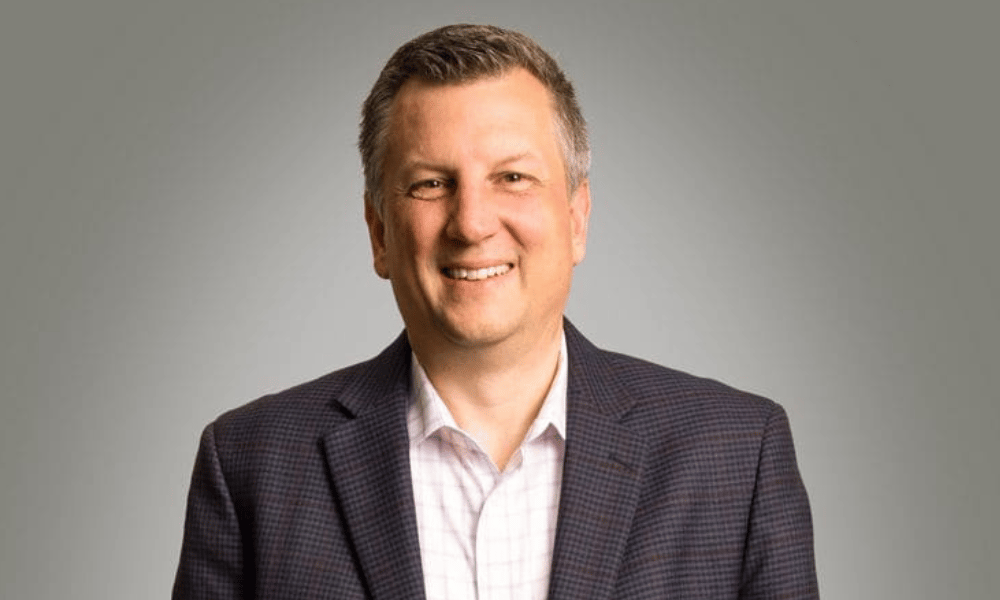
Arkansas-based Sowell Management has launched an advisor partnership program that gives affiliated advisors an equity stake in the firm, backed by a minority investment from New York-based private capital firm Merchant Investment Management.
The announcement marks a significant shift for the North Little Rock firm, which has spent its 25-year history growing to $6.5 billion in assets under management entirely through organic means – an unusual arc for a firm that size, according to CEO Daryl Seaton.
"This is going to significantly propel our growth forward and align us even further with our advisors," Seaton – who took the helm in January after succeeding founder Bill Sowell – said of the advisor partnership program in an interview with InvestmentNews.
The new program gives both current and prospective affiliated advisors the ability to participate in Sowell's equity and long-term enterprise value. It also formalizes succession and continuity planning resources that Sowell says its advisor community has been asking for.
The firm's own numbers underscore the demand: reflecting an industry-wide blind spot, Seaton noted that only about 15% of advisors have a written, executable succession plan. Sowell launched a subsidiary called Trek Wealth Solutions roughly three years ago to begin addressing that gap – handling equity transactions and succession conversations with advisors – and the new program builds directly on that foundation.
"To us, it's so important to help the advisor think about how they're going to monetize their business, which in many cases is their largest asset," Seaton said.
Sowell evaluated a broad range of capital partners, including private equity firms, before settling on Merchant. The deciding factors, Seaton said, came down to three things: capital availability, the network of portfolio companies Merchant has assembled, and its track record of supporting independent advisors without taking over their operations.
Merchant's ecosystem spans more than 130 partner firms and RIA practices across six countries, collectively managing more than $340 billion in assets.
"We found that Merchant had the best alignment with us," Seaton said. "Whether it be the capital they can help bring so that we can really expand our advisor partnership program, the relationships and the network of companies they've built … and then their experience supporting fiercely independent advisors."
For the past few years, Merchant has been intentionally building out its ecosystem of companies to support RIA partners. Those efforts include collaborations with investment banking firm Republic Capital Group; CPA and advisory firm Venning Advisors; and a strategic growth partnership with WR Valuation, a boutique valuation shop. Late last month, it inked a partnership with Emerge Business Management to provide family office solutions to the wider network of independent advisory firms partnered with Merchant.
The broader practice management support that Merchant brings, Seaton said, goes beyond just adding clients at the top end of the wealth spectrum. It includes helping advisors grow in whatever direction fits their business model – whether that means lead generation, richer client services, or acquiring books of business from other advisors in their local markets.
Its history of taking minority – rather than majority – positions was also important to Seaton, who highlighted the need to preserve the independence and customization that Sowell has built its model around.
"What they have said, over and over again, is they want the advisor to run the business that made them successful," he said.
Matt Brinker, managing partner at Merchant, said in a statement that Sowell's management team "knows where they want to take the business," and that the firm's Midwest values and approach to wealth management were a draw for the partnership.
Sowell currently has around 100 advisor representatives and serves more than 6,000 individual clients across more than 60 branch offices in just over 30 states, with clients in all 50. Seaton, who joined as COO in 2020, emphasized that the firm spent years preparing its operational infrastructure before seeking outside capital.
"A lot of firms think about capital first and then the operational part comes later," Seaton said. "We wanted to do it the other way."
That groundwork, he said, was specifically intended to support what the firm calls the "fiercely independent advisor" – one who values personalization and customization at scale.
The firm is also expanding its addressable market upward. Last week, Sowell announced the launch of Cache River Private Wealth, a new division targeting clients with net worth of $5 million or more. The unit will offer what Bill Sowell has called "family office lite" services, coordinating investment management, tax planning, estate planning, and multi-generational legacy planning.
"With the announcement of Cache River Private Wealth, we're going to help our current advisors go upstream," Seaton said. "Current advisors on our platform striving to work upstream now have that offering, and they can plug into it without having to build that infrastructure themselves."
With fresh capital in hand, Sowell is now positioning itself as a buyer in the RIA consolidation wave. Seaton said the firm has fielded inquiries from sellers just above $1 billion that shopped around the major acquirers and came back to Sowell. At the time, the firm couldn't pull together enough capital to close those deals, which was a driving consideration in the Merchant arrangement.
Going forward, Sowell is focusing its acquisition attention on the sub-$1 billion market, which Seaton characterized as underserved in some cases. The firm is particularly targeting advisors in the Midwest and Southeast, where he says the firm has strong traction.
"We believe there's a niche of advisors that want liquidity options, succession options, all of the things we've been discussing – but they want it from a firm like ours, not a New York-based firm," Seaton said.
On the question of valuations in a competitive M&A market, Seaton acknowledged the challenge, but said cultural fit can change the math. He noted that some sellers are willing to accept something less than the highest offer when they believe the acquiring firm will take care of their clients and staff.
"The culture has to be right, but the economics have to be right as well," he said. "We've got to thread that needle."

DeVoe data shows third-quarter RIA deals fell 19% as private equity-backed buyers increasingly target firms with $1 billion-plus in assets, says dealmaker Corey Kupfer.

Adhesion waives platform and tax management fees for capabilities as asset managers add alternatives and tax overlays to model offerings.

The Vanguard-bound RIA custodian is now letting advisors subscribe clients to late-stage private company SPVs from inside its platform.

The AI-native RIA is pitching 90-second client onboarding to independent firms weeks after landing $100 million Series C.

Founder Rick Kent moves to executive chairman, and Zach Mersberger has been named president of the $33 billion hybrid-RIA.
As AI makes financial information more accessible than ever, Lana Hock explains why human judgment, trust, and empathy remain the qualities clients value most in a financial advisor
Northern Trust’s Ken Lassner shows advisors how to convert volatility into after-tax portfolio gains

