
The numbers coming out of F2 Strategy's Q1 2026 trend report are hard to ignore.
Of more than 30 firms surveyed – collectively representing upwards of a trillion dollars in assets – 79% said their operating models need changes within the next one to two years.
Integration ranked as the top unmet skill among the F2 survey's respondents, with 54% identifying it as the most pressing gap on their tech journey, followed by data and analytics. Onboarding was cited by 72% of participants as a key source of friction, running well ahead of the next-highest pain points – alternatives processing and data consistency – which were each flagged by 45%.
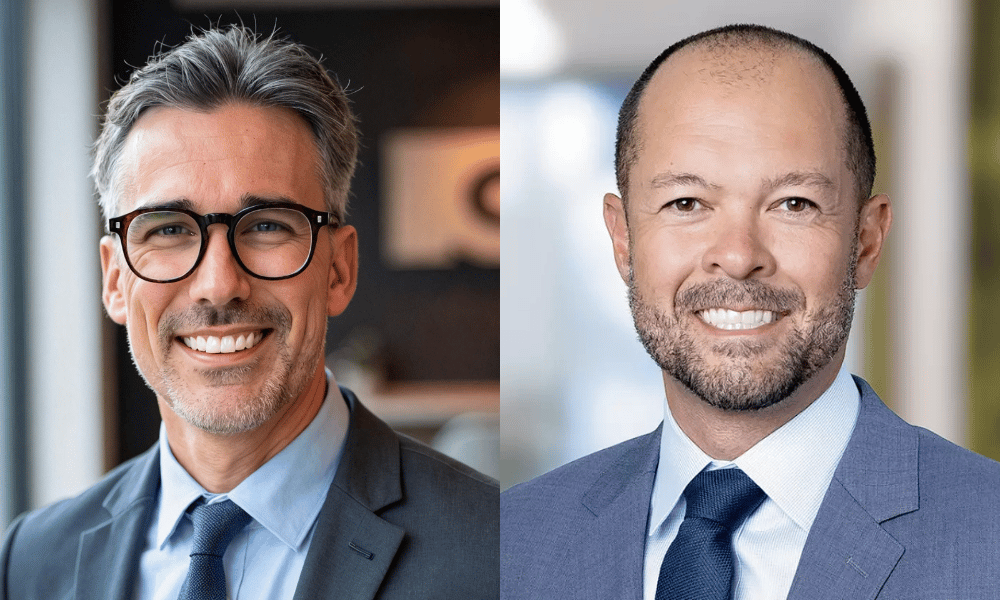
Bryce Carter, head of client engagement at F2 Strategy, said the breadth of findings reflects a challenge that is nearly universal across firm types.
"Every firm has an operating model," he told InvestmentNews. "The question is whether it's intentional or accidental."
Carter was careful to frame the integration shortfall as something more nuanced than a failure to adopt the right software.
"Most firms don't just have a technology problem – they have a connectivity problem," he said. "The stack itself looks good on paper, but their workflows are still broken."
The symptoms he described would hit hard for many RIAs: manual CRM entry, "swivel-chair" account opening, fragmented alternatives workflows, and reporting still stuck in Excel. The worst-hit areas, Carter said, are onboarding, alternatives, and reporting – all of which cut across multiple systems and expose weak points when data cannot move end to end.
The survey also exposed a tension between the two priorities advisors care most about: their own experience and the firm's ability to scale. That's where Carter sees a potential tug-of-war, as "every customization an advisor asks for creates an operational drag somewhere else."
Firms that scale well tend to standardize the core while limiting where flexibility lives. The choice to go that way becomes easier, Carter said, when a firm's culture is cohesive.
"Where there's an aligned culture of advisors who buy into a firm's way of doing things, they're more accepting of standardization."
Danilo Kawasaki, co-founder and chief operating officer of Gerber Kawasaki Wealth and Investment Management, said the F2 survey's finding on integration gaps tracked with his firm's experience.
"It's right on the money," he told InvestmentNews. "We actually just went through a complete tech revamp over the last year and a half."
Gerber Kawasaki, a Los Angeles-based RIA currently managing around $4.5 billion in assets, operates across four custodians: Schwab, Fidelity, LPL, and Altruist. While having a multi-custodian setup is common among growing RIAs, it amplifies the integration problem considerably.
As Kawasaki explained, each custodian runs its own tools and systems, which in practice means the firm needs a software overlay just to give advisors a single working environment. Gerber Kawasaki chose Orion for that role.
Beyond that, the firm had to deal with the challenge of customizing its Salesforce CRM, to the point where they had to hire a dedicated employee.
"The out-of-the-box product Salesforce offers just isn't up to speed with what we require," Kawasaki said.
Salesforce serves as the firm's main hub for client onboarding, whichi is where the F2 survey saw the industry continuing to lose ground. On that front, Kawasaki said Altruist has come closest to cracking the code.
"Through Altruist you can onboard a client within minutes," he said. The firm has begun directing all new clients below a certain asset threshold to Altruist, while high-net-worth clients are primarily routed to Fidelity.
On top of custodian complexity, AI is adding another layer of uncertainty. Kawasaki said his firm is currently beta testing three AI systems simultaneously: Anthropic's AI, Salesforce's agent AI, and Hazel, an AI tool built into the Altruist platform.
"There's no easy answer right now," he said. "There's no single system that can operate across all of our platforms."
Separate research by F2 shows AI adoption is accelerating – with a 23-percentage-point rise in wealth firms using AI over the course of two years – but that productivity gains don't necessarily translate to organic growth. RIAs have adopted AI at a faster clip than bank-based advisors, according to that report, though the path from experimentation to genuine integration remains uneven.
For Carter, the question of whether to hire in-house integration talent, outsource it, or bring in a fractional CTO has no universal answer.
"There's an outsourced approach where it makes sense, and then there's a point where bringing it in-house becomes justified," he said. "There's no magic number for that."
Kawasaki said the integration work of the past 18 months was never just about fixing operational friction – it was part of the groundwork for expansion. Gerber Kawasaki recently hired its first out-of-state advisor, based in Seattle, and is recruiting in Austin, Nashville, Miami, Atlanta, and San Francisco.
The firm is targeting $10 billion in assets under management within five years, growing organically, and expects to bring in between $600 million and $700 million in net new assets this year.
"All the infrastructure work we've done up to now was to create the foundation to get there – efficiently," Kawasaki said.
Carter, for his part, sees the industry's onboarding problem as one that has resisted solution for too long, and suggested the F2 data should serve as a call to action. Beyond that, he said firms that invest in better data architecture, tighter workflows, or building their operating models with intention are the ones most likely to see a payoff.
"The firms pulling ahead are actively designing their model," he said. "The ones falling behind are reacting to problems instead of engineering their system."

“Today is as big a moment as I have seen in my career,” says Shirl Penney of Dynasty Financial Partners.

TradePMR's Scott Victoria says Robinhood Advisor Network's 25% revenue fee model better serves advisors than basis-point pricing in other RIA client referral programs.

Built in partnership with Dynasty Financial, Schwab, VanguardClaude for Financial Advisors links custodians, CRMs and planning tools for advisor workflows

New benchmarking tool ties advisor pay structures to ownership and succession as the industry faces a widening talent gap.

Arca becomes the first firm to build on Altruist's Realtime Custodial API, deepening a partnership tied to its rapid tech-led growth.
Northern Trust’s Ken Lassner shows advisors how to convert volatility into after-tax portfolio gains
Dan Biagini of American Equity says the steady decline of pensions, longer lifespans and a reset in interest rates are rewriting how advisors build retirement income

