
America's founding argument 250 years ago was essentially that self-governance produces better outcomes. The same is often said by financial advisors who took the independent route by breaking away from a large corporate parent.
Independent financial advisors — those who have left large broker-dealers and wirehouses to launch their own registered investment advisor (RIA) firms — now manage 27% of total industry assets in the United States, up from 21% a decade ago, according to a February 2026 report from research firm Cerulli Associates. Cerulli also estimates that close to 9% of advisors, representing $3.1 trillion in assets, changed firms in 2025. The common destination: independence. Three RIA founders share why they made the move — and what it means for the clients they serve. Cerulli data also show that 71% of advisors say they would choose an independent channel if they were to switch firms, and 88% of existing independent RIAs say they are very likely to remain with their current firm over the next 12 months.
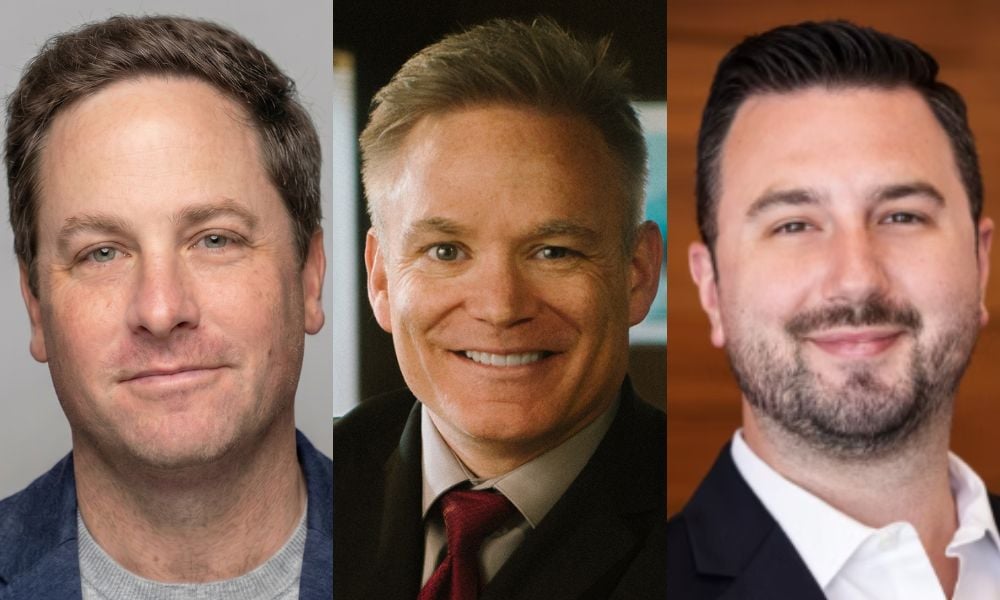
Brad Desormeaux, CEO and private wealth advisor at Iron North Private Wealth in Coeur d'Alene, Idaho, draws a direct line between the principles behind America's founding and the philosophy driving his firm. Desormeaux, an 18-year wealth management veteran and Iraq War veteran who joined Sanctuary Wealth after breaking away from UBS in May 2026 with $350 million in client assets, believes independence allows him to apply a foundational idea to financial advice: that people are best positioned to direct their own lives.
"That's what independence means in practice — spending our time finding the best solution and getting it done," Desormeaux said.
At a large institution, Desormeaux notes, recommendations can be shaped by proprietary platforms or lending relationships. As an independent fiduciary — an advisor legally required to act in the client's best interest — the responsibility begins and ends with the client.
"That allows us to search broadly for opportunities, negotiate competitively for services, and select investment managers based on merit and outcomes rather than affiliation. If a better solution exists, we're free to pursue it," he said.
Mitch Stein, founder and principal at Arena Private Wealth, a Midwest-based RIA with offices in Chicago, Cleveland, and Columbus that manages approximately $338 million in regulatory assets under management, sees the RIA model as a structural solution to a structural problem.
For Stein, self-governance in the context of an RIA means eliminating the conflicts that force large firms to optimize for the institution's interests over the client's — no pay-to-play arrangements, no sales quotas, no mandates handed down from a compliance committee far removed from the client relationship.
"In our case, that's led us to co-lead a funding round in a company many people believe is the most credible challenger to NVIDIA in AI inference — not because we had the biggest balance sheet, but because self-governance gave us the flexibility and the appetite to pursue it," Stein said, referring to Arena's lead role in a $230 million Series B round for Positron AI, announced in February 2026.
That kind of deal — unusual for an RIA and almost unheard of for a Midwest firm — is exactly what Stein says independence makes possible. Arena was able to perform direct due diligence and co-lead the round alongside institutional players including Jump Trading and the Qatar Investment Authority.
"For clients, the most practical way I explain it is: everything we build, every decision we make and every opportunity we bring to you exists because we think it's right for you — not because it's convenient for us, or because someone is paying us to put you in it," Stein said. "That's what independence actually means at the table, and it's something that is genuinely hard to replicate inside any large firm, no matter what they tell you."
For Peter Bjelopetrovich, CFS, founder and managing partner at Mindset Wealth Management in Indianapolis, Indiana, independence comes down to something simpler: the ability to show up as yourself.
Mindset, which launched in 2024 with backing from tru Independence and manages approximately $323 million in assets across 212 accounts, was built by four former colleagues from RIA Sheaff Brock Investment Advisors who wanted to pursue strategies — including differentiated options overlay approaches — that a larger firm's structure would constrain.
"Some advisors may feel most comfortable in a suit, some may feel most comfortable in a t-shirt. If the proficiency is the same then the client ultimately decides based on who they 'liked' the most and we don't want to win clients while wearing a mask. This has served us tremendously thus far," Bjelopetrovich said.
That authenticity, he argues, builds the kind of trust that sustains long client relationships — something that becomes harder to deliver when firm culture is dictated from above.
The experiences of Desormeaux, Stein, and Bjelopetrovich reflect a broad industry realignment. According to Cerulli, independent RIAs are projected to increase in number by 12% by 2028, at which point approximately one-third of all advisors will belong to RIA channels. Wirehouse headcount, by contrast, is expected to decline by 5.7% over the same period.
For the advisors who have already made the leap, the data tracks with lived experience. The fiduciary model — stripped of sales pressure and proprietary product mandates — is, they say, simply a better way to serve clients.

The Vanguard-bound RIA custodian is now letting advisors subscribe clients to late-stage private company SPVs from inside its platform.

The AI-native RIA is pitching 90-second client onboarding to independent firms weeks after landing $100 million Series C.

Founder Rick Kent moves to executive chairman, and Zach Mersberger has been named president of the $33 billion hybrid-RIA.

Three senior women in wealth management outline the ownership, capital and confidence gaps still holding top advisors back.

Schwab's Claude integration blocks Anthropic from retaining advisor and client data for model training, even for users without enterprise plans.
As AI makes financial information more accessible than ever, Lana Hock explains why human judgment, trust, and empathy remain the qualities clients value most in a financial advisor
Northern Trust’s Ken Lassner shows advisors how to convert volatility into after-tax portfolio gains

