
Jump to Winners | Jump to Methodology
Standing apart from wirehouses used to be the domain of RIAs armed with a strong track record and a clean fiduciary value proposition. Now, that combination is merely table stakes. The firms that truly excel with individual investors have rebuilt their value around comprehensive planning, differentiated service models and relentless investment in talent. This has all been carried out while simultaneously navigating the challenges of the past year:
fee pressure
historic intergenerational wealth transfer
accelerating AI adoption
InvestmentNews' 5-Star RIA Firms – Individuals 2026 showcases the firms pulling away from the pack. Their practices have delivered strong performance and resilient client outcomes over the past 12 months and define what it means to be a fiduciary advisor to mass affluent, high-net-worth, and ultra-high-net-worth households.
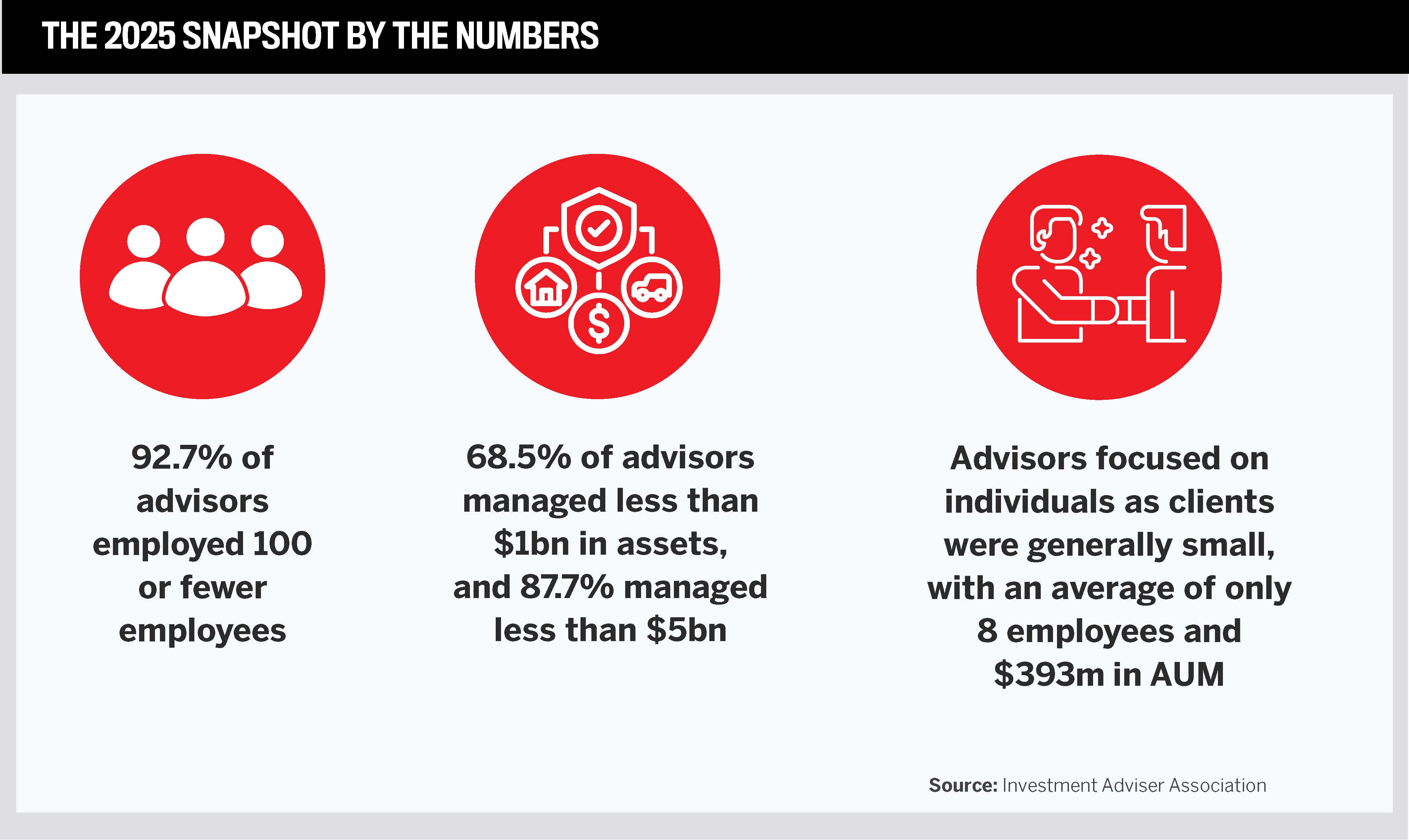
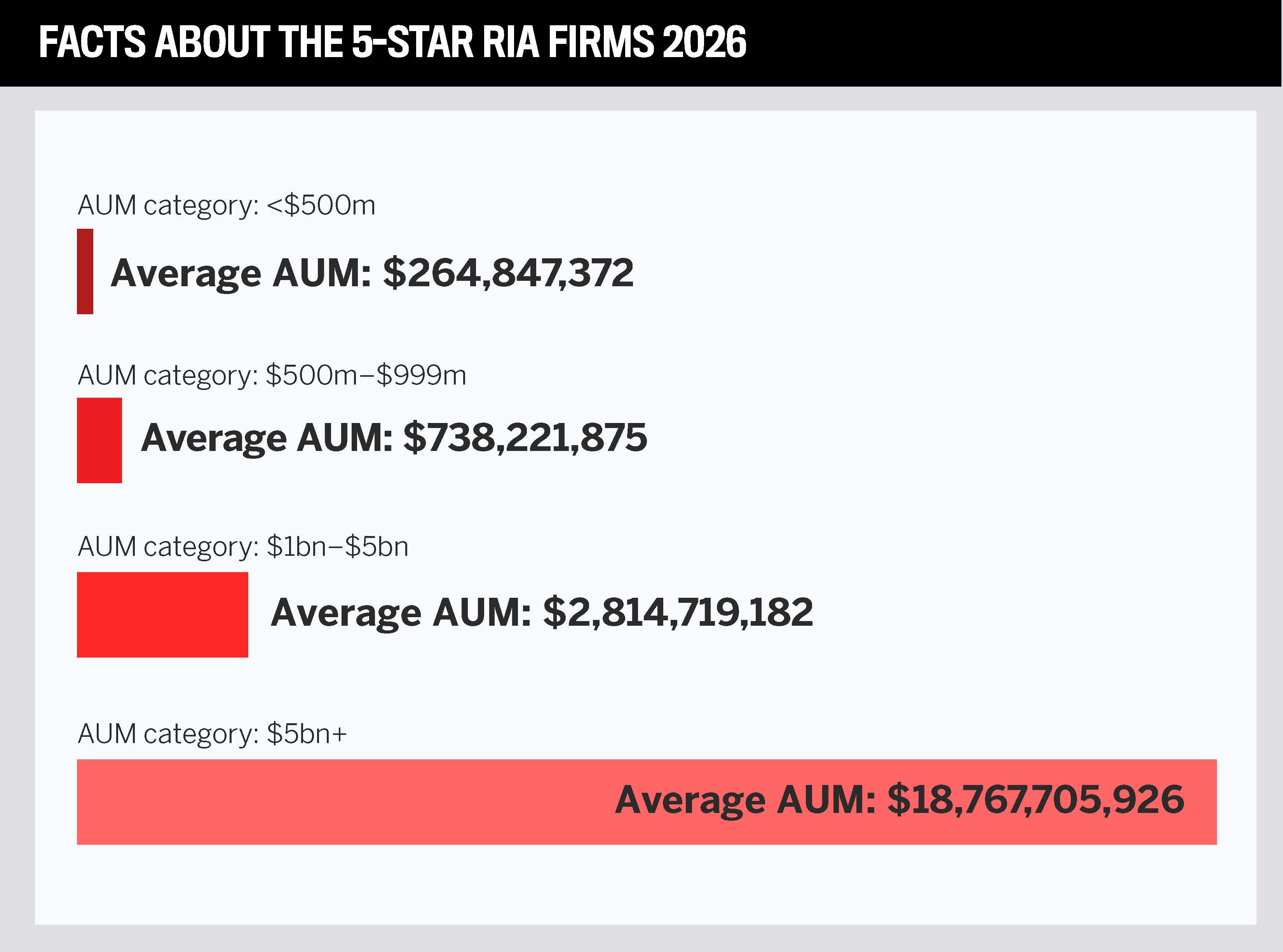
Individual investors are asking for more at precisely the moment when talent constraints, regulatory expectations, and market noise are all intensifying. The 5‑Star firms featured in this report, which have total regulatory AUM of at least $100 million, have responded by building broader, scalable, and more human-centered business models.
Clients have consistently sought RIAs out for strong performance, asset allocation expertise, fiduciary positioning, in addition to transparent AUM-based pricing and a personalized service ethos.
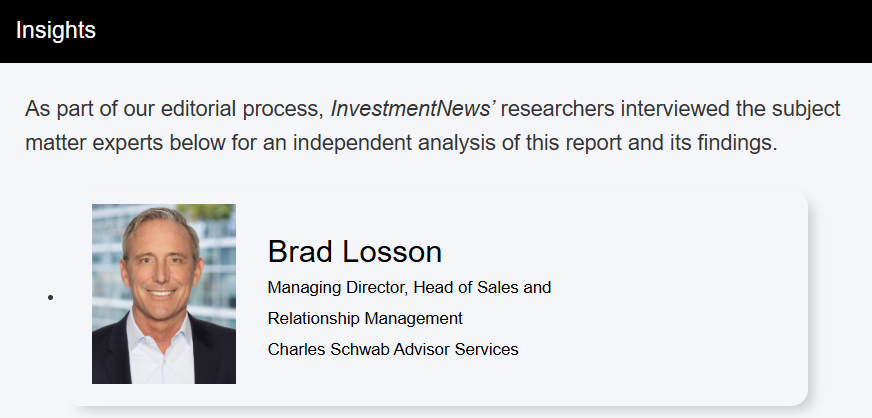
As Brad Losson, managing director and head of sales and relationship management at Charles Schwab Advisor Services, observes, the leading RIAs have always embodied “the truest form of independence”.
“Clients want a trusted advisor who understands their goals, family dynamics, and life transitions – someone who can coordinate across multiple aspects of their financial lives and be the trusted voice on everything that touches their wealth,” he says.
That foundation remains essential, particularly in a year when volatility and political noise tested client confidence.
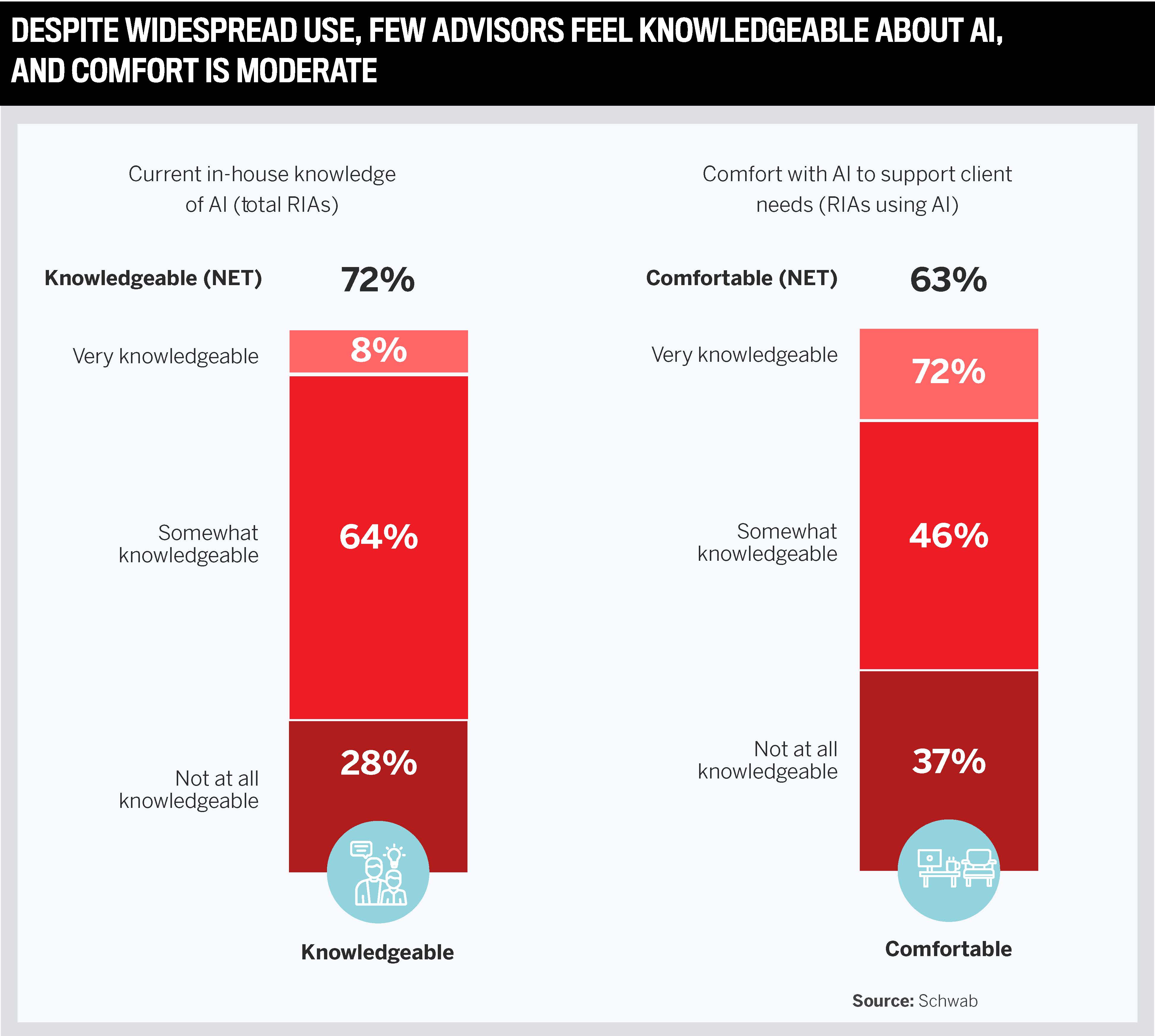
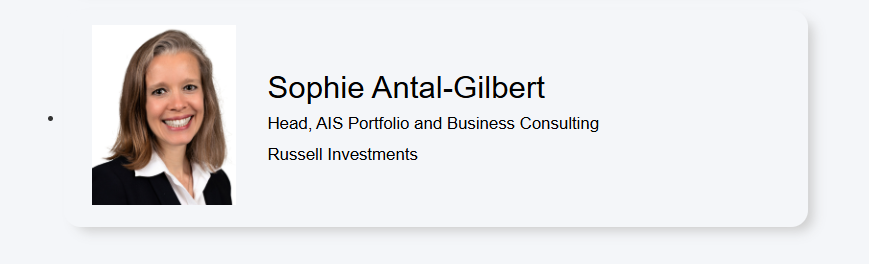
Sophie Antal-Gilbert, head of AIS portfolio and business consulting at Russell Investments, sees a similar evolution and gives it a specific name. For her, the modern leading RIA is a “family wealth advisor” that serves as a “holistic wealth architect,” managing the overall picture across generations.
“Clients choose these top-tier RIAs for their comprehensive wealth integration, the quantitative and qualitative aspects of wealth, coordination of multiple specialists as well as multigenerational family governance,” she comments. “These advisors also offer behavioral and emotional coaching to their clients, they focus on client outcomes and goals-based planning, selecting institutional-quality portfolios that are tailored and customized to the client’s unique goals, circumstances, and preferences.”
If the past year has made anything clear, it’s that delivering this holistic experience of a high standard at scale is hard. The RIA firms that have managed it are those who have been intentional about who they serve and how they align resources and pricing with complexity.
Antal-Gilbert notes that the best-performing firms “typically avoid ‘one size fits all’ models” and instead develop “scalable service strategies that are fair, rather than equal”. Many segment their client base according to both the revenue a household generates – or has the potential to generate – and the amount of effort required from the advisory team to meet that household’s needs.
At the top end of the book, leading firms deploy what Antal-Gilbert describes as a RAVE service model characterized by:
rareness
advocacy
value
experience
This includes custom wealth management, elevated and proactive service experiences, and bespoke product solutions. For the remainder of the practice, the top firms implement a CORE model, typically expressed through one-to-many engagements and more turnkey product architectures:
consistent
organized
repeatable
experience
Over the last 12 months, pricing has moved in lockstep with these service strategies. Where flat AUM fees once dominated, premier RIAs are increasingly using tiered AUM schedules with breakpoints, subscription or retainer models, and project-based fees. As firms anchor their value proposition to noninvestment dimensions of the relationship – comprehensive planning, family meetings, coordination with outside professionals – they are justifying fees based on planning complexity and relationship depth, not just asset levels.
Communication has also been reengineered. The top RIA firms are no longer limiting outreach to portfolio and market updates. Instead, they deliver annual planning roadmaps, engaging clients proactively during periods of volatility and providing multigenerational education on issues such as taxes, election cycles, long-term care, and insurance.
Losson adds, “As clients’ needs evolve naturally over time, firms with a clear ideal client focus can more easily revisit their offering and thus evolve and innovate in response.”
Turning purpose-driven planning and AI-enabled advice into a 5-star experience
AUM: $822,130,691 (on December 31, 2025)
For CEO Joshua Allen, TCP Asset Management’s competitive edge can be summed up in two words: trust and clarity. He says, “Clients aren’t just looking for someone who understands markets; they want someone who understands them.”
The Ohio-headquartered firm’s core promise is to simplify complex financial decisions, so clients feel confident and to back that up with a consistently transparent, highly personal experience.
That strategic focus involves being proactive especially in a volatile environment, particularly through TCP’s proprietary Connect Method, the foundation of how the firm works with every household. Rather than starting with products or portfolios, TCP begins by asking clients to be clear on what matters most such as their values, goals and the vision they have for their life.
“From there, we align their financial strategy around that [vision], so decisions aren’t driven by headlines or short-term noise, but by a purpose-driven plan,” explains Allen.
In a year when volatility and uncertainty have been the norm, that purpose-driven framework has been central to keeping clients grounded.
Over the past 12–18 months, TCP reached out before clients feel anxious, reframing market events in the context of their plan and continually connecting day-to-day decisions back to the bigger picture. The Connect Method provides the team with a common language and process to use at scale: going beyond balance sheets, regular check-ins that revisit life priorities, and a clear decision-making framework that both advisor and client can lean on when headlines turn noisy.
Allen emphasizes that tech and AI are used to enhance the client relationship. The goal is to reduce time spent on administrative work and increase the time spent guiding decisions, reinforcing the plan, and helping clients stay focused on what matters most.
TCP has deliberately assembled a specialized tech suite:
Zocks, an AI-powered meeting assistant, handles notetaking, meeting prep and follow-up tasks, plus workflows and data integrity going into the CRM.
Pave Pro, a portfolio management and investment technology platform, helps the firm deliver customized, scalable allocations that closely align with each client’s goals and risk profile, while also supporting efficient reporting and optimization.
Orion Advisor Tech serves as TCP’s central hub, with Redtail as the CRM and Orion Portfolio Accounting for billing, reporting, and trading.
The firm is also building out Denali AI as a data lake and enterprise AI layer, allowing cross-system data to connect and ultimately move timely insights across the client base.
Internally, the biggest lesson TCP has drawn from the last year is just how decisive culture is for performance.
“Our team has worked with various industry leaders and coaches to understand that mindset, positivity, and accountability drive performance,” says Allen. “We have made it our own in a way that fits TCP. For us, that means showing up prepared, staying solution-focused, and being a steady, positive presence for our clients no matter what the market is doing. “
The firm sees its role as going beyond financial advice: helping clients navigate uncertainty with confidence. That type of emotional ballast relies on a team that’s aligned, disciplined, and intentional about the energy it brings into every interaction.
A recent client sold a successful business and stepped into the next stage of life earlier than expected. On the surface, it was a complex technical engagement – coordinating tax planning, income structuring, estate considerations, and risk management across multiple accounts. However, the real challenge was behavioral.
“Our role was to help guide that shift – not just financially, but mentally,” Allen says. “Through our process, we helped the client redefine what success looked like in this next phase, align their wealth with their purpose, and stay disciplined during moments where emotions could have led to reactive or even irrational decisions.”
By the end of the process, the client hadn’t just received a sophisticated financial plan; they had a clearer vision of their next phase of life and the confidence to move on in their own terms.
Leading with heart in an age of scale and AI
AUM: $3,328,625,395 (on December 31, 2025)
Denis Walsh is clear on what sets Money Concepts apart: it’s neither technology nor products.
“Our motto is ‘Lead with Heart,’” says the president and CEO of the Florida-based firm. “To us, that means showing love and respect to our advisors, our home office staff, and clients. We believe in sharing ideas, successes, and failures among our advisors.”
That culture is the engine behind some of the highest advisor retention levels in the industry and a community of like‑minded professionals who choose to stay.
Money Concepts has navigated the past 18 months, a period defined by volatility, consolidation and constant noise, by making the complex simple. That translates into putting the client’s best interest first, never losing sight of core goals and maintaining enough structure to serve fundamental needs while staying flexible to adapt quickly.
The firm has also doubled down on being advisor centric. Despite having a long track record of being early on tech, Money Concepts is always deliberate about enhancing the field first, then bringing the benefits back to the office.
Walsh says, “When other firms use tech to enhance their internal operations, then the field, we have always sought to enhance the field first and adapt its use to the firm.”
It’s following the same path with AI by implementing it in strategic and measured steps, with one non-negotiable principle: the human relationship comes first. Whether it’s between the firm and the advisor, or the advisor and the client, person-to-person communication is the firm’s core asset.
As AI becomes more capable, Walsh is convinced clients will value that human connection even more, and Money Concepts is committed to balancing the power of AI to free capacity and sharpen insight, not to replace the advisor.
The firm is equally candid about a hard truth many in the industry overlook: that no financial professional starts as the finished article. Yet, many training programs have drifted into product complexity and away from the fundamentals of relationship building.
To combat this, Money Concepts has built a dedicated business and professional development framework that meets advisors where they are and gives them a path forward. The emphasis is on a “mindset for growth” based on just-in-time training that helps professionals maximize their focus on their own goals and objectives. Segmented training tracks ensure there’s a relevant next step. The payoff has been tangible in both production and retention.
“Regardless of where they are in experience and expertise, there is something for them to plug into to help move forward with clarity,” Walsh adds.
An experienced professional had a complex estate settlement need. Although the advisor had a good solid career and tax experience, this particular case exceeded her experience and expertise.
Money Concepts Advanced Planning Unit, a group of top professionals who each have a unique set of experiences, was assigned to assist and offer support. The group meets regularly around advanced strategies and serves as a subject matter resource for the wider field.
In the course of these meetings, a member of the Advanced Planning Unit was brought in due to his specialty in real estate. As a result of the joint work efforts, the original advisor was able to effectively deliver a comprehensive solution to the client and secure $43 million of new assets.
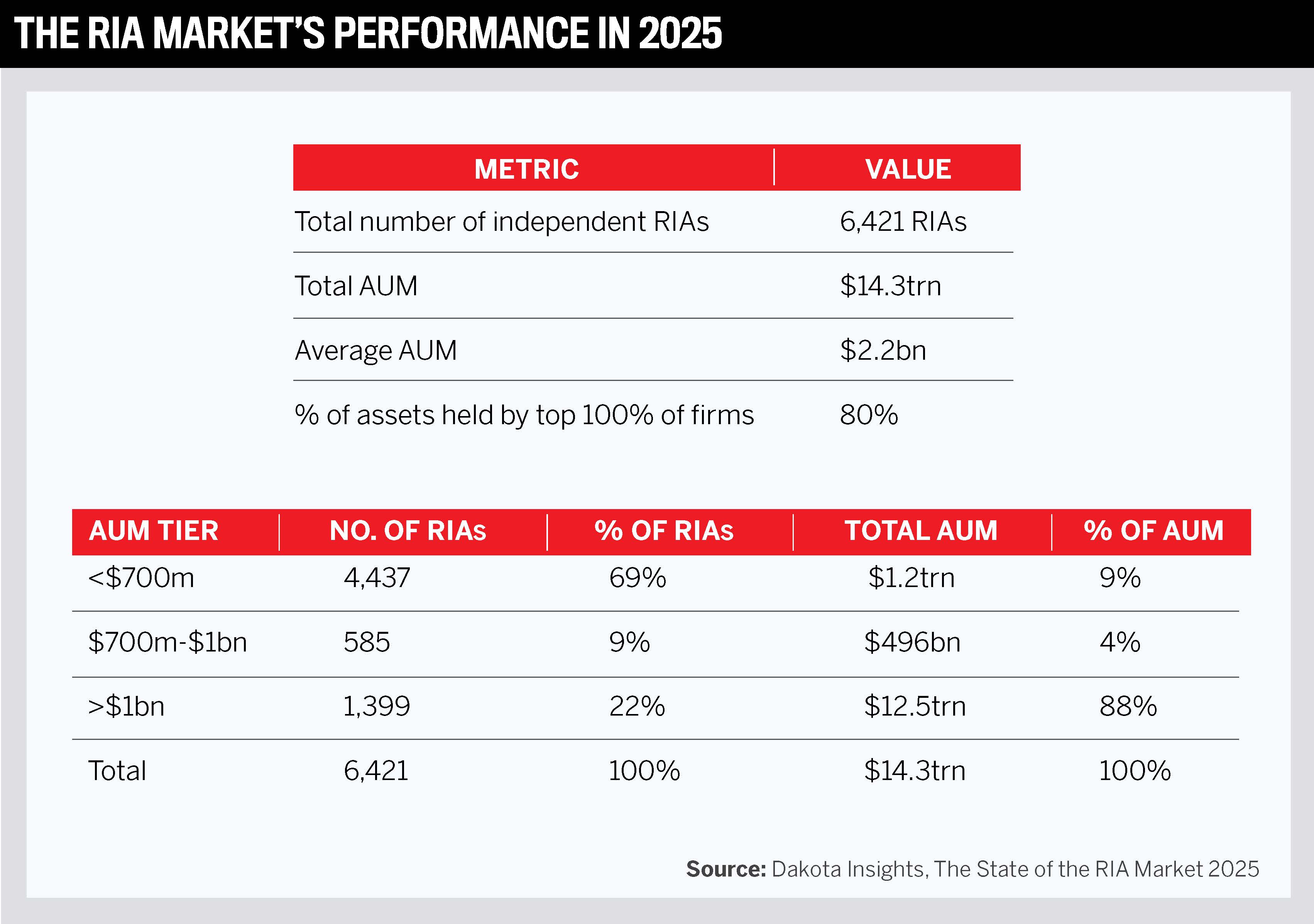
The leading RIA firms are not only delivering now for clients but are fixed on what is propelling them forward.
The industry’s top performers are adept at:
✔️refining their value proposition
🤝devising new client acquisition strategies
👥investing deliberately in talent
💻continually evaluating how technology can enhance advisor effectiveness
Losson says, “Referrals continue to be the top driver of organic growth for firms of all sizes, yet most firms are leaving that channel underbuilt and often underinvest in direct new client acquisition infrastructure.”
There is also a clear case for efficiency to be a fundamental lens for all operations.
“The value proposition should be repeatable and embedded in every aspect of their business: client segmentation, service models, planning process, client interactions, product inventory, hiring choices, and team management practices,” Antal-Gilbert adds.



InvestmentNews selected the 5-Star RIA Firms (individuals-focused client base) using data self-reported by registered investment advisers to the US Securities and Exchange Commission on Form ADV.
To be eligible for consideration, firms were required to meet all of the following criteria:
The firm’s most recent Form ADV filing date was on or after December 1, 2024.
The firm reported total regulatory assets under management (AUM) of at least $100 million.
The firm reported discretionary or non-discretionary managed assets for US clients.
More than 70 percent of the firm’s total AUM was attributed to the “Individuals” client type, as reported on Form ADV.
The Top List ranking is based solely on AUM attributed to the “Individuals” client type, as disclosed in the firm’s Form ADV filing. In cases where a firm submitted more than one annual Form ADV update during the evaluation period, the most recent filing was used for ranking purposes.
This recognition is not pay-to-play. Firms do not pay a fee to be considered or selected for inclusion on the list. Eligibility and rankings are determined exclusively through an objective analysis of publicly available regulatory data.
The 2026 5-Star RIA Firms list reflects information reported in Form ADV filings as of December 31, 2024. The award was announced on April 23, 2026 and is based on data covering the reporting period ending December 31, 2024.