
Jump to Winners | Jump to Methodology
InvestmentNews names its 2026 5-Star Technology winners, where AI governance and data unity beat feature lists
A platform can list 50 integrations and still fail the tests that matter: does it make an advisor better at the job or help wealth management firms deliver improved service?
InvestmentNews’ third annual 5-Star Technology awards, announced in 2026, set out to answer that question for the best new technology and software for investment management professionals, and this year’s field delivered a clear verdict.
From Vestmark’s proactive AI monitoring platform, Pulse, to Alaris Acquisitions’ AI-driven M&A matchmaking tool, Lens, to Orion Advisor Technology’s governed intelligence layer, Denali AI, this year’s winning wealth management technology and financial advisor software didn’t come from the tools with the longest feature list, the most integrations, or the most AI bolted on for its own sake. The point was whether a platform made investment advisors and wealth managers better equipped to do the one thing their clients are actually paying for: the best possible service, delivered with judgment, speed, and confidence.
Of this year’s 42 ranked winners, 21 qualified under the New Technology category, reserved for solutions launched within the past 24 months, according to IN’s own award data. Top-ranked wealth management technology providers like april, Dispatch, and Wealth.com proved they made advisors sharper and more capable in front of clients, not just busier behind the scenes, a distinction borne out across InvestmentNews’ own reporting on wealth management AI budgets and returns.
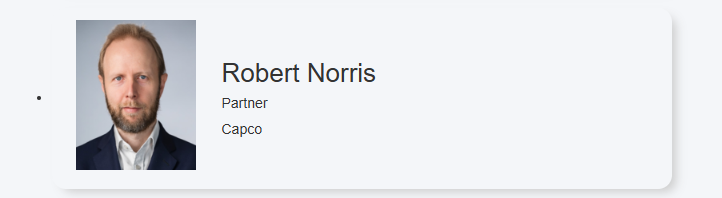
Robert Norris, partner at Capco in Fort Collins, CO, captured the shift bluntly: a leading platform “will not be defined by whether it has customer relationship management (CRM), planning, portfolio management, communications, or AI,” but by whether a firm can make those tools work from the same trusted data toward a clear outcome.
Share of advisory firms reporting each level of AI usage, 2026
That distinction between aggregation and intelligence runs through this year’s best new technology and software winners. Matthew Berkowitz, MBA, CAIA, managing principal at Capco in New York, described the industry as “closer to aggregation than intelligence,” noting that many firms can now collect client information in one place but few can make it useful in the moment.
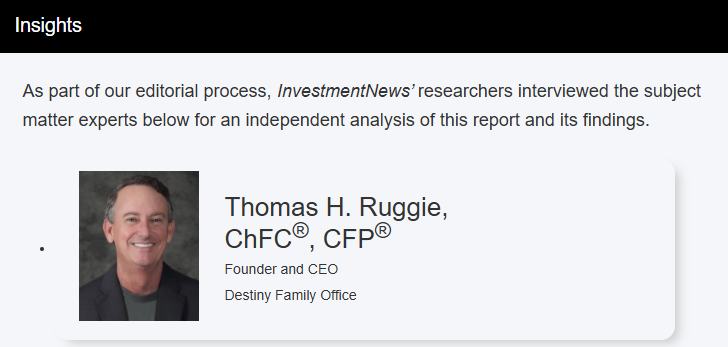
Thomas H. Ruggie, ChFC, CFP, founder and CEO of Destiny Wealth Partners in Florida, echoed the same concern from the advisor’s side of the table: “Too many systems are bolted together and held in place with hope, and they come apart the first time one piece changes. A long menu of features and a page full of integration logos is easy to buy and easy to demo, but it rarely changes the quality of the advice a client actually receives.”
This message is echoed by Norris, who says, “The feature race is becoming less useful. The real test is whether a firm can move faster while keeping trust, security, and control intact.”
Allen Darby, founder of Alaris Acquisitions, a wealth management mergers-and-acquisitions (M&A) advisory firm, has more than doubled the business in the past 12 months, growing the team from nine people to 18, as wealth management M&A dealmaking races to a record pace industrywide in 2026. The firm’s 5-Star Technology recognition centers on its AI-driven approach to buyer-seller matchmaking, a model Darby built specifically to solve what he sees as a structural flaw in how most M&A advisory firms bring wealth management sellers to market.
That flaw, Darby argues, is the auction. Competing firms invite dozens of buyers into a process and use price as the primary filter, narrowing the field only after offers are in. For most industries, that works fine. But in wealth management, the seller doesn’t disappear once the deal closes. They join the buyer’s team, and their staff and clients go with them. Screening on price before culture and compatibility, in Darby’s view, gets the sequence backwards.
Alaris inverts it. The firm onboards buyers directly into its platform, spending 30 to 50 hours collecting detailed data from each one, covering deal structure, integration requirements, and the qualitative traits that make one buyer a fit for one seller and not another. More than 80 buyers have gone through this process. Rather than running a broad auction, Alaris uses that data to curate a shortlist, typically five buyers, who are matched to a seller on compatibility before economics ever enter the conversation.
“Unlike my competitors who literally prevent them from talking, the sell-side advisor is a gatekeeper between the parties. We don’t do that,” explains Darby. “I tell my buyers, ‘Look, once we invite you to the process, you don’t need my permission to call them, to go see them, to interact with them as much as you want to develop your own conviction.’ I want them to have conviction, because that’s what’s going to make them aggressive when it comes to putting their offer in.”
Artificial intelligence is what makes that curation possible at scale. Some buyer criteria are straightforward: for instance, does a buyer work with a given custodian? Others are harder to systematize, such as whether a buyer’s investment philosophy fits a seller’s, or whether a buyer who previously ruled out a market has since developed a succession need that changes their position. Darby says reasoning through that kind of shifting, contextual fit across dozens of buyers by hand was never realistic. AI made it possible to surface matches a human team couldn’t have found on its own.
“Most M&A advisory firms have deal people who are siloed, like a headhunter trying to get their own deals. We are all one firm. We don’t have deals assigned to people in my organization. It’s the entire organization on every deal. We’ve got a team of seniors and a team of really young people, and the young people really energize us – it’s a bunch of self-starters,” says Darby.
The firm’s next development extends the same logic to the negotiation itself. Alaris is building what it calls a conviction score: an AI-driven feedback loop that captures how both the buyer’s and seller’s teams feel after each meeting and aggregates that into a running measure of how the deal is trending for each side. The goal is to catch miscommunications early, rather than let a wrong impression fester until a deal falls apart. Darby points to a case in which a seller was on the verge of eliminating a buyer over a misunderstanding about centralized planning resources; once flagged, the buyer clarified its position and went on to win the deal.
Looking ahead, Darby expects the firm’s AI investment to keep compounding. He describes Alaris as already leading its niche in AI adoption, with further capability rolling out over the next six months that he expects will shift market share away from competitors still running traditional auction processes, a trend consistent with how AI is reshaping M&A evaluation and execution across wealth management more broadly.
Lens is Alaris' AI-driven matchmaking platform, built on a differentiated belief: in RIA M&A, cultural fit isn't a soft factor assessed after the deal terms — it's a driver of valuation itself.
Over the past 12 months, how would you sum up Alaris’s growth?
“Explosive would be a word I would use. We more than doubled in the last 12 months, not only in revenue but also our team. We were right at nine people a year ago. That’s a different company, just given the growth and the new talent we’ve brought on. I thought we had one of, if not the best, M&A advisory teams in the country. I know we do now.”
What makes your process different from the standard M&A auction model?
“What we’ve done at Alaris that no one else has done is we’ve inverted the process. We actually onboard buyers into our platform and we capture all of their data. Today, we have over 80 buyers that have engaged Alaris in this way. When we bring our client through, I can match make on compatibility. I’m not casting a net into the marketplace and getting buyers to compete on price. I take the entire buyer universe and measure it against these compatibility points, and it produces the list of buyers who should be invited. It’s not blind. I reason to a fit.”
Why doesn’t inviting more buyers to the table simply drive up the price?
“People perceive that more bidders equals higher price. Sophisticated buyers in an auction process know it’s a multi-round process, so they don’t put their best offer forward early because they know they have to negotiate in later rounds. In doing so, they risk being eliminated before they’ve ever demonstrated real interest. Conviction is what drives an aggressive offer, not competition. A buyer who has spent real time with a seller and believes in the fit will go further than one who has never met the firm.”
“What we’ve done at Alaris that no one else has done is we’ve inverted the process. We actually onboard buyers into our platform and we capture all of their data. Today, we have over 80 buyers that have engaged Alaris in this way. When we bring our client through, I can match make on compatibility. I’m not casting a net into the marketplace and getting buyers to compete on price. I take the entire buyer universe and measure it against these compatibility points, and it produces the list of buyers who should be invited. It’s not blind. I reason to a fit.”
Why doesn’t inviting more buyers to the table simply drive up the price?
“People perceive that more bidders equals higher price. Sophisticated buyers in an auction process know it’s a multi-round process, so they don’t put their best offer forward early because they know they have to negotiate in later rounds. In doing so, they risk being eliminated before they’ve ever demonstrated real interest. Conviction is what drives an aggressive offer, not competition. A buyer who has spent real time with a seller and believes in the fit will go further than one who has never met the firm.”
How has AI changed what you can do for clients?
“I can produce such a granular level rationale of why you’re a fit for this seller and vice versa – it’ll blow your mind. I could never do this two years ago. We had the data two years ago, but AI can take hundreds of potential buyers and shrink the field down to the handful who are genuinely a fit, including the context that changes overnight, like a buyer who ruled out a market six months ago but now has a partner retiring there.”
What’s next for Alaris?
“We’re trying to solve that by creating an AI-driven feedback loop that allows the buyer and the seller to measure in real time the conviction. We’re calling it the conviction score. Both sides will be able to see the divergence in conviction between the two parties as it’s happening, not after the fact. We had a case where our client was about to eliminate a buyer over a miscommunication about centralized planning resources. Once we flagged it, the buyer corrected it and ended up winning the deal. That’s the kind of thing we want to catch early, every time.”
Reed Colley, president of Orion Advisor Technology, leads a firm whose 5-Star Technology win centers on Denali AI, an intelligence layer built directly into advisors’ existing workflows rather than sold as a standalone tool. Orion became one of the first wealthtech firms, and the first portfolio accounting provider, to earn ISO’s official AI management systems standard certification, ISO/IEC 42001, the international standard for AI management systems.
Colley describes Denali AI’s design philosophy as deliberately different from the point solutions that dominate much of the wealthtech market. Rather than sitting alongside an advisor’s existing systems, it pulls together data already flowing through Orion’s platform, spanning portfolio management, planning, CRM, risk, trading, and billing, into a single adaptive layer. An advisor can ask a plain-English question, such as which clients are underweight in fixed income or which households have required minimum distributions coming due and get a data-backed answer without switching between systems.
“The AI landscape changes every single day, so we are constantly evaluating what is next, integrating what matters, and shipping innovation advisors can trust. We do not ask advisors to learn a whole new system. We put the intelligence into the tools they already use,” says Colley.
That connectivity was a deliberate choice, according to him, in a market where firms often patch together disconnected tools that each see only part of an advisor’s business. Denali AI’s advantage, Colley says, comes from seeing more of the full picture than a bolt-on tool touching only one corner of the tech stack.
The ISO 42001 certification matters to Colley beyond the credential itself. Advisors won’t adopt AI, he argues, unless they trust how it’s governed, and the certification backs up the oversight, accountability, and risk management built into Denali AI from the outset. That governance extends to firm-level controls: single-tenant isolation, no model training on firm data, and multi-model orchestration across providers including Anthropic, OpenAI, and AWS. Firms also retain a Data Portability Guarantee and the ability to integrate with other data lakes, a structure meant to avoid locking clients into a single vendor’s ecosystem.
Personalization is central to how the platform is built, Colley says, because Denali AI draws on a firm’s own systems and data, its insights reflect that firm’s specific business rather than a generic template. Orion’s Skills Builder pushes this further, letting firms build and deploy their own purpose-built AI agents for tasks like meeting preparation or client outreach, while retaining control over permissions, data access, and governance throughout.
Colley identifies the biggest barrier to AI adoption in wealth management as a combination of fragmented data, clunky workflows, and governance concerns, all of which Denali AI was built to address directly. Looking ahead, he expects Orion to keep deepening that workflow integration rather than pursuing AI as a separate destination, with the goal of giving advisors more time for the parts of the job that depend on human judgment.
Denali AI is Orion's enterprise intelligence layer, designed to avoid the two traps of wealth management AI: closed ecosystems that lock firms in and open-4 overlays with too little governance to trust.
What is the standout feature of your tech?
“The standout feature of Orion Denali AI is that it is not a bolt-on tool or a point solution. It is an open, governed intelligence platform that sits on top of Orion’s connected data and is built right into the advisor’s day-to-day workflow. Because it lives inside the platform advisors already use, it sees more of the picture than standalone tools that only touch one corner of the tech stack.”
How big an achievement has it been to earn the ISO/IEC 42001 certification?
“It is a big deal, because it backs up the trust and governance we built into Denali AI from day one. We were one of the first wealthtech firms to earn it and the first portfolio accounting provider to get there. Advisors are not going to adopt AI unless they are confident it is built and managed the right way. This certification proves Denali AI is held to real standards for oversight, accountability, and risk management.”
What issues do you feel your tech solves, and who is it built for?
“Denali AI is built to knock down the biggest barriers to AI adoption in wealth management: fragmented data, clunky workflows, governance worries, and technology lock-in. Unlike point solutions, it lives inside Orion’s ecosystem and connects trusted, permissioned data across portfolio management, trading, billing, CRM, planning, and operations. It is especially valuable for firms that want to unify data across systems, lift productivity, scale client engagement, and adopt AI in a way that fits the governance and oversight a regulated industry requires.”
How much can clients personalize the platform to suit themselves individually?
“Personalization is at the core of how Denali AI is built. It connects the systems, data, and workflows a firm already runs and creates an adaptive layer grounded in that firm’s own business. Our Skills Builder takes it further. Firms can create, test, and deploy their own purpose-built agents for things like meeting prep or client outreach, and they stay in control of permissions, data access, and governance throughout.”
What future plans do you have for the platform?
“We will keep expanding Denali AI with deeper workflow integration, smarter automation, and more personalized advisor experiences. The focus stays the same: AI that helps advisors work more efficiently, serve clients better, and adopt what is next with trust and confidence.”
Beyond this year’s winners, a handful of industry voices offered a consistent read on where wealth tech is heading, and where it still falls short.
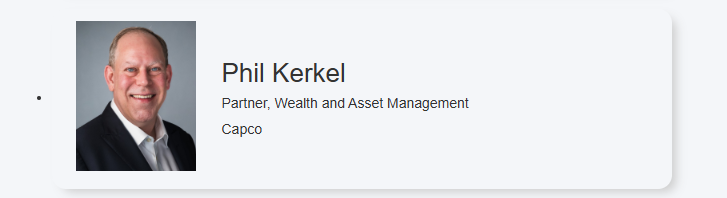
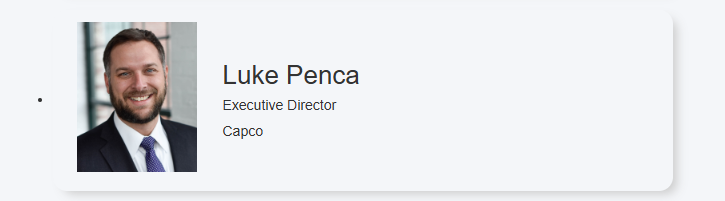
Capco’s wealth and asset management team was frank about the limits of feature comparisons. Phil Kerkel, partner, wealth and asset management at Capco in New York, argued that self-service access is now the baseline expectation for clients, but that automation should remove friction around the advisor relationship rather than replace it: “The point is not to automate the relationship away. It is to make the advisor better prepared, faster to respond, and less buried in manual work.” Luke Penca, executive director at Capco in Westerville, OH, drew a similar line around agentic AI specifically, calling it useful “when it has clean data, clear permissions, and a specific job,” but warning that firms treating an AI agent purchase as a new operating model are overestimating what the technology alone can deliver.
Ruggie framed the same tension through three decades of running an advisory practice. His test for any new technology is simple: does a human still own the decision and stand behind it? “In a fiduciary business, the advice is the one thing I will not turn over to a model,” he comments, adding that the real, measurable value of AI this year has been in giving advisors back the hours they spend on meeting prep, notes, and compliance work rather than in replacing judgment calls with clients.
On vendor evaluation, both sides converged again. Berkowitz described a modern vendor review as “a data risk, AI risk, cyber risk, and third-party governance issue,” not a one-time technology checkpoint, a framing that lines up with the Financial Industry Regulatory Authority’s regulatory guidance on artificial intelligence for member firms evaluating AI-driven tools and vendors. Ruggie put it more bluntly: he pays less attention to a vendor’s polished security page than to how plainly they answer pointed questions about where client data goes and whether it trains their models. “When someone gets vague or defensive, I consider that an answer too,” he says.
Vestmark Pulse is built to run continuously in the background, not wait to be asked – turning portfolio, market, and compliance data into proactive suggestions while the advisor keeps the final say.
Looking to the next 12 to 24 months, the winners and SMEs interviewed for this report point toward the same unresolved problem: most firms have made progress on aggregating client data but have not yet turned that data into usable intelligence. Norris identified the structural barriers holding firms back as “legacy architecture, inconsistent data quality, unclear data ownership, and governance models built for reporting instead of real-time advisor guidance,” a gap that this year’s top-ranked winners, particularly the data orchestration and tax-intelligence platforms, are explicitly built to close.
Top obstacles advisory firms cite to expanding AI use, 2026
Governance is likely to become a harder requirement rather than a nice-to-have differentiator. The US Securities and Exchange Commission’s own withdrawal of its predictive data analytics rule proposal in 2025 means there is no formal federal AI rule for investment advisers, but that hasn’t relaxed scrutiny: examiners have continued to request AI inventories, vendor diligence files, and evidence of human review during routine exams. Orion’s ISO/IEC 42001 certification signals a direction other vendors will likely be pushed to follow as advisors and compliance teams grow more comfortable asking pointed questions about data handling, model training, and explainability before adopting new tools. At the same time, firms like Alaris show that AI’s value isn’t confined to advisor-facing platforms: back-office and advisory processes, such as M&A matchmaking, stand to see similar gains from AI-driven pattern recognition once enough proprietary data has been collected to make it reliable.
The best new technology and software for investment management professionals of 2026 share a common thread that goes beyond any single feature: each demonstrates that trustworthy, well-governed data infrastructure now matters more to advisors and their clients than the length of a platform’s capability list.
As Ruggie puts it, “the biggest mistake is treating a rollout as an event instead of a habit you build,” a caution that applies as much to vendors chasing this year’s AI trend as to the firms adopting their tools. The financial advisor software and investment management platforms recognized in this report are the ones treating trust as infrastructure, not an afterthought. Every vendor on IN’s list has solved one problem well instead of solving a group of problems adequately.
What is the best new technology and software for investment management professionals in 2026?
InvestmentNews’ third annual 5-Star Technology awards recognize the top-performing wealth management technology and software providers, evaluated on innovation, industry value, and submission quality. This year’s top-ranked winners span tax, estate planning, data orchestration, and alternatives management platforms.
What is the New Technology category?
A subcategory within the 5-Star Technology awards recognizing standout solutions launched within the past 24 months, specifically designed for financial advisors and the broader financial management sector.
Why are AI governance certifications like ISO/IEC 42001 becoming more important in wealth tech?
As advisors adopt more AI-driven tools, firms and compliance teams are increasingly requiring proof of responsible AI management, covering oversight, accountability, and risk controls, before trusting a platform with client data and advice-adjacent decisions.
Is agentic AI actually delivering value for financial advisors yet?
According to industry experts interviewed for this report, agentic AI delivers real value in narrow, well-defined tasks with clean data and clear permissions, but is often overhyped when treated as a standalone purchase rather than an integration into existing workflows.
What trends will shape wealth management technology over the next two years?
Experts point to deeper data unification, moving from data aggregation toward genuine client intelligence, stronger AI governance and vendor security scrutiny, and continued growth in AI-driven back-office applications beyond client-facing tools.
For the third annual InvestmentNews 5-Star Technology awards, recognizing the best new technology and software for investment management professionals, technology service providers from across the United States were invited to submit nominations showcasing how their solutions address specific challenges faced by wealth management professionals, and how each product or service differentiates itself from others in the marketplace.
The InvestmentNews team conducted a rigorous and impartial evaluation of each entry, assessing the quality and depth of information provided, the level of genuine innovation, and the overall value the solution brings to the industry, benchmarking submissions against one another to determine the top performers. The team additionally recognized standout innovations in the New Technology category, open to technologies or software solutions launched within the past 24 months and specifically designed for financial advisors and the broader financial management sector.