
Office address: 20th Street and Constitution Avenue NW, Washington, DC 20551
Website: federalreserve.gov
Year established: 1913
Company type: central bank (federal agency)
Employees: 24,000+
Expertise: monetary policy, financial system stability, bank supervision and regulation, payment systems and settlement, consumer protection, community development, economic research and analysis, financial institution examination
Parent company: US Government
Key people: Jerome Powell (chair); Philip Jefferson (vice chair); Michelle Bowman (vice chair for supervision); Michael Barr, Lisa Cook, Stephen Miran, and Christopher Waller (governors)
Financing status: N/A
The Federal Reserve operates as the US central bank from Washington, DC. The organization conducts monetary policy, supervises financial institutions, and runs payment systems. Also called “The Fed”, it has 24,000 staff, 12 regional banks, and 24 branches nationwide as of 2025.
In 1913, Congress founded the Federal Reserve to address repeated financial crises. The new system featured 12 regional banks overseen by a central Board in Washington.
Banks could borrow cash during tight times by pledging their loans as collateral. The Fed also transformed payment systems, making check clearing faster and check movement smoother nationwide.
October 1929 brought a stock market crash that led to the Great Depression. Congress blamed the Fed for failing to prevent bank collapses during the financial panic.
Power shifted from regional banks to the central Board of Governors in DC. The Treasury competed with the Fed for control over monetary policy for the next two decades.
World War II forced the Federal Reserve to keep government bond rates locked below 2.5 percent. After 1945, inflation exploded as wage and price controls vanished overnight.
The Treasury wanted low rates to service its debt, but the Federal Reserve wanted higher rates to fight inflation. The Accord of 1951 finally freed the Fed from Treasury control and gave it true independence from that point on.
Stagflation (high inflation and high unemployment) hit hard in the 1970s when inflation and unemployment both climbed together. Paul Volcker took over and raised interest rates sky-high to crush inflation completely. His brutal approach triggered a nasty recession but killed inflation for good.
The 2008 financial crisis and 2020 COVID pandemic also forced the Federal Reserve to slash rates to zero and buy trillions in securities to stabilize markets.
Now the Fed faces a new test: artificial intelligence spreading through banking systems fast. Governor Michael Barr warned in 2025 that banks are moving too quickly into AI without guardrails in place. AI systems trading with each other could spike market volatility or trigger systemic risk across markets.
The Federal Reserve also understands AI will transform finance eventually but waits for solid evidence before making big calls. Unlike Fed Chair Alan Greenspan in the 1990s, today's leaders won't bet heavily on technology promises.
The Federal Reserve provides essential financial tools that support banking and economic stability nationwide:
The Federal Reserve funds community projects, teaches banking basics, shares research data, and offers multilingual access. It also publishes research that economists and policymakers rely on daily. Through 12 regional banks, the organization serves communities nationwide with financial support.
The Federal Reserve maintains strict ethical standards to ensure fair decision-making and public trust. It also says that employees must follow ethics rules to prevent actual and perceived conflicts of interest.
The organization provides extensive benefits to its workforce:
For students who seek hands-on experience, the Federal Reserve internship targets undergraduates and graduates in economics, finance, software development, and law. Interns create personal learning goals, work with assigned mentors, and attend weekly networking events.
Jerome Powell leads the Federal Reserve Board as chair and heads the Federal Open Market Committee. Before joining the Fed, Powell worked at the Bipartisan Policy Center focusing on federal and state budget matters. Powell earned a politics degree from Princeton University and a law degree from Georgetown University.
The Board of Governors includes six additional members who guide the organization:
Board members are nominated by the president and confirmed by the senate to 14-year terms. No governor can serve two full consecutive terms, though those finishing unexpired terms may be reappointed.
The Federal Reserve has been discussed in the context of how it adjusts policy based on labor market weakness and inflation. At the 2025 Future Proof Festival, an annual investment and wealth management industry conference, former Federal Reserve Bank of Dallas President Rob Kaplan spoke on a panel.
He noted that weak job markets force the Fed to act on rate cuts despite inflation still running above target. He also emphasized that the Federal Reserve's role is to respond to current economic conditions rather than market expectations for future years.
The organization also uses balance sheet management and interest rate policy to support employment and control inflation. For example, in October 2025, Powell hinted at pausing balance sheet reductions as labor market weakness grew. Interest payments on bank reserves help the Fed maintain control over short-term interest rates effectively.

Record highs for B-Ds in profits, revenues and assets give the industry much to be cheery about.

The bank has launched a number of new credit cards this year, including a low-interest-rate card, and plans a rewards-card line next year.

Allianz's chief economic adviser suggests the central bank 'ease your foot off the accelerator starting now.'
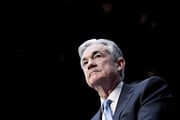
Wall Street had been anxiously awaiting Biden’s picks. The Fed’s monetary policy has encouraged investors to take on more risk and pushed stock, housing and other asset prices higher.
The second four-year term for Jerome Powell rewards him for his work rescuing the economy from the pandemic and tasks him with protecting that recovery from surging prices.

His departure frees up another vacancy for President Joe Biden to fill as he considers new leaders for the central bank.

Private capital would prove more critical to reaching the Paris Agreement aim of net-zero carbon emissions by 2050.

Treasury inflation-protected securities have become the hottest ticket in 2021 as messages about 'transitory' inflation clash with reality.

'I can't say it enough. Inflation is the key issue,' said Doll, who's chief investment officer at Crossmark Global Investments.

About 3 million people retired earlier than they likely had planned as a result of the Covid environment, according to a report by a senior economist at the Federal Reserve Bank of St. Louis.

Treasury Secretary Janet Yellen led the panel of top federal regulators that issued the report on climate change, including tentative recommendations for how agencies should begin preparing to contain the risk.

Record allocations by households, foreign investors, mutual and pension funds are set to climb even higher in 2022, Goldman strategists led by David Kostin wrote in a note Friday.

Investors could benefit from investing in a lower-duration, diversified fixed-income solution that invests in high income-producing sectors, such as high-quality high yield or emerging market debt.

A Fed survey shows U.S. household expectations for inflation one year ahead rose to 5.3% in September from 5.2% in August, while median expected inflation three years ahead rose to 4.2% from 4%.

BondBloxx, founded by a group of former BlackRock executives, will offer fixed-income exchange-traded funds that target specific industry sectors.
