
AI notetakers have become a fixture on meetings hosted by financial advisors, but compliance experts warn that these tools quietly create business records and client communications that are ripe for SEC scrutiny.
“The SEC has already come out and said anything you create with AI needs to be reviewed by a human being,” said Leila Shaver, founder of My RIA Lawyer. “Even your notetakers, you’ve got to review those. Go into the settings and turn off the email notifications that say, here's the summary, because you have to review the summary.”
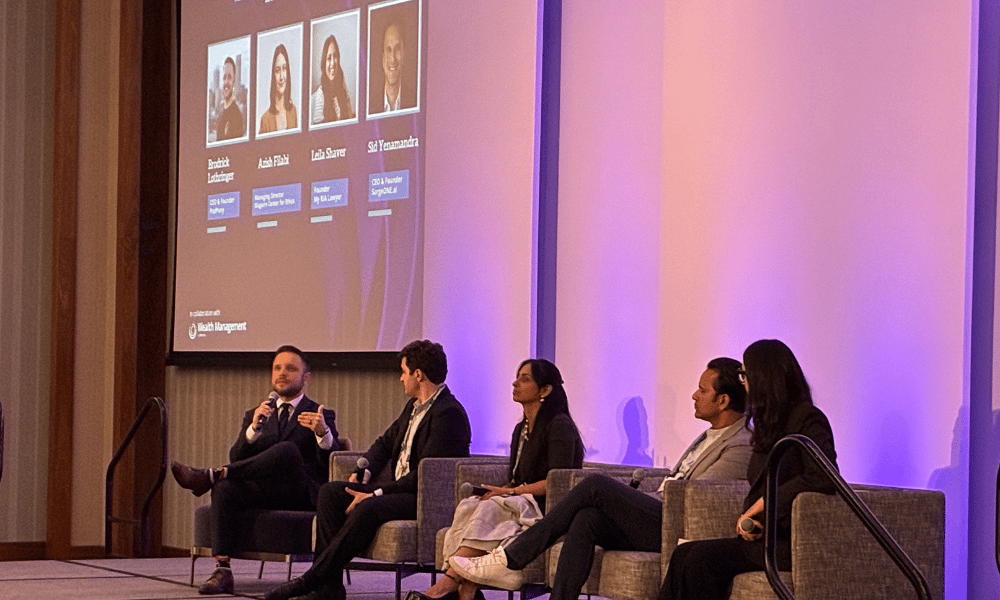
Shaver’s Georgia-based law firm provides outsourced compliance and legal consulting to RIAs. She spoke at the RIA Edge Nashville conference on a panel with Brodrick Lothringer, CEO of PodPony; Azish Filabi of the Maguire Center for Ethics at The American College of Financial Services; Sid Yenamandra, CEO of RIA cybersecurity platform SurgeONE.ai; and Mark Michael Astarita, head of strategy and operations at Greenboard, an AI-powered compliance software for advisors.
“As soon as it goes into your email, it becomes a book of record of your business. It's been sent via email, so now it's in your email archive system. You've made it available to anyone that's on the call, so if they're a client, that's an official communication,” said Shaver. “And if it has messed up the transcription of what you discussed, that's what you just sent officially via third party.”
Fintech providers have inundated the industry with notetaker products marketed for financial advisors. Leaders in the space include Jump, Zocks, and Hazel by Altruist.
“Given the sensitivity of the work that financial advisors do, I think that's really critical when you're sitting across from a client and you do have these notetakers, how has that been communicated?” said Filabi. “How do your clients feel about it? Have you asked them?”
In March 2024, the SEC announced a $400,000 fine to two advisors found to have made false and misleading statements on their “use of AI and machine learning that incorporated client data in its investment process.” Entities tied to Rimar Capital were also fined $310,000 by the SEC over the firm’s false claims of using AI “to perform automated trading for client accounts and numerous other material misrepresentations.”
A study from BridgeWise shows that AI usage in finance has surpassed notetakers to 78% surveyed investors using AI to support their investment-related decisions. However, another study from DeepVest found that general-purpose AI tools failed on 85% of investment tasks by producing incorrect calculations or hallucinating data. Mainstream AI giants such as Anthropic and Perplexity have recently rolled out tools for wealth management and investment analysis.
“Depending on the size of the organization, we're seeing firms go anywhere free, all the way to the enterprise plan. Once you have that, you have to police what data is being shared with these models,” said Yenamandra. “So if you're in a team plan for many of these, you could actually set up your privacy settings where the model won't remember any of the data that is shared. But if you're using the free version, it's all out there.”

New benchmarking tool ties advisor pay structures to ownership and succession as the industry faces a widening talent gap.

Arca becomes the first firm to build on Altruist's Realtime Custodial API, deepening a partnership tied to its rapid tech-led growth.

Gryphon Wealth co-founders Jason Hyrne and chairman and Jeff Wyatt say that the RIA’s long-term strategy hasn’t changed despite its fully-independent status.

Astraeus finds AI-adopting RIAs grew headcount and productivity faster, though compliance concerns around AI oversight persist.

RIAs weigh their options as Schwab tries courting Altruist users following Vanguard's blockbuster deal.
Northern Trust’s Ken Lassner shows advisors how to convert volatility into after-tax portfolio gains
Dan Biagini of American Equity says the steady decline of pensions, longer lifespans and a reset in interest rates are rewriting how advisors build retirement income

