
For almost as long as there has been advisor technology, the persistent problem has been client data living in multiple systems. In the early days when software was housed on floppy disk drives, CDs, or hard drives, almost all client information needed to be keyed separately into each and every piece of software that the advisor used, since there was no way for those different programs to "talk" to each other (and the "source of truth" for client data was often their physical client file folder!).
But in the 2000s, as software began migrating into the cloud – essentially living online instead of being in local physical file folders or on individual local computers – there was all of a sudden a new ability for those tools to connect to each other using APIs. So over the last two decades, technology providers (some more diligently than others) have built integrations with one another, allowing data to migrate between tools so that, for instance, changing a client's address in one program would be automatically reflected in all the other tools that were integrated with it.
But despite the promise of software integration, in reality it became – and in many cases remains – a major point of frustration for advisors who use technology. Because the integrations between software tools are built by the software providers themselves, the existence and quality of integration between any two tools is 100% dependent on whether the tools' providers decide to integrate with one another, what type of integrations they decide (or are able) to build, and how effectively they maintain the integration over time. Which is challenging for most independent technology providers, as the lack of any clear standards for advisor and client data means every data integration with another partner is a unique (and costly and time-consuming) one-of-a-kind build.
The end result of this is a fragmented landscape of inconsistently integrated software tools, and some headache-inducing technology decisions for advisory firm owners. For example, if an RIA uses Software A for their CRM and Software B for their financial planning platform, and is trying to decide between Software C and Software D for their portfolio management, what do they do if Software C integrates with Software A (but not Software B), and Software D integrates with Software B (but not Software A)? For the most part, advisors have needed to muddle through such decisions and pick what they think will be most beneficial in the short term, and hope that in the long term the quality of integrations will improve enough to connect everything together eventually.
For a number of years, data warehousing was touted as the solution to advisors' challenges of managing and integrating data from different systems. As the sales pitch from providers like AppCrown, Skience, and MileMarker went, advisors who "owned their data" (i.e., piped it into their own data warehousing solution) had full control over how to use that data and how it was sent out from one application to another, and because the different tools only needed to connect to the warehouse "hub" (and not individually to each and every other software tool), there were fewer connections to maintain and therefore better and more consistent connections across the whole tech stack. And while all of this was true in theory, the reality all too often ended up being that once advisory firms invested in a costly data warehousing solution and had all their data sitting in one centralized place, they then felt the pressure to then do something with that data. Which often led to advisory firms building their own expensive custom software solutions to live on top of their data, effectively building and maintaining their own version of the same custom data integrations that technology providers already were, but without the scale of a technology provider… which mean their data systems now "talked to each other" with a solution that would have been much cheaper if they just kept using existing third-party tools with their own integrations to do most of the same things.
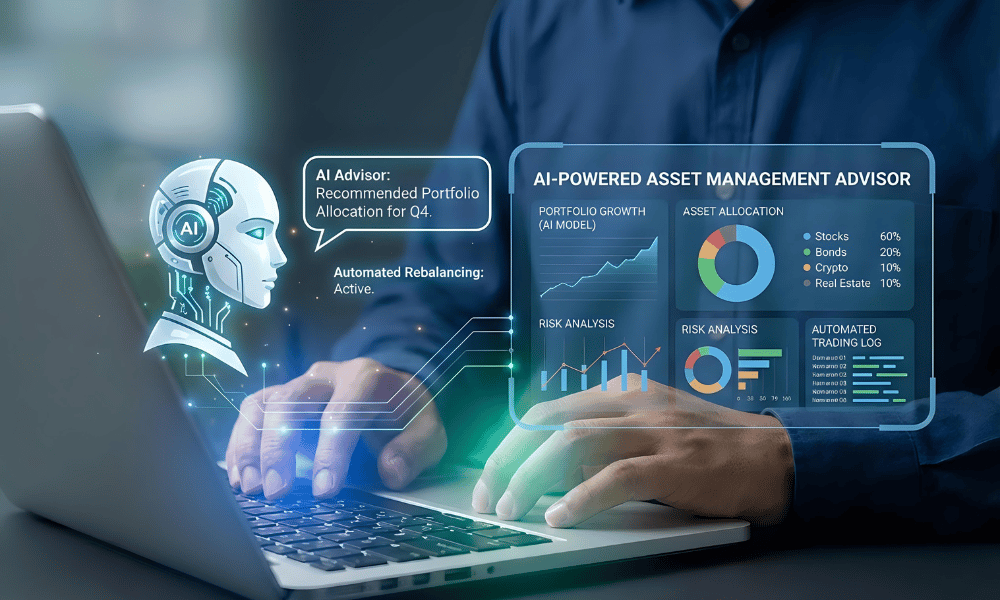
But in more recent years we've seen an increasing number of AI tools aiming to bridge the gaps left by inconsistent or nonexistent software integrations. Rather than relying on software providers themselves to clean up and standardize data across so many API connections, these AI tools can theoretically go back and forth between tools on their own to sync the data across them all. In other words, it doesn't matter if Software A has an established integration with Software C or Software D, since the AI tool can simply tie them all together and port information back and forth as if they had been integrated using existing open APIs. Furthermore, the AI tools can serve as an interface for all of the data they're harnessing from different systems, giving advisors a single place to find information pertaining to a client no matter which system that information actually lives in.
The big question, however, is that if these AI tools do become the solution for advisors' data integration woes (and it's still too early to tell exactly how reliable they are), where should these tools themselves live? Because as of now, there are various tools in advisors' tech stacks that are competing to be the "AI layer" unifying their client data across all of their systems.
For instance, the multifunction technology provider Advisor360 recently unveiled what it calls an "AI-native wealth operating system", with AI serving as a bridge between its performance reporting, onboarding, CRM, and notetaking tools and plugging into advisors' external tools as well. And Orion has released more details about its much-anticipated Denali AI tool that weaves together information from its own multiple CRM and portfolio management and financial planning systems. Meanwhile, other third party tools are seeking to be a standalone AI data layer, such as Dispatch (which syncs together and standardizes data from multiple sources without actually storing the data itself). And even some of the original data warehousing tools like Milemarker are rolling out AI tools to connect and query different systems – suggesting that maybe the need for advisors to "own their data" was overstated all along and that the real need was simply for a (AI-driven?) tool that could sync data together regardless of where it was stored.
With all these different solutions competing to be advisors' AI layer to normalize and integrate data across multiple systems, it remains to be seen which model (AI layers built on top of existing incumbents, or standalone AI-layer-that-integrates-them-all solutions) will eventually take hold. What is clear is that advisors don't need multiple AI layers at once, since the whole purpose is to have one unified solution that connects the data across all of their different systems. But with so many providers pouring money into their AI investments, in the short term at least it appears that advisors will have multiple tools in their tech stacks competing for the status of the One Data Source To Rule (or at least Manage) Them All – and so it will come down to which one actually does the best job of connecting to and moving data around the advisor's whole tech stack. In other words, in a world where AI can handle all the work of integrating advisor technology, it doesn't matter whether that AI is a part of an existing software tool or stands on its own – the only thing that matters is whether it can do a good job delivering on its promise of solving the advisor's integration problems.
This article first appeared on the Nerd’s Eye View at Kitces.com at https://kitc.es/advisortech-jan2026, and has been reprinted here with permission.
Ben Henry-Moreland
Ben Henry-Moreland is a Senior Financial Planning Nerd at Kitces.com, where he specializes in writing and speaking on financial planning topics including tax, practice management, and technology. He also co-authors the monthly Kitces #AdvisorTech column. Drawing from his experience as a financial planner and a solo advisory firm owner, Ben is passionate about fulfilling the site’s mission of making financial advicers better and more successful.
Michael Kitces
Michael Kitces is Head of Planning Strategy at Focus Partners Wealth, which provides an evidence-based approach to private wealth management for near- and current retirees, and Focus Partners Advisor Solutions, a turnkey wealth management services provider supporting thousands of independent financial advisors through the scaling phase of growth.
In addition, he is a co-founder of the XY Planning Network, AdvicePay, fpPathfinder, and New Planner Recruiting, the former Practitioner Editor of the Journal of Financial Planning, the host of the Financial Advisor Success podcast, and the publisher of the popular financial planning industry blog Nerd’s Eye View through his website Kitces.com, dedicated to advancing knowledge in financial planning. In 2010, Michael was recognized with one of the FPA’s “Heart of Financial Planning” awards for his dedication and work in advancing the profession.

Iowa's Greenwood Wealth Partners exits D.M. Kelly as UBS and Ameriprise win Merrill Lynch recruits in California and Florida

Less than 1% of pool funds went to actual trading, CFTC says

Plus, SEIA builds a governed data foundation for its in-house AI and Snappy Kraken debuts a read-only marketing coworker for advisors.

He owes $364 million but pays $100 a month

Broadridge, Wedbush and Alaris Acquisitions have also filled senior wealth management roles with hires from J.P. Morgan, Osaic and SageView.
As AI makes financial information more accessible than ever, Lana Hock explains why human judgment, trust, and empathy remain the qualities clients value most in a financial advisor
Northern Trust’s Ken Lassner shows advisors how to convert volatility into after-tax portfolio gains
