Investors often
turn toward luxury collectibles like expensive cars and paintings as alternative investments. But owning physical assets doesn't always make sense, even for the ultra-wealthy.
A car-loving billionaire, for instance, may be looking to invest in vintage automobiles, an asset class that has returned 288% over the last decade, more than twice the return of the S&P 500, according to the Knight Frank Luxury Investment Index. But if the investor lives in a car-unfriendly place like Manhattan, where will he or she keep the car?
Enter Rally Rd., an investment firm that splits high-value physical assets into shares and offers them as equity investments on a digital trading platform. Rally Rd. currently offers shares of blue chip cars like
Jaguars, Ferraris and Aston Martins, and it plans to expand into other types of collectibles.
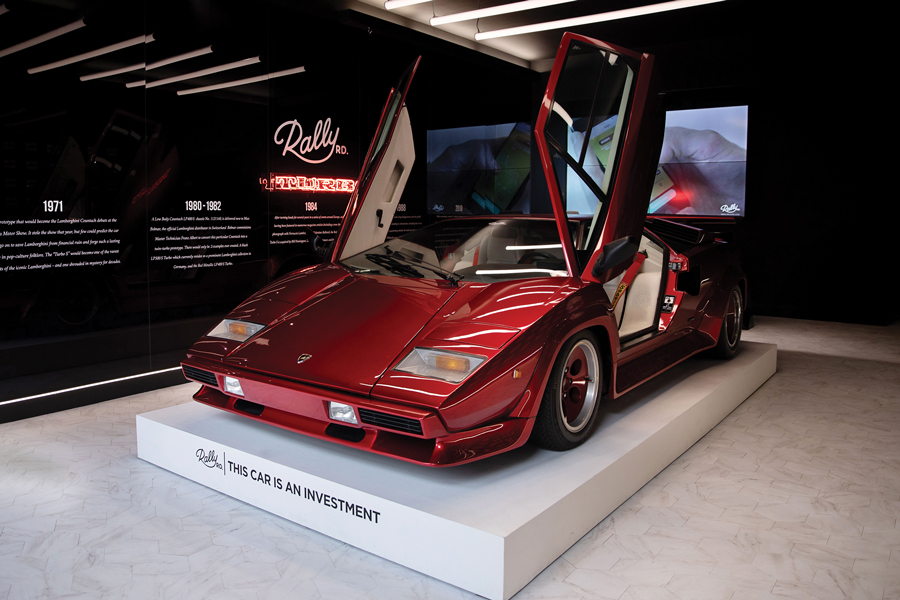
After finding a car that passes Rally Rd.'s strict investment criteria — such as one of only two 1980 Lamborghini Countach Turbos in existence, valued at $635,000 — the company acquires the vehicle. Then it holds a Securities and Exchange Commission-registered initial public offering, allowing investors to learn about the car and purchase shares.
For each car, Rally Rd. issues between 2,000 and 5,000 shares, valued from $7 to $245 each. The Lamborghini mentioned above sold for $100 per share at its
IPO.
The company doesn't charge commissions or management fees; it makes money by taking a small sourcing fee as the underwriter of the initial offering, according to Bloomberg. It also takes a position in each vehicle, of up to 10% of the shares, at the same price and share class as the individual investors.
While Rally Rd. began with the idea of providing access to expensive collectibles to people who traditionally couldn't afford them, co-founder and CEO Christopher Bruno said there is also value for high-net-worth investors and the advisers who serve them.
"There's a long history with uncorrelated returns associated with this type of asset class," Mr. Bruno said. "A lot of individuals would value that."
Making that immediate, all-in decision to buy an expensive car can be too risky for some, but no one wants to wake up in 10 years to see the value of the car they looked at but ultimately declined to buy has surged in value, he said. Rally Rd.'s share offerings let investors get as involved as they want, and a wealthy person could later decide to buy out the rest of the car.
"People should be diversified and have access to good quality investments that are worth it to them," Mr. Bruno said.
A similar movement is occurring in the fine art world.
Online marketplaces like Masterworks and UK-based Maecenas offer an opportunity to buy shares in expensive paintings.
These platforms are possible thanks to the JOBS Act, signed into law during the Obama administration, which allows small companies to sell shares to the general public without needing to be a part of a major stock exchange.
Collectibles such as fine art and rare cars provide diversification, but they are also linked to high society and can act as a status symbol.
It helps that classic cars can be easier to wrap one's head around than something like bitcoin, Mr. Bruno said.
Although investors can't drive the rare car they own shares in, they can see the cars via webcams Rally Rd. operates from its "museum-grade" storage facilities.
The company has a storefront in Manhattan where it displays autos prior to their IPOs, and it is planning to launch a larger facility in New York in the future.
Rally Rd. also takes the cars to special events around the country.
"There are some emotional connections to them as well, investing in things that are hard assets and historically significant in some way," Mr. Bruno said. "When you see the diversity of the collection all in one place, it's just such a unique, eclectic collection."