
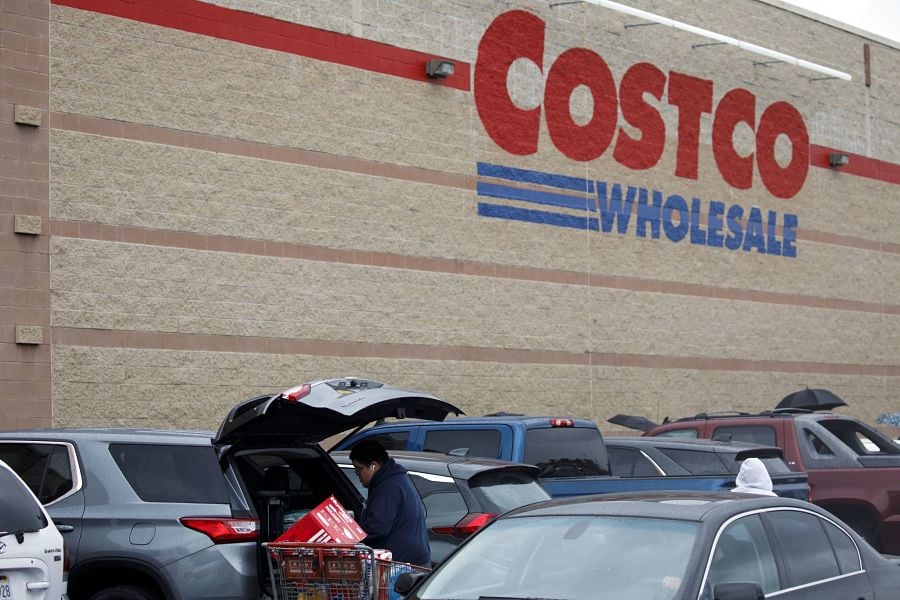
A Costco shareholder resolution over greenhouse gas emissions last month passed by a landslide, and it could mark the beginning of a wider campaign against food distributors’ practices.
Seventy percent of shareholders at the company’s annual meeting Jan. 20 voted in favor of the resolution, which was brought by mutual fund firm Green Century Capital Management.
The measure was unique in a couple of ways — it targeted a major U.S. food distributor and it requires reporting and action over Scope 3 emissions, or those tied to Costco’s value chain. That means massive reductions in the carbon footprint related to all the items the big-box company sells, going all the way back to the raw materials used in them. The resolution requires Costco to “adopt short, medium and long-term science-based greenhouse gas emissions reduction targets, inclusive of emissions from its full value chain, in order to achieve net-zero emissions by 2050 or sooner and to effectuate appropriate emissions reductions prior to 2030.”
In what could be a sign of things to come, one or two major fund companies among Vanguard, State Street or BlackRock likely voted in favor of the resolution, said Thomas Peterson, shareholder advocate at Green Century. All three of those firms declined to comment, noting that they don't disclose their voting history ahead of quarterly reports, so it’s unclear which voted in favor.
Other institutional investors, including CalPERS and Norway’s sovereign wealth fund, supported the resolution, Peterson said.
“We’re seeing this as an initial salvo in a multiyear campaign to the food and agriculture sector to get moving on climate [change] in a much more significant way,” he said.
Scope 3 emissions represent the overwhelming majority of greenhouse gases in food supply and agriculture. By comparison, Scope 1 emissions are those that come directly from a company’s facilities, while Scope 2 are those tied to energy sources used to power their locations.
The country’s largest retailer, Walmart, measures emissions in all three categories and calculates 95% of its total coming from Scope 3, or its value chain, Green Century noted in its resolution. Other companies that measure across those categories and are seeking to reduce them include McDonald’s, Target, PepsiCo, Nestle, Kellogg and Best Buy.
Costco was simply a laggard among peers, according to Green Century. It's one of 50 big U.S. companies named by Ceres as the largest contributors to greenhouse gases in the food industry.
Agriculture is a major contributor to the world’s greenhouse gas emissions, with industrial farming of animals playing a leading role in that. And it’s not just about what is grown, as farming practices can vary widely in how much they contribute to climate change. Deforestation, commonly associated with raising cattle and producing palm oil, soybeans, cocoa and pulp, accounts for 10% of greenhouse gases, Green Century noted.
The Costco resolution was a trial, Green Century CEO Leslie Samuelrich said.
“We were filing this first-of-its-kind proposal to see if it would get through the SEC,” she said. Companies can challenge proposals, which Costco did. The SEC sided with the investors, and the retailer then dropped its bid to stop the resolution.
Shortly after, the company announced a plan to measure and reduce its Scope 1 and 2 emissions — but that step did not dissuade shareholders from approving the Scope 3 resolution, Samuelrich noted. Costco’s board of directors also recommended that shareholders vote against the proposal.
Costco public relations staff did not respond to a request for comment. There were other shareholder resolutions voted on at the annual meeting, including one on executive compensation, which passed, and another to request reporting on racial justice and food equity, which failed.
Next, Green Century is “looking at a set of roughly 10 companies on the [Ceres] list of the 50 largest food and agriculture companies in the U.S., all of whom have major work to do,” Peterson said.
The 30-year-old firm proposed its first shareholder resolution around protecting tropical rainforests about eight years ago, and times have since changed, Samuelrich said.
“Until a year ago, majority votes were rare,” and getting 25% of shareholders to favor a proposal was seen as a success, as it could still put pressure on public companies to make changes, she said. “Getting 70% likely puts the other companies on notice.”
In the near future, resolutions will likely include biodiversity risk, following the trend seen in Europe, she noted.
Last year, Green Century engaged with about 130 companies on their greenhouse gas emissions practices “and only went to a vote with a handful of them,” she said.
“Other companies need to start paying attention to the investor requests around climate and scope three,” she said. “It’s not just us, a green fund, that cares deeply about this issue.”

Advisor360, spun out of Commonwealth in 2019, adds two execs and is ‘excited to support LPL’ after the conversion

The multi-family office says its earliest participating funds invested in Anthropic at a $45 billion valuation, while the vast majority of its access came at $183 billion.

Financial Exploitation Prevention Act wins unanimous Senate approval as advisor groups press for White House signature

The two financial advice leaders announce a settlement to ongoing trade disputes involving financial advisors.

Phillip Patrick Williams allegedly launched the scheme in 2022 and eventually pocketed more than $100 million.
Advisors are broadening the conversation beyond savings to help clients prepare for the realities of longer lives
Growing wealth, evolving priorities, and untapped opportunities are reshaping how women approach long-term investing.

