

The Bitcoin fever is starting to break as worries about a market bubble discourage investors from buying in.
Prices for the largest cryptocurrency dipped as much as 6.8% on Wednesday and traded below $35,000. Ever since the market shot through all-time highs in early January, Bitcoin has been beset by volatility and skepticism that the run-up has been excessive.
Analysts have pointed to $40,000 as the key level that Bitcoin needs to surpass in order to draw fresh money from investors riding cryptocurrency momentum. They argue that recent gains could prove fleeting if the rally stalls and traders looking for quick returns shift their money elsewhere.
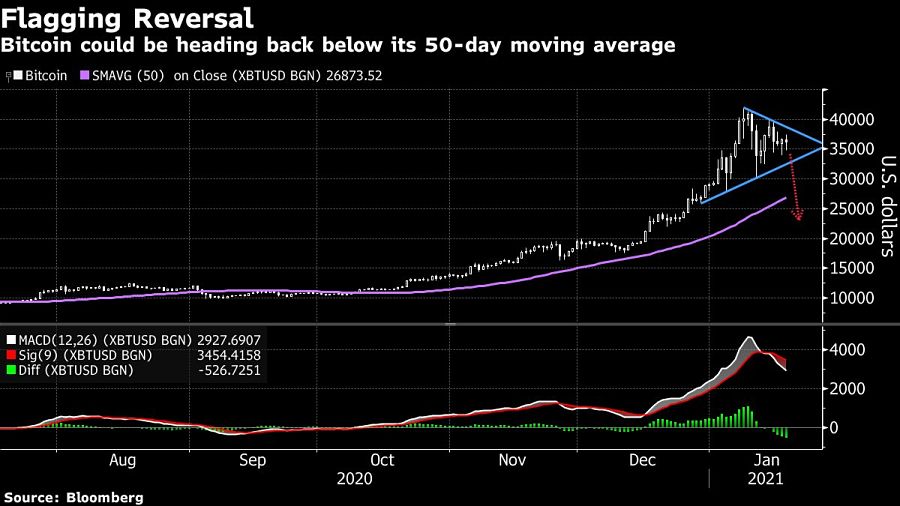
“Many cryptocurrency traders are diversifying into other coins in fear that Bitcoin could see another collapse if $41,500 is not reached sometime soon,” said Edward Moya, senior market analyst at Oanda Corp.
There are also concerns among Wall Street pros that Bitcoin’s 400% rally in the past year makes it too dangerous for them to jump in. In Bank of America Corp.’s monthly survey, fund managers called Bitcoin the world’s most crowded trade -- the first time it’s held that title since 2017.

New UMA, direct indexing and asset location capabilities aim to cut manual work for advisors managing personalized portfolios

As notetakers push into account opening, a consultant warns RIAs risk ‘buying redundancy’ instead of capability

The senior recruiter position at LPL Financial can lead to future success and industry leadership.

Hackers are already probing two bugs in software that runs most of the web. European Government and other major sites have already been taken down for emergency patches.

Unclaimed auto accounts can’t take family money, so advisors face questions on 529s, divorce terms, employer funding and stock gifts.
Knighthead Life entered the market with a competitive MYGA. A strong launch earned advisor confidence and paved the way for FIAs.
As AI makes financial information more accessible than ever, Lana Hock explains why human judgment, trust, and empathy remain the qualities clients value most in a financial advisor

