
BlackRock reported a sharp jump in first-quarter profit Tuesday, driven by record ETF inflows and a surge in performance fees, though assets under management pulled back from a peak reached at the end of last year.
The world's largest asset manager posted net income of $2.21 billion, or $14.06 per share, for the three months ended March 31 – up 46% from $1.51 billion, or $9.64 per share, in the same period a year ago. Excluding acquisition-related costs and other one-time items, BlackRock earned $12.53 per share, ahead of analyst estimates of around $11.65.
Revenue rose 27% year-over-year to $6.7 billion, topping consensus expectations of roughly $6.55 billion.
Total net inflows reached $130 billion for the quarter, led by its iShares ETF business, which posted its best-ever first-quarter result with $132 billion in net inflows. Private markets drew another $9 billion in net inflows, with private credit and infrastructure accounting for the bulk of that activity.
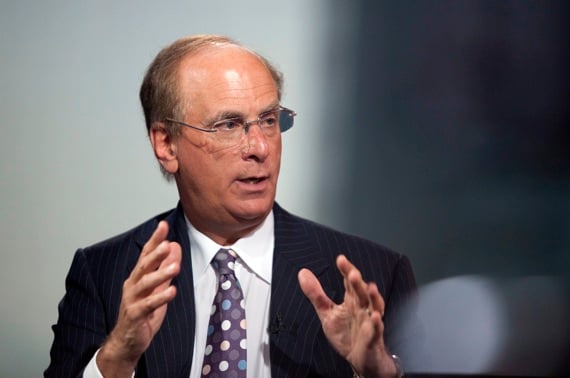
In the Tuesday release announcing the results, CEO Larry Fink said "capital is in motion as market fundamentals and provider relationships are re-evaluated."
Despite the strong profit figures, BlackRock's assets under management closed the quarter at $13.89 trillion – up 20% from $11.58 trillion a year earlier, but down from the $14.04 trillion record it set at the end of 2025. The nearer-term decline was largely attributable to market volatility during the first quarter, with equity markets posting broad losses. The S&P 500 fell 4.6% in the period.
For an asset manager, the AUM figure carries particular weight because it forms the basis of most fee revenue. Even with continued client inflows, a market-driven drop in asset values can partially offset new business gains, compressing the revenue base going forward.
One of the more notable data points in the quarter was the performance fee line. Investment advisory performance fees reached $272 million – more than four times the $60 million recorded in the first quarter of 2025 – driven primarily by private markets activity, including the impact of its 2025 acquisition of HPS Investment Partners.
Base fees, which exclude performance-linked revenue, grew 8% organically from a year earlier, the firm's strongest first-quarter organic base fee growth in five years, according to BlackRock.
Technology services and subscription revenue also climbed, rising 22% year-over-year to $530 million. Fink noted that the firm's technology services annual contract value grew 14%, boosted in part by continued demand for its Aladdin platform and the contribution of data provider Preqin, which BlackRock acquired in March 2025.
BlackRock's private markets business has drawn scrutiny in recent quarters, as parts of the private credit industry have faced rising default concerns. The firm reported $320.4 billion in private markets AUM at quarter-end, down modestly from $322.6 billion at the end of December. That decline reflected $8.5 billion in capital returned to investors and a roughly $2 billion drop in market values, partially offset by the $9.1 billion in net inflows.
Fink said private markets inflows "were led by private credit and infrastructure, where we have strong fundraising and deployment momentum."
BlackRock repurchased $450 million of its own shares in the quarter and raised its quarterly cash dividend 10% to $5.73 per share. Shares rose roughly 2.5% in premarket trading Tuesday, though the stock remains down more than 4% year-to-date.
The adjusted operating margin widened to 44.5% from 43.2% a year earlier, reflecting operating leverage across the firm's combined asset management and technology platform.

Investors got projected returns dressed up as real ones, SEC says

Parents must still act to get the $1,000 federal seed and employer contributions, giving financial advisors a role in the rollout.

FINRA booted Rudy Anguiano from the industry for “conversion - the intentional and unauthorized taking of another person’s property.”

Notice 2026-62 also flags box spread ETFs and tax-aware fund trades as Treasury opens month-long consultation period.

The firm's former general counsel walked away clean
As AI makes financial information more accessible than ever, Lana Hock explains why human judgment, trust, and empathy remain the qualities clients value most in a financial advisor
Northern Trust’s Ken Lassner shows advisors how to convert volatility into after-tax portfolio gains

