
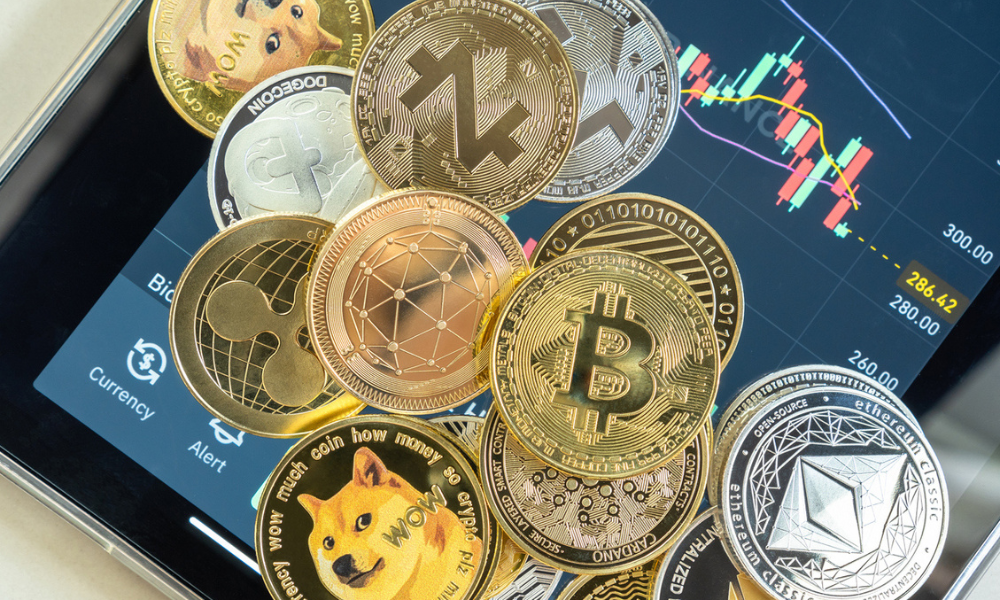
Crypto exchanges that connect buyers and sellers directly without Wall Street-style middlemen are under pressure to improve their services amid a decline in market share.
These so-called decentralized platforms facilitate trading via algorithmic, blockchain-based software known as smart contracts, with users retaining custody of tokens rather than handing them to an intermediary institution.
Crypto diehards predicted a golden period for peer-to-peer trading venues such as Uniswap and dYdX after last November’s collapse of the FTX exchange, which undermined trust in centralized platforms that take control of tokens.
But that hasn’t panned out: Monthly spot trading volumes on decentralized exchanges slid 76% to $21 billion by June this year versus January 2022, more than the 69% drop for their centralized rivals to $429 billion, Kaiko data shows. The market share of peer-to-peer digital-asset platforms has dropped to 5% from a 2023 peak of 7% achieved in March, according to the figures.
Decentralized platforms appeal to crypto buffs who dislike the intermediary model of traditional finance. But they are often hamstrung by more complex user interfaces, slower speeds and lower liquidity than key centralized venues like those offered by Binance Holdings or Coinbase Global Inc.
Most institutional investors find it difficult or impossible to trade on peer-to-peer exchanges, though their “designs continue to improve and the platforms are still generally less than thee years old,” said Richard Galvin, co-founder of Digital Asset Capital Management.
Examples of efforts at improvement include a recent new protocol from Uniswap, the largest decentralized trading venue, which seeks to improve prices for clients by aggregating disparate digital-asset liquidity sources. Earlier this year, blockchain firm Vertex rolled out a decentralized exchange that it said offers comparable speeds to centralized platforms.
A crypto hedge fund survey by PwC indicated that decentralized exchanges pose compliance difficulties as they are unregulated. “The regulatory overhang is definitely a hindrance to these protocols,” said Townsend Lansing, head of product at crypto asset manager CoinShares International.
“Investors who are more conservative and not sophisticated crypto veterans would likely avoid decentralized exchanges and prefer steady, regulated traditional financial products,” said Vince Turcotte, director of digital assets at market surveillance firm Eventus.
While decentralized exchanges have struggled for volumes, monthly active users have steadily increased since 2020 and topped 1 million for most of this year, according to Token Terminal data. That may reflect unease about the future of centralized platforms following FTX’s bankruptcy amid allegations of massive fraud, which sparked greater scrutiny from officials.
More investors are asking how to counteract custody and counterparty risk, leading them toward decentralized routes, according to Karan Ambwani, India lead for dYdX.
Still, growing the user base may get more challenging given recent signs that traditional financial firms see opportunities in crypto as the market recovers from a $1.5 trillion rout in 2022.
For example, institutional-only crypto exchange EDX Markets went live last month. The platform is backed by firms including Citadel Securities, Fidelity Digital Assets and Charles Schwab Corp.
The entry of big traditional players from traditional finance will likely bring more liquidity to the digital-asset ecosystem, according to Yves Longchamp, head of research at Seba Bank AG.
That “may benefit centralized-exchange volumes initially but could later also lead to an increase in volumes across decentralized exchanges due to a rise in demand for crypto in general,” Longchamp said.

Iowa's Greenwood Wealth Partners exits D.M. Kelly as UBS and Ameriprise win Merrill Lynch recruits in California and Florida

Less than 1% of pool funds went to actual trading, CFTC says

Plus, SEIA builds a governed data foundation for its in-house AI and Snappy Kraken debuts a read-only marketing coworker for advisors.

He owes $364 million but pays $100 a month

Broadridge, Wedbush and Alaris Acquisitions have also filled senior wealth management roles with hires from J.P. Morgan, Osaic and SageView.
As AI makes financial information more accessible than ever, Lana Hock explains why human judgment, trust, and empathy remain the qualities clients value most in a financial advisor
Northern Trust’s Ken Lassner shows advisors how to convert volatility into after-tax portfolio gains

