
When Logan Paul sold a rare “Pikachu Illustrator” Pokemon card for $16.5 million at auction last week, the headline number was meant to shock. The buyer, AJ Scaramucci, son of Anthony Scaramucci and founder of Solari Capital, has framed the purchase as the first step in a “planetary treasure hunt” for scarce real‑world assets, not a one‑off splurge.
For financial advisors, the record price is another reminder of the growing slice of wealth being parked in trading cards, game memorabilia, and other pop‑culture curiosities – items that, in the right markets, can fetch returns that rival or even exceed traditional markets.
A “Pokemon index” maintained by Card Ladder, a website where users can track the value of trading cards, recently posted a 145% annual return, according to CNBC’s reporting on the auction – a full order of magnitude above the S&P 500’s 15.2% gain over the same period, and roughly twice the contemporaneous 73.4% rise in Alphabet shares. A Wall Street Journal report last year found that same index posted roughly 3,821% cumulative returns since 2004, versus 483% for the S&P 500.
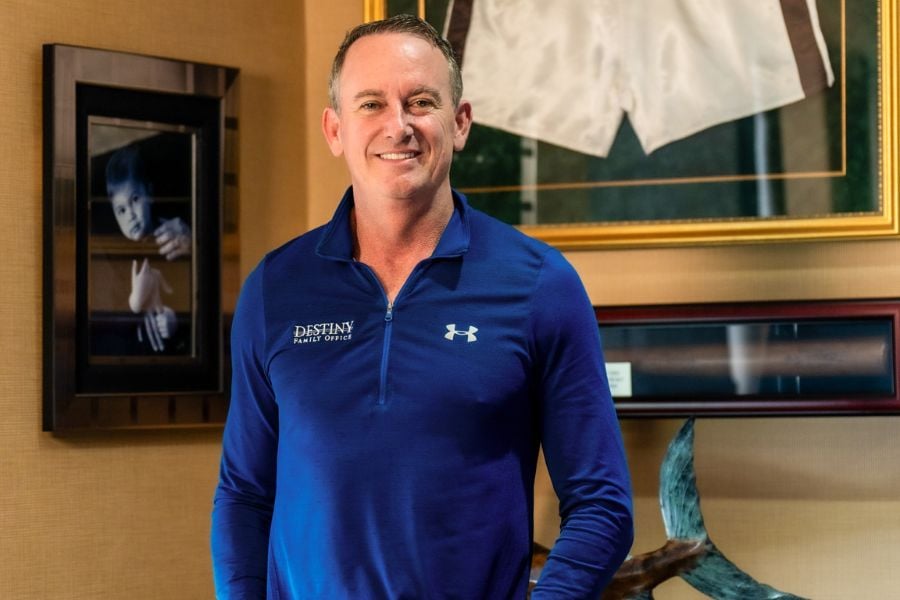
Thomas Ruggie, founder and CEO of Destiny Family Office – who has established himself as an authority on collectibles as an asset class – says the Pokemon sale has already filtered into client conversations.
“The questions are more along the lines of shock and amazement to see the valuations on some of these things,” Ruggie told InvestmentNews. “[The $16 million Pokemon card sale] has been brought up multiple times by clients and advisors ... wanting my thoughts on what happened.”
Ruggie sees an overlap between the Pokemon frenzy and other speculative manias of the past decade, from Bitcoin to meme stocks and NFTs.
“There’s a certain segment of the population that is up and coming financially,” he said, pointing to “relatively younger people that have made a lot of money on Bitcoin” and now “have the type of money to throw at things like this.
"[High-end cards] are seen by some people as a potentially risky trade, but a trade that could provide a significant windfall down the road to resell the asset,” he said.
Driving many of those markets is a cottage industry built on special inserts and grading by third‑party authenticators. At the primary point of sale, that cultural-commercial complex can be compared to a lottery system where buyers have the chance to draw a headline‑worthy piece.
“You see all these people in these pack wars opening cards, looking for that holy grail of something that is going to sell for a ton of money,” Ruggie said.
Ruggie argues that the excitement and price action surrounding decades-old cards, which goes beyond Pokemon, exists because of "artificial scarcity." Pointing to the world of NBA trading cards, he highlighted the one‑of‑one Michael Jordan–Kobe Bryant card, which sold last August for nearly $13 million.
That item, also known as the Dual Logoman card, appears to have skyrocketed in value since then. At the SAG Actor Awards Sunday evening, Shark Tank investor Kevin O'Leary, who bought the card alongside Matt Allen and Paul Warshaw, claimed it was worth $20 million.
"It’s a $20 million card in 2.2 pounds of Tiffany white gold and 100 karats of Tiffany diamonds," O'Leary told reporters as he sported the one-of-a-kind collectible on a bejeweled chain around his neck.
At the time the Dual Logoman card was auctioned, Ruggie said it came with game‑worn jersey patches and autographs from both His Airness and the Black Mamba. Yet, he noted, “if you take the [value of] the highest‑selling Michael Jordan game‑used jersey ever and add it to the highest‑selling Kobe Bryant game‑used jersey ever, it’s [worth] less than this card.”
That disconnect is a warning sign for Ruggie, who maintained that "the artificial scarcity is creating a bubble in the industry that ultimately is going to burst.”
The Pikachu Illustrator card Paul sold had already set a private‑sale record when he acquired it in 2021 for about $5.3 million. Since then, he's worn it around his neck during public appearances, and it's even been featured on Netflix’s reality series, “King of Collectibles.” That kind of exposure and provenance, Ruggie says, has only added to the vaunted Pokemon card's value.
Assuming he was lucky enough to have a highly-appreciated item in today's scorching-hot collectibles market, Ruggie said he would "probably look to take advantage of that." But because it can be hard to time the top of any market, any sellers would naturally run the risk of watching a card continue to rise in value after they cash out.
For enthusiasts who don't want to part with their their sports memorabilia, Ruggie says there are specialty lenders who are willing to extend credit againt certain items that have been properly authenticated and graded. While he has no firsthand knowledge when it comes to Pokemon cards, he expects they could be treated similarly.
"If you have a card that’s worth $100,000, you probably could go get a 50% credit line against that card from companies that are doing that sort of thing,” he said.
Given that the Pokemon card franchise just recently celebrated its 30th anniversary, there's every reason to believe more enthusiasts and speculators will come to cash in on the global phenomenon. On that note, Ruggie encourages investors and the advisors who work with them to remember the cardinal rule of investing: avoid concentrated, leveraged bets on a single asset class.
“If you are looking at this as an investment and there’s that fear‑of‑missing‑out kind of allure, my opinion would be: don’t put all your eggs in one basket,” he said. “Continue to diversify and understand that there are inherent risks with things like this that also offer potential for significant return.”

While technical expertise is necessary, sustainable trust is only possible for advisors who know how and when to lean on the emotional side of advice.

Betterment, F2 Strategy and WealthReach push AI deeper into advisory firm operations with three deals this week.

Retirement expectations widen from reality, according to Natixis Investment Managers' annual Global Retirement Index.

Half of planners have seen clients raid retirement savings or cut contributions as affordability pressures mount, CFP Board finds

In a constant fight over control of clients, the financial advice industry has a long history of such allegations and disputes.
As AI makes financial information more accessible than ever, Lana Hock explains why human judgment, trust, and empathy remain the qualities clients value most in a financial advisor
Northern Trust’s Ken Lassner shows advisors how to convert volatility into after-tax portfolio gains

