
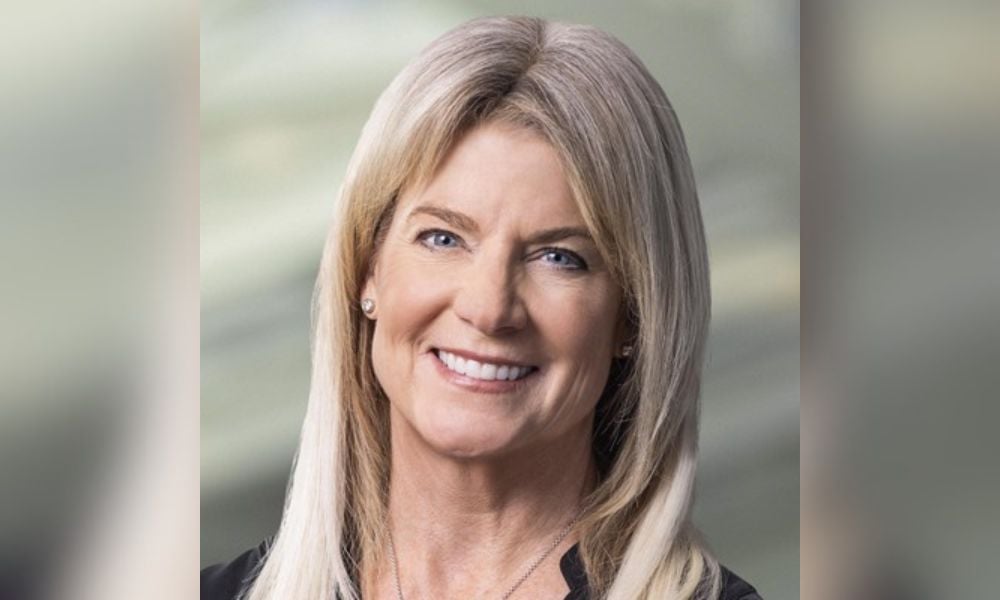
Financial advisors navigating private credit for clients should not equate rising defaults with losses for investors, according to PGIM’s managing director Dianna Carr-Coletta.
Fitch Ratings reported that its U.S. Private Credit Default Rate rose to a record 6.1% for the trailing 12 months ending in July 2026. Another recent analysis from the Wall Street Journal found that loan defaults at funds managed by Ares Management, Blackstone, Blue Owl Capital and Golub Capital reached their highest levels since at least 2021.
“Defaults do not equal losses because there are a lot of things you can do post default that can help you recover more money than what it was worth at the time that it defaulted,” Carr-Coletta said at a media gathering hosted by PGIM in New York. “Defaults mean they haven't paid their interest, they can't pay their principal, now we need to talk about restructuring. So now we need to take over the company, we become the equity, we get people to run it. Then you have the opportunity of the equity upside, which no one ever thinks about from a senior debt lender.”
PGIM, the global investment management arm of Prudential Financial, manages more than $260 billion in private credit assets as part of the firm’s $1.2 trillion public and private credit holdings. Carr-Coletta said that in a prior year, PGIM assumed takeover control of one defaulted company within its portfolio. “It's actually turned around—one of those good stories so far. Still hold it,” she added.
For advisors conducting due diligence on private-credit managers, Carr-Coletta said an increase in loans using payment-in-kind (PIK) interest rather than cash payments can be a “leading indicator” to detect early signs of stress in a private credit asset. For loans on business development companies (BDCs), payment-in-kind arrangements jumped from approximately 5.4% in Q1 2022 to 9.8% in Q1 2026, according to the Federal Reserve Bank of Boston.
“If you truly are senior secured, to me you should be paying cash interest. Then you've got the right sized balance sheet,” said Carr-Coletta. “If PIK is increasing, that's an early indication [that] there's got to be some stress within that.”
Advisors should also examine a private-credit manager’s historical losses and how much it has recovered after defaults. Other metrics to watch include non-accruals, which typically occur when a borrower has stopped paying interest or principal, and payments are not trending upward for at least 90 days.
“We need to get focused on the managers,” added Carr-Coletta. “Making sure that you don't have less diversification than you think. Perhaps you have maybe three private credit investments within a portfolio, but those three are all invested in the same name. So when you think you only have a 1%, you have a 3% exposure to that name.”
InvestmentNews reported last month that customers and clients of financial advisors sold back or redeemed $5.9 billion of shares to nontraded business development companies (BDC) in the second quarter, according to alternative fund tracker Robert A. Stanger & Co. Inc., raising the total of investor funds sold back to companies to $12.7 billion this year. The Blackstone Private Credit Fund, a nontraded BDC, told investors last week that it was capping withdrawals from the fund at half of its investors seeking to sell shares back to the fund.

LIMRA data show record RILA demand as advisors lean on guaranteed income to calm anxious clients.

The firm's multiyear sponsorship agreements with Duke and Oregon athletics put it in front of a new generation of high-potential NIL earners.

The move follows earlier dealmaking and leadership changes as the Overland Park-based hybrid RIA builds toward a nonprofit-focused institutional platform.

From building multigenerational relationships to entering new adult planning areas and building healthy financial habits, higher education can be a gateway for advisors to become trusted partners to families.

The wirehouse-focused aggregator's rollout to more than 100 advisors lands as financial advisors race to add tax and estate planning tools.
Northern Trust’s Ken Lassner shows advisors how to convert volatility into after-tax portfolio gains
Dan Biagini of American Equity says the steady decline of pensions, longer lifespans and a reset in interest rates are rewriting how advisors build retirement income

