
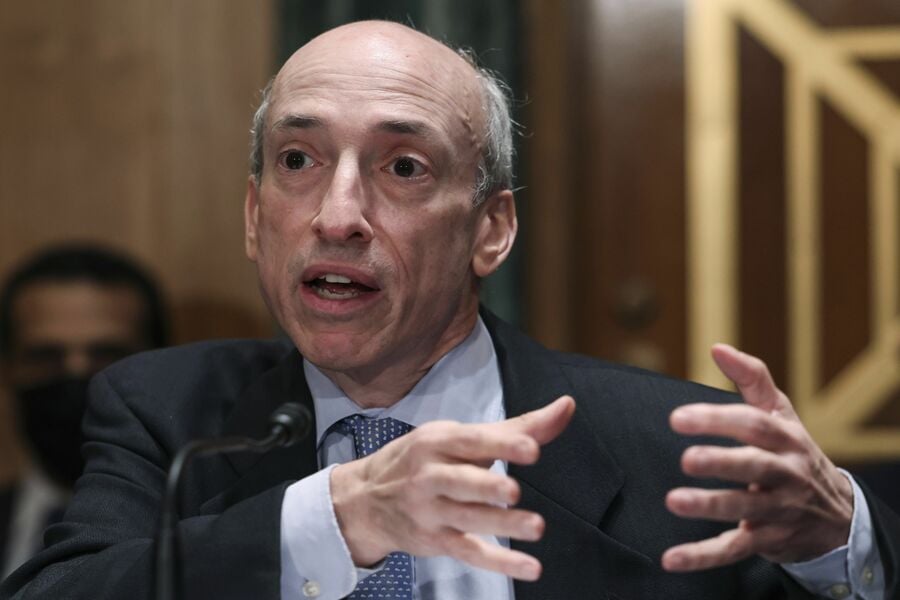
The Securities and Exchange Commission is adding 20 more officials to a team dedicated to policing crypto markets, the latest move by Wall Street’s main regulator to crack down on digital tokens that may run afoul of its rules.
The additions will bring the SEC’s Crypto Assets and Cyber Unit to 50 people, the agency said Tuesday in a statement. The focus of the expanded enforcement group will include virtual-currency offerings, decentralized finance and trading platforms, as well as stablecoins, according to the regulator.
Over the past year, the SEC has moved aggressively to expand oversight of digital-assets with Chair Gary Gensler frequently saying he considers many of them to be securities and subject to his agency’s rules. The regulator has launched probes into marketplaces offering certain types of nonfungible tokens, or NFTs, and companies behind crypto-lending products.
“By nearly doubling the size of this key unit, the SEC will be better equipped to police wrongdoing in the crypto markets while continuing to identify disclosure and controls issues with respect to cybersecurity,” Gensler said in the statement.
The SEC team, which was previously known as the Cyber Unit, has brought more than 80 enforcement actions since its inception in 2017, the agency said.

Just over 10% of advisors' wealth clients come from defined contribution plans, as capacity, data and technology gaps block the bridge to wealth

Deal creates a $20B-plus custody platform for private market investing in IRAs, months after Schwab closed its Forge Global purchase

Despite the good times, advisors should tread carefully, said one veteran industry executive.

Cullen marks the fourth firm the New York-based RIA aggregator has bought in 2026 as deal volume heads for a record year.

The quality of AI ROI measurement depends on pre-deployment decisions around business outcomes, leadership alignment, and establishing trusted information, among other factors.
Knighthead Life entered the market with a competitive MYGA. A strong launch earned advisor confidence and paved the way for FIAs.
As AI makes financial information more accessible than ever, Lana Hock explains why human judgment, trust, and empathy remain the qualities clients value most in a financial advisor

