
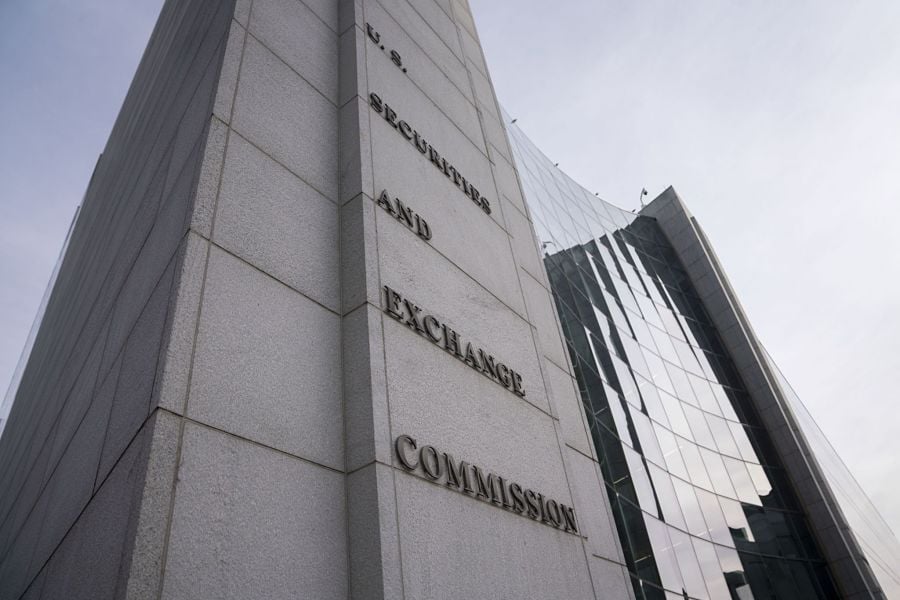
The Securities and Exchange Commission has formally opened a 60-day public comment period on exchange-traded funds that invest in innovative asset classes or pursue novel investment strategies, a request that squarely covers applications for prediction-market ETFs that have been on hold since early May.
The window, which runs from the request's publication in the Federal Register, gives advisors, issuers and other market participants a formal channel to weigh in before the agency decides how to treat these products going forward.
In a Tuesday statement announcing the consultation, SEC Chairman Paul S. Atkins said the commission wants public input on how the US ETF market can keep growing and innovating while still serving investors effectively as it evaluates its response to recent market changes.
Brian Daly, director of the SEC's Division of Investment Management, framed the stakes in terms of scale, noting that ETFs have grown from roughly 4 trillion dollars in assets in 2019 to more than 12 trillion dollars by the end of 2025.
"As ETFs continue to grow and novel strategies emerge, public engagement is essential to answering key questions to make the next years of development a success," Daly said.
Event contracts are just one of several novel ETF categories driving the request, alongside crypto assets, leveraged strategies, single-stock products and private-asset funds. In other words, prediction-market ETFs aren't the sole target of the review, but they sit squarely inside it.
The SEC's request for comment on Tuesday is built around three broad topic areas, broken down into roughly two dozen questions. In one section, the SEC asks whether a fund investing mainly in assets that aren't securities – which event contracts are not – can still call itself an investment company under the Investment Company Act's "Subjective Test," and whether the SEC's decades-old five-factor framework for making that call still holds up.
The SEC is also contemplating whether novel ETFs' underlying assets create problems for the arbitrage mechanism that keeps an ETF's share price in line with its net asset value, and whether investors have enough information to understand what makes these products different from a standard ETF.
Further, the SEC is considering whether the 75-day and 60-day windows that let new ETFs go effective automatically give SEC staff enough time to review genuinely novel structures, and whether the agency should gain explicit authority to delay effectiveness on its own initiative rather than relying on issuers to volunteer a delay.
In February, Roundhill, Bitwise and GraniteShares each filed applications to launch ETFs around event contracts, betting that the SEC's 75-day effectiveness rule would carry the products to market automatically. That clock was set to run out in early May, when the agency instead asked the issuers for more detail on fund mechanics and disclosures.
Todd Sohn, chief ETF strategist at Strategas Securities, told CNBC at the time that delays of this kind tend to accompany any genuinely new asset class reaching the ETF wrapper, while GraniteShares chief executive Will Rhind said the firm recognizes that innovative products often warrant additional review around liquidity and investor protections.
For some analysts, the SEC's move to delay its approval in this case would bring to mind episodes around other exotic ETF offerings, including spot crypto ETFs and ETF share classes for active mutual funds.
Analysts are split on the promise and prospects of prediction market ETFs. In a note earlier this month, Andres Rincon and Casey Yang of TD Securities argued the structure has real utility if regulators eventually clear it, writing that institutions could use prediction-market ETFs to hedge event risk around elections or rate decisions, while retail investors could gain a simpler, brokerage-account route into probability-based trades that are otherwise confined to platforms such as Kalshi and Polymarket.
"There seem to be unresolved jurisdictional questions between the Securities and Exchange Commission (SEC) and the CFTC as prediction markets reside at the intersection of securities regulation, derivatives oversight and gambling law," Rincon and Yang acknowledged. "Political prediction markets raise additional sensitivities, particularly around market manipulation, election integrity, and public perception."
Jeffrey Ptak, managing director for Morningstar Research Services, separately argued the SEC should reject the products outright, noting that an event contract carries a zero percent expected return the moment an investor enters it, unlike a stock or bond that compensates holders for risk over time. Armour also flagged that the proposed funds would likely layer an expense ratio on top of swap-based financing costs, since most of the filings plan to gain exposure through total return swaps rather than holding the contracts directly.
"[ETFs have] been a relatively cheap, reliable gateway to global capital markets, creating trillions in wealth and advancing important goals like putting kids through college or paving the way to a secure, comfortable retirement after our working years," Ptak wrote. "These proposed products seem like the antithesis of that."

Parents must still act to get the $1,000 federal seed and employer contributions, giving financial advisors a role in the rollout.

FINRA booted Rudy Anguiano from the industry for “conversion - the intentional and unauthorized taking of another person’s property.”

Notice 2026-62 also flags box spread ETFs and tax-aware fund trades as Treasury opens month-long consultation period.

Heartwood Wealth Advisors deal marks the serial acquirer's 36th-ever transaction as third-quarter RIA M&A volume slips 19%

The AI lab disclosed more than $8 billion in 2025 losses on an operating basis as financial advisors weigh a supersized listing likely to land past the midterms.
As AI makes financial information more accessible than ever, Lana Hock explains why human judgment, trust, and empathy remain the qualities clients value most in a financial advisor
Northern Trust’s Ken Lassner shows advisors how to convert volatility into after-tax portfolio gains

