
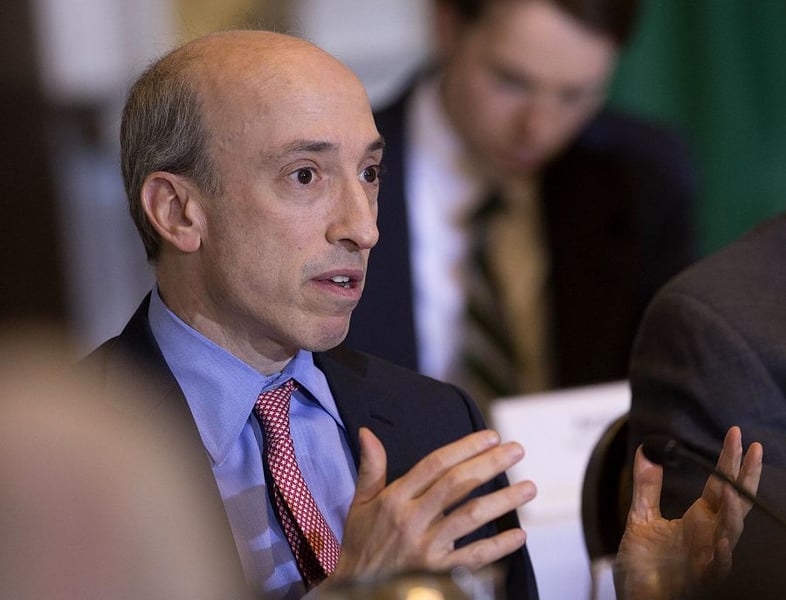
Securities and Exchange Commission Chair Gary Gensler is going back on the offensive against those in the crypto industry that he says are purposefully shirking regulations.
On Thursday, Gensler repeated his demands that crypto exchanges, brokers and attorneys in the digital coin industry comply with securities rules. It’s the latest salvo by the SEC chief in his push to clamp down on an asset class that he says often operates in legal gray areas.
The SEC has been at odds with much of the crypto industry over whether the agency's regulations should apply to projects that are more decentralized than stocks or bonds since long before Gensler took over the agency in April 2021. Tensions have increased during the past year, with the SEC chair repeatedly arguing that most tokens are covered by those rules.
“The public deserves the same protections from your clients that they get with other issuers of securities,” Gensler said in remarks prepared for Thursday’s Practising Law Institute’s SEC Speaks event in Washington. “Not liking the message isn’t the same thing as not receiving it.”
Crypto enthusiasts say forcing digital asset firms to comply with traditional registration and oversight requirements could effectively kill businesses. Furthermore, some argue the “decentralized” nature of digital asset trading also makes it difficult to obtain the types of information the SEC typically requires.
American lawmakers are now considering multiple proposals that would significantly boost the power of the Commodity Futures Trading Commission, the U.S. swaps and futures regulator, to oversee crypto assets. Some securities lawyers say that passage of those bills would diminish the SEC’s authority over the asset class.
On Thursday, Gensler said any legislation should be done in a way that maintains the SEC’s oversight of “crypto security tokens.” He added that those assets make up the bulk of digital assets that are currently traded.

The deal gives Envestnet institutional-grade trading and tax technology alongside Vestmark's advisory client base

The AI-driven RIA has doubled its advisor base to over 150 this year and is on pace to top $100M in annual recurring revenue

New trading tools let advisors execute and rebalance client portfolios directly, while firms retain permission-based control.

New ADP-delivered solution gives small and mid-size businesses access to 3(38) fiduciary oversight and participant-level advice for one fee.

Boston Hill Advisors joins Hightower's national platform as the mega-RIA's latest Massachusetts move drives HTSW closer to its $50 billion target for 2026.
Northern Trust’s Ken Lassner shows advisors how to convert volatility into after-tax portfolio gains
Dan Biagini of American Equity says the steady decline of pensions, longer lifespans and a reset in interest rates are rewriting how advisors build retirement income

