
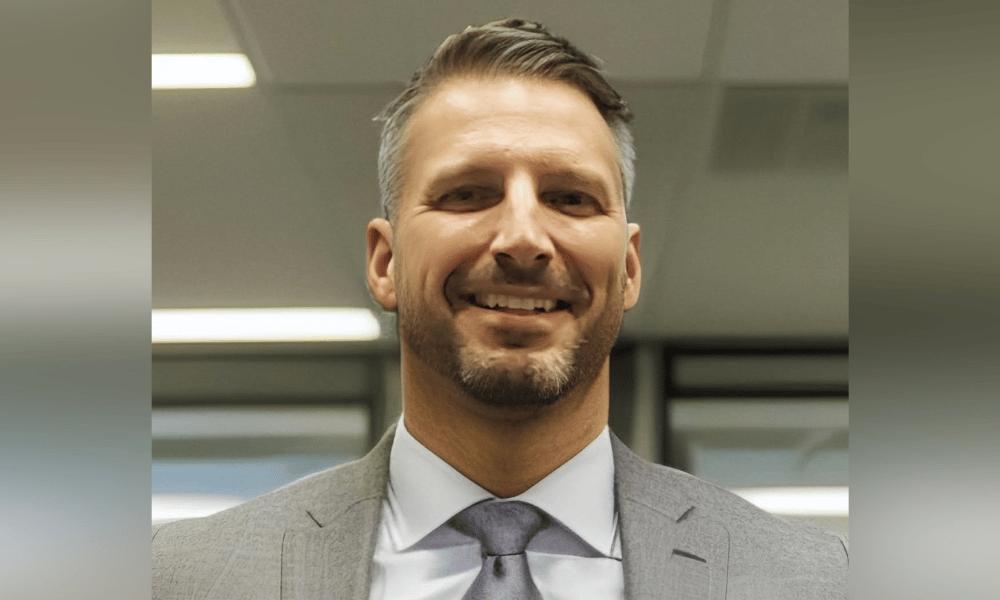
Pre-IPO equity is no longer just a story about who can get into a deal – now it's about who can get in through the right infrastructure.
That's the well-informed view of Dean Rubino, chief executive of KPC Private Funds, who explained why the private equity opportunity for high-net-worth clients has shifted from a question of access to a question of institutional plumbing.
Because an overwhelming majority of companies are staying private for much longer, Rubino says the bulk of enterprise value creation is happening much earlier in a company's life cycle – well before any splashy headlines of a public listing can come out.
"I think the overarching theme is that companies on average are staying private longer, maybe than they were a couple of decades ago," Rubino told InvestmentNews in an interview. "The capital is there to fund the needs of what would otherwise be capital-intensive companies."
Between sovereign wealth funds, private equity funds, and large family offices, Rubino said companies increasingly have their pick of deep pockets to keep operating and growing without tapping public markets. From the wealth-building side, he says secondary trading mechanisms for private shares have matured to the point of allowing early employees and founders a way to create liquidity events without an IPO.
"People forget that SpaceX has been around for 20 years," Rubino said, referring to the historic mega-IPO that's vaulted the rocket-maker's employees to new levels of wealth. "I remember seeing a valuation for it in the secondary market back in 2021, and that company was still 15-plus years old. It's doubled since."
With Anthropic and OpenAI now positioned for eventual public listings at staggering valuations, Rubino said the spotlight on late-stage private growth – and on what investors miss by waiting for an IPO – has only gotten brighter.
For advisors weighing whether to bring pre-IPO exposure to clients, Rubino argued that the real bottleneck isn't finding a deal – plenty of special purpose vehicles already market pre-IPO shares directly to accredited investors, after all. The problem is that many of those vehicles aren't built for a fiduciary relationship.
"When an advisor is seeking access, I think they need a platform that has the institutional infrastructure and framework around it," he said. That framework, he said, should have specific, checkable features that advisors can watch for.
"Whatever you're investing in, you need for it to have custodial acceptance – it has to appear on statement," he said, pointing to compatibility with RIA custodians such as Schwab, Pershing and Fidelity.
He also cited institutional pricing that avoids the markups common in direct-to-consumer vehicles, along with documented professional diligence, annual third-party audits, and a defined liquidity period or end date so clients aren't left trapped in a holding pattern if an IPO is delayed.
With the rise of retail platforms purporting to offer alternative ways to participate in the growth of private companies, including tokenized securities, proponents of self-directed investing – specifically those who see advisors as a superfluous layer between investors and investment opporunities – have a new talking point to latch onto. But to Rubino, advisors can still bring real value to clients.
"I don't see it as the advisor as a middleman," he said. "I see them as really adding value here by making that [institutional-caliber] infrastructure available to you."
And contrary to the stereotype of affluent individuals being sophisticated investors, Rubino said many high-net-worth clients have built their wealth through a concentrated 401(k) position or a single patent rather than a career in finance – meaning they have the capital but not necessarily the diligence skills to vet a private equity stake on their own.
Before bringing and recommending a pre-IPO position to their clients, Rubino argued that every advisor should go through a due-diligence checklist.
"Are you on the cap table [as a holder of the asset]? Are you not?" he said. "Do they own it? Do they have the rights to sell it? What are you actually buying?"
He also noted that many pre-IPO deals involve preferred shares from a Series D, E or F round rather than common stock, which can carry warrants, anti-dilution provisions or dividend rights that materially change the investment's risk profile. Those types of questions were on full display earlier this year, when Anthropic's board of directors buckled down saying any sale or transfer of its stock without explicit approval will be considered void and not recognized by the company.
Fee transparency and operational simplicity are also crucial. Among other things, advisors should double-check whether pricing includes a hidden markup, and whether the vehicle undergoes an independent annual valuation. Depending on how many they want to participate, Rubino said firms should also check whether the onboarding paperwork is simple enough to scale across dozens or even hundreds of accounts.
And while their client base does need to meet accredited-investor thresholds for most private vehicles, which can be dauntingly complex, he said advisors don't need a specialized credential or deep expertise to talk about pre-IPO opportunities with clients.
"They don't need any special accreditation ... The advisor doesn't need to be a venture capitalist," Rubino said. "They just need to understand what the company does and what their prospects for growth are."

Advisors say record balances aren't a retirement income plan and urge clients to benchmark their lives, not an index

Wealth enterprises are leaving revenue on the table - a new PureFacts and Ascentix partnership aims to help firms take it back.

What if one investment decision could create tax-saving opportunities across your entire portfolio? Chris Vizzi shares how the Stacking Strategy helps investors align tax planning, portfolio construction, and wealth preservation to maximize long-term outcomes while keeping more of what they earn.

Buyers spending on AI may treat less efficient sellers as overstaffed and price the cost of rightsizing into lower offers

Kenneth Leech pleaded guilty in June to one obstruction charge, and could face six to 12 months in prison.
Knighthead Life entered the market with a competitive MYGA. A strong launch earned advisor confidence and paved the way for FIAs.
As AI makes financial information more accessible than ever, Lana Hock explains why human judgment, trust, and empathy remain the qualities clients value most in a financial advisor

