
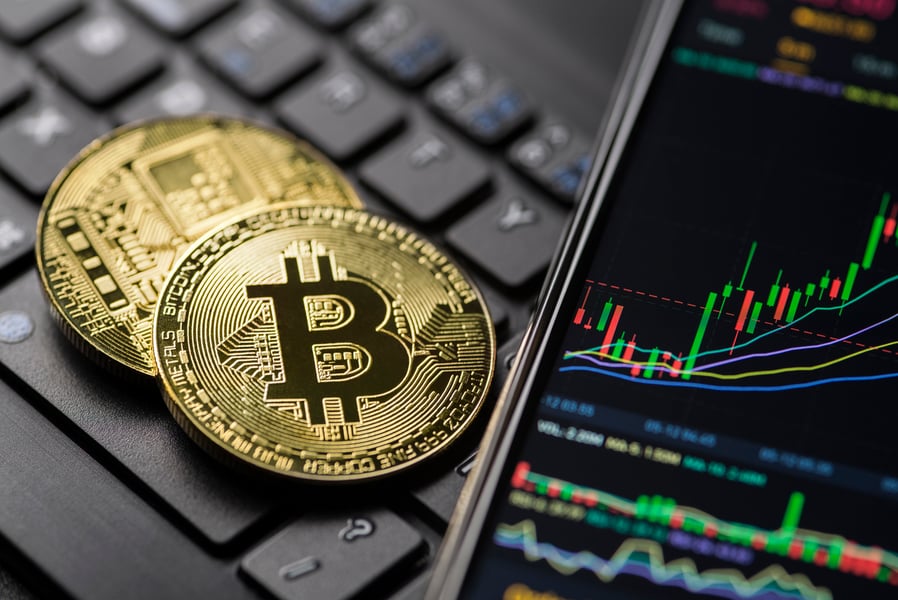
Bitcoin missed out on a rally in global markets sparked by cooling U.S. inflation, triggering some caution about the token’s outlook.
The largest digital asset on Thursday mostly held losses of 0.7% from a day earlier, while stocks and bonds extended gains on bets that an end to Federal Reserve monetary tightening is getting closer.
Bitcoin has stalled this month after a June surge courtesy of a flurry of applications by investment heavyweights like BlackRock Inc. to start U.S. exchange-traded funds investing in the token’s spot market. Investors are now asking whether bitcoin’s 83% rebound this year still has room to run.
“Bitcoin was an outlier in terms of widespread risk seeking in pretty much every asset class after the U.S. inflation data,” said Tony Sycamore, a market analyst at IG Australia Pty. “To me that’s not a good sign.”
The odds of bitcoin falling toward $25,000 to $26,000 — roughly the zone of its 200-day moving average — are building, according to Sycamore.
Crypto analysts flagged speculation that the U.S. might be readying to sell some seized Bitcoin as a possible reason for its muted post-inflation performance.
“The disinflationary environment coming through after relatively quick interest-rate increases should be good for risk assets, including crypto,” said John Toro, head of trading at digital-asset exchange Independent Reserve. “But suggestions that bitcoin seized by the U.S. are being moved around — which served to highlight the risk that some could be sold — hit sentiment.”
The U.S. inflation rate slid to a more than two-year low of 3%, contributing to climbs exceeding 1% in global shares, a bond gauge, gold and oil on Wednesday. A dollar index hit a 15-month low, sending ripples through currency markets.
Bitcoin and a gauge of the largest 100 digital tokens both lost ground in a marked contrast to the mood across other asset classes. For some prognosticators, it may just be a matter of time before bitcoin resumes its partial recovery from a crypto rout in 2022.
Crypto fund provider Grayscale Investments wrote in a note that “we would expect lower US inflation and reduced odds of Fed rate hikes to support digital asset markets broadly over the medium term.” Grayscale argued investor appetite for higher-risk cryptocoins could increase, leading to a drop in bitcoin’s dominance of the $1.2 trillion digital-asset market.
Bitcoin fell as much as 0.3% on Thursday before paring the drop and was trading at $30,385 as of 8:36 a.m. in London, well below its 2021 record high of almost $69,000.

Faulty Forms 1099 and account statements reportedly left some Vanguard brokerage customers overpaying or underpaying taxes for over a decade.

The democratization of ETFs cuts both ways

Independent broker-dealers snap up experienced advisors as competition for established practices intensifies.

Derek Flowers, a nearly 30-year veteran, is set to retire in mid-January, handing the reins to the executive who helped lead the bank's regulatory turnaround.

The campaign spans broadcast TV and streaming, as the brokerage faces slowing client net flows and an $8.1 billion advisor team that left to launch an RIA this month.
As AI makes financial information more accessible than ever, Lana Hock explains why human judgment, trust, and empathy remain the qualities clients value most in a financial advisor
Northern Trust’s Ken Lassner shows advisors how to convert volatility into after-tax portfolio gains

