
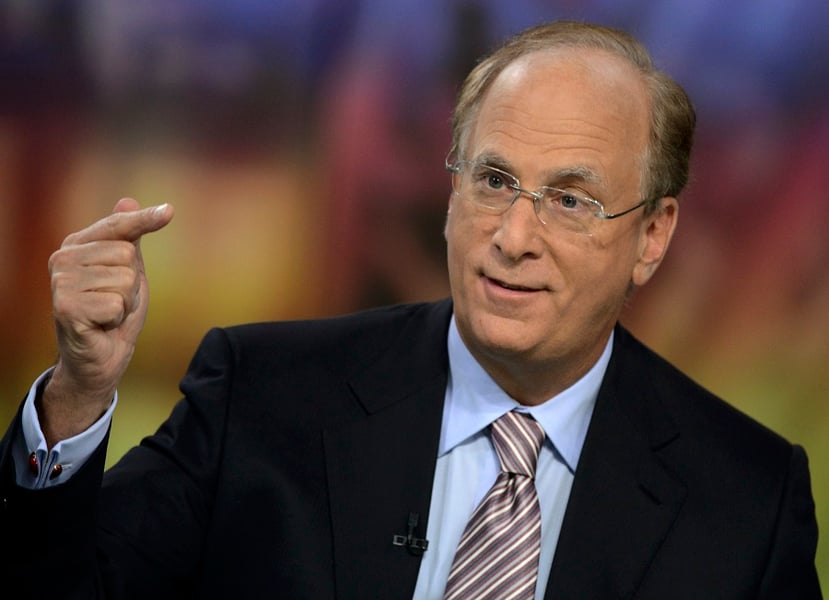
BlackRock Inc. Chief Executive Larry Fink escalated his call for corporate leaders to focus on the environment in the wake of the COVID-19 crisis, and pledged new measures to address climate change.
Companies should disclose plans for how their business models will be compatible with a net-zero economy, Fink said in his annual letter to CEOs Tuesday. Drawing parallels between the deadly consequences of the pandemic and the effects of global warming, Fink wrote that positioning for the long term means preparing for the realities of climate change.
“The pandemic has presented such an existential crisis -- such a stark reminder of our fragility -- that it has driven us to confront the global threat of climate change more forcefully and to consider how, like the pandemic, it will alter our lives,” Fink wrote in the letter.
[For more impact investing news: Check out InvestmentNews’ ESGClarityUS.com]
A year ago, Fink stirred Wall Street with an urgent call for companies to address climate change, which he said would bring about a “fundamental reshaping of finance.” That was before COVID-19 caused more than 2.1 million deaths globally, upended the travel and entertainment industries and forced central banks to take extreme steps to backstop reeling economies.
The crisis didn’t stop investments in sustainable products. New York-based BlackRock finished 2020 with about $200 billion in its sustainable strategies, buoyed by net inflows of about $68 billion into the products over the course of the year, the company said this month on its earnings call. That’s just a sliver of the approximately $8.7 trillion the world’s largest asset manager oversaw as of Dec. 31.
BlackRock occupies a unique role in corporate America’s response to climate change. As the firm grows, Fink, 68, has become an elder statesman of finance, penning his annual letters to business leaders and speaking out on sustainability issues. He pledged to lead by example last year, making changes to BlackRock’s own practices, including exiting thermal coal producers in its actively managed portfolios and offering more environmentally friendly investment products.
He unveiled additional measures Tuesday, including adding a “heightened-scrutiny model” to its active portfolios to manage securities with climate risk. It will also launch investment vehicles with “explicit temperature-alignment goals,” including products oriented to a net-zero pathway.
Activists have accused the firm of not going far enough, pointing to its vast holdings in fossil-fuel companies. The Sunrise Project is among groups calling on BlackRock to use its voting rights to pressure management of the companies it owns for reform.
The broader environmental overhaul that nonprofits endorse poses difficulties for BlackRock, which still holds about two-thirds of its assets in index-tracking products. These investments are tied to what are essentially lists of companies representing an industry, a theme or a broad market. Such passive investing strategies contrast with active ones, where portfolio managers select individual investments.
Index-based investing is undergoing changes of its own. Custom strategies are on the rise in the industry, allowing investors to tweak indexes based on personal preference, including for ethical or environmental reasons.
BlackRock agreed in November to acquire personalized index provider Aperio for about $1 billion. Fink said clients can use customized indexing to express preferences around net-zero goals.

“Today’s actions send a clear message that even the biggest financial institutions are not above the law,” said Treasury Secretary Scott Bessent.

To build a truly self-sustaining practice, enterprising advisors have to start with a vision of what they want to be – and accept the realities that come with building toward it.

Serial acquirers add a 35-year-old Oregon wealth manager and a New York practice focused on women navigating life transitions.

Mara Glassel and Julie Fox will co-lead the fast-growing hybrid RIA’s ultra-high-net-worth and private wealth businesses.

The banking giant's wealth arm extends its revenue streak as it pushes to exit consent orders weighing on growth since 2020.
Knighthead Life entered the market with a competitive MYGA. A strong launch earned advisor confidence and paved the way for FIAs.
As AI makes financial information more accessible than ever, Lana Hock explains why human judgment, trust, and empathy remain the qualities clients value most in a financial advisor

