
BlackRock's Larry Fink to top CEOs: Ignore investors and focus on the long term

BlackRock's Larry Fink to top CEOs: Ignore investors and focus on the long term
Money manager tells 500 chief execs to adopt shareholder-friendly practices, sustainable returns.
JUN 16, 2015
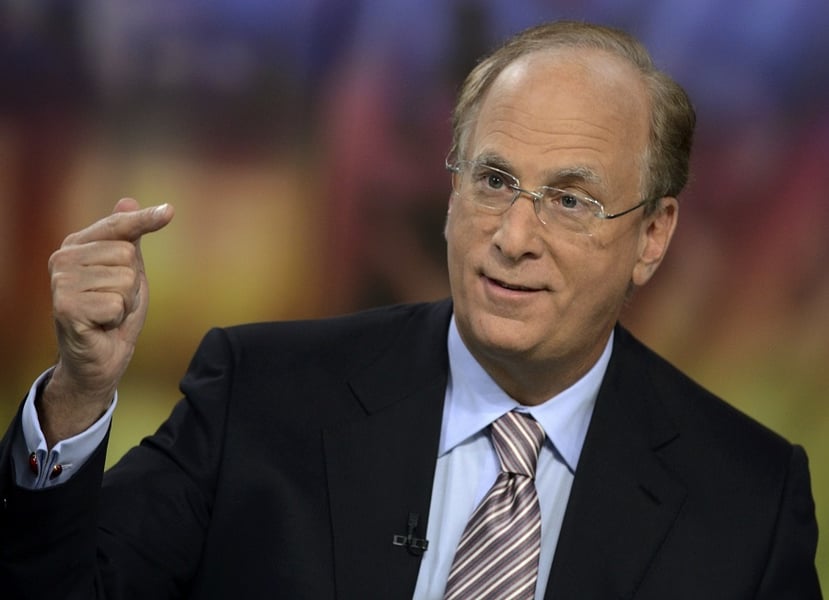
BlackRock's Laurence D. Fink, whose firm is the largest shareholder in companies from Microsoft Corp. to JPMorgan Chase & Co., is telling 500 CEOs to focus on long-term growth and avoid giving in to pressure from investors seeking immediate profits. Mr. Fink reiterated a stance he has taken in letters to chief executive officers in March 2013 and January 2012, urging them to engage in shareholder-friendly practices and sustainable returns. (More: BlackRock dives into ARCP) Management must resist paying out earnings if it compromises longer-term prospects, and communicate their growth strategy, he wrote in a letter distributed Tuesday to the CEOs of companies in the S&P 500 Index. “Corporate leaders' duty of care and loyalty is not to every investor or trader who owns their companies' shares at any moment in time, but to the company and its long-term owners,” the 62-year-old CEO and co-founder of New York-based BlackRock wrote. “Corporate leaders and their companies who follow this model can expect our support.” (More: Investors shun stock pickers, favor Vanguard, BlackRock, State Street) BlackRock, the world's largest money manager with $4.65 trillion in assets, is vocal about corporate practices at companies whose shares it holds, and has a corporate-governance team that seeks to protect its investment assets and increase client returns. BlackRock owns stock through its active funds as well as index products via iShares, the world's largest provider of exchange-traded funds. While global governments should also address policy that rewards a focus on the short term, BlackRock sees an “important role” for itself and other investors in engaging with management and company boards, Fink wrote. The firm changed its proxy voting guidelines this year to clarify expectations for boards and specify when it may vote against directors, he wrote.

Latest News

Advisor moves: LPL recruitment momentum continues with $815M Northwestern Mutual team

Meanwhile, Raymond James and Tritonpoint Partners separately welcomed father-son teams, including a breakaway from UBS in Missouri.

SEC chief Atkins signals caution on prediction market ETFs amid broader rethink of novel fund structures

Paul Atkins has asked staff to solicit public comment on novel ETFs, pausing the clock on as many as 24 filings linked to the booming event contracts market.

Private capital's $1 trillion bet on the American retirement account

From 401(k)s to retail funds, Deloitte sees private equity and credit crossing into mainstream investing on two fronts at once.

Advisor moves: Wells Fargo Advisors pulls in $9.6b in fresh talent during first half of May

Big-name defections from Morgan Stanley, UBS, and Merrill Lynch headline a busy two weeks of recruiting for the wirehouse.

Why uncertainty is making behavioral coaching more valuable than ever

Markets have always been unpredictable. What has changed is the amount of information investors are trying to process and the growing role advisors play in helping clients avoid emotional decisions

SPONSORED Are hedge funds the missing ingredient?

Wellington explores how multi strategy hedge funds may enhance diversification

SPONSORED Beyond wealth management: Why the future of advice is becoming more human

As technical expertise becomes increasingly commoditized, advisors who can integrate strategy, relationships, and specialized expertise into a cohesive client experience will define the next era of wealth management