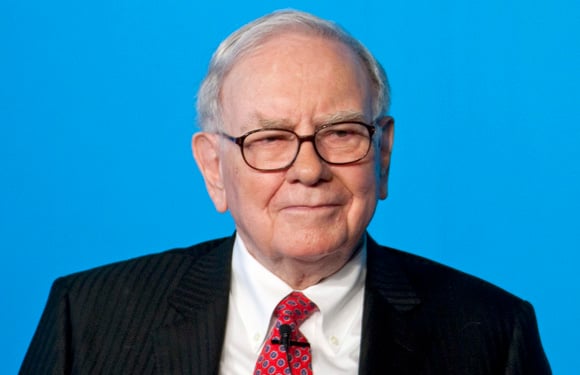
Warren Buffett, the billionaire chairman of Berkshire Hathaway Inc., said low interest rates and inflation should dissuade investors from buying bonds and other holdings tied to currencies.
“They are among the most dangerous of assets,” Buffett said in an adaptation of his annual letter to shareholders that appeared today on Fortune magazine's website. “Over the past century these instruments have destroyed the purchasing power of investors in many countries, even as these holders continued to receive timely payments of interest and principal.”
Buffett, 81, who built Omaha, Nebraska-based Berkshire from a failing textile maker into a firm selling insurance, energy and jewelry through acquisitions and stock picks, echoed Laurence D. Fink, chief executive officer of
BlackRock Inc. Fink said this week that investors should be 100 percent in equities, because of depressed stock valuations and the Federal Reserve's pledge to keep interest rates low.
“High interest rates, of course, can compensate purchasers for the inflation risk they face with currency-based investments -- and indeed, rates in the early 1980s did that job nicely,” Buffett wrote. “Current rates, however, do not come close to offsetting the purchasing-power risk that investors assume. Right now bonds should come with a warning label.”
The Fed has kept borrowing costs near zero, and said last month that economic conditions may warrant “exceptionally low levels” for rates through at least late 2014 to boost the economy and put more Americans back to work. Buffett said other currency-based investments that may pose a risk include money- market funds, mortgages and bank deposits.
IBM, Coca-Cola
Berkshire still holds bonds, primarily Treasuries, for liquidity, and has a preference to invest in companies by buying them outright or acquiring stock, Buffett said. The firm purchased Lubrizol Corp. for about $9 billion and took a more than $10 billion stake in International Business Machines Corp. last year.
Berkshire had more than $68 billion of equities as of Sept. 30 including the largest stakes in Coca-Cola Co. and
Wells Fargo & Co., the biggest U.S. bank by market value. Fixed-maturity investments of about $34 billion included holdings of government debt, corporate bonds and mortgage-backed securities. Cash (BRK/A) and cash equivalents were about $34.8 billion.
The Standard & Poor's 500 Index has climbed 7.3 percent this year through yesterday after being little changed in 2011. Yields (USGG10YR) on 10-year Treasuries rose above 2 percent for the first time in two weeks yesterday after touching a record low of 1.67 percent in September.
‘The Fearful'
Buffett said investors should avoid gold, because its uses are limited and it doesn't have the potential of farmland or companies to produce new wealth. Achieving a long-term gain on the metal requires an “expanding pool of buyers” who believe the group will increase further, he said.
“What motivates most gold purchasers is their belief that the ranks of the fearful will grow,” he wrote. “During the past decade that belief has proved correct. Beyond that, the rising price has on its own generated additional buying enthusiasm, attracting purchasers who see the rise as validating an investment thesis. As ‘bandwagon' investors join any party, they create their own truth -- for a while.”
Gold prices have climbed to more than $1,700 an ounce from less than $300 in the last decade, as investors sought safety in bullion.
Buffett uses his annual letter to Berkshire shareholders to opine on the economy, the firm's operating units, corporate governance and other issues. The full document accompanies financial statements and will probably be released later this month.
--Bloomberg News--