
Office address: 11 Wall St, New York, NY 10005
Website: nyse.com
Year established: 1792
Company type: financial services
Employees: 1,000+
Expertise: equities trading, ETF exchange operations, options trading, bonds, ETPs, trading technology infrastructure, equity index data, data products, market determinism, price discovery mechanisms, auction facilitation
Parent company: Intercontinental Exchange (ICE)
Key people: Lynn Martin (president), Sharon Bowen (chair), Michael Harris (vice chair), Sridhar Masam (CTO), Jon Herrick (chief product officer), Chris Taylor (chief development officer), Tara Dziedzic (head of US Listings)
Financing status: corporate backed or acquired
The New York Stock Exchange (NYSE) serves as the world's largest equities exchange in Lower Manhattan. Here, companies raise capital through public share listings and investors trade equities daily. As of 2025, it lists 74 percent of Fortune 500 and 70 percent of S&P 500.
In 1792, 24 stockbrokers gathered beneath a buttonwood tree on Wall Street and signed an agreement to establish trading rules and fixed commissions. The nation's markets were in chaos, and these traders sought to rebuild public confidence in securities trading.
That simple pact eventually became the foundation for the New York Stock Exchange, the world's largest equities exchange.
Wall Street's roots trace to 1624 when Dutch settlers founded New Amsterdam. They built a protective stockade wall that eventually gave the street its name.
The Compromise of 1790 positioned Wall Street as the nation's financial center. Alexander Hamilton, the first Treasury Secretary, implemented his vision of federal bonds and credit markets.
By 1817, brokers formalized operations into the New York Stock and Exchange Board. They established twice-daily trading sessions at 40 Wall Street.
A presiding officer called out securities while traders shouted bids and offers from assigned chairs. This practice introduced the term "seat," which describes NYSE membership today.
By 1865, the exchange traded over 300 different securities. The growing volume prompted relocation to a permanent home on Broad Street.
The stock ticker arrived in 1867 and transmitted prices instantly via telegraph. Telephones installed in 1878 accelerated trading further. By the late 1880s, daily volume exceeded one million shares for the first time. The 1903 building also became the first air-conditioned structure in North America.
After decades of innovation, market crises, and technological advancement, the New York Stock Exchange evolved into what it is today. Then in 2013, ICE acquired the New York Stock Exchange and remains its parent company today.
The Securities and Exchange Commission (SEC) approved extended trading hours for NYSE Arca, the exchange's all-electronic trading platform, in February 2025. The exchange plans to launch 22-hour daily trading from 1:30 a.m. to 11:30 p.m. ET by late 2026. Though extended hours raise concerns about advisor fatigue, the longer window provides global investors greater access to US-listed securities.
Surging profits at the 130 financial institutions listed on the exchange reinforced the New York Stock Exchange's role in US capital markets in 2025. The exchange's firms generated $30 billion in first-half profits, with compensation expenses rising and average bonuses reaching $244,700. Strong financial performance strengthened the NYSE's position as a leading global trading hub.
The New York Stock Exchange combines multiple asset classes with advanced trading technology and global market access:
The New York Stock Exchange provides comprehensive operational support through real-time market updates, regulatory guidance, and technical assistance. These resources help traders execute transactions safely and maintain compliance with exchange rules.
Capitalism forms the New York Stock Exchange's core mission, which is enabling companies worldwide to raise capital and reach investors. The exchange promotes transparency and good governance to ensure fair markets and investor confidence. The NYSE influences global financial policy through:
The NYSE lists more than 2,000 public companies valued at over $40 trillion as of March 31, 2025. Over 500 international firms from 45 countries have chosen the NYSE as their listing exchange. These listed companies employ approximately 43 million people worldwide.
Lynn Martin is president of NYSE Group, which runs the world's largest stock market, four equity markets, and two options exchanges. Martin's academic background includes undergraduate studies in computer science from Manhattan College and graduate studies in statistics from Columbia University.
Assisting Martin in leading the New York Stock Exchange operations are these key people:
These leaders guide the New York Stock Exchange based on the principle that free and fair markets benefit everyone.
The NYSE emerged as the central figure in New York's stock sales tax debate in April 2025. The proposed tax would cost traders around half a penny per dollar in stock transactions. The threat of relocation poses serious risks to the New York Stock Exchange's future operations in the state.
Beyond its market operations, the NYSE facilitates bell-ringing ceremonies to honor firms celebrating major milestones in their capital markets history. For example, Wellington Shields, a 100-year-old wealth manager, rang the closing bell on July 9, 2025. The exchange's celebration of independent firms demonstrates its commitment to recognizing long-term business relationships and cultural values.

The securities industry will receive proposals this week to improve record-keeping in the stock market and coordinate rules on erroneous trades, two concerns that were highlighted by the May 6 selloff.
The Dow Jones industrials climbed back above 10,000 Wednesday after Federal Reserve Chairman Ben Bernanke said debt problems in Europe might only amount to a "modest" drag on the U.S. economy.

The teen game platform omgpop.com offers some useful lessons on how to get market participants to change their behavior.
Stocks are mostly falling after another slump in the euro prolonged concerns about Europe's economy.

Stocks plunged again Thursday as more investors woke up to the possibility that economic problems such as Europe's debt crisis might spread around the world and stop the growing recovery in the U.S.
U.S. prosecutors in Virginia plan to step up pursuit of financial fraud cases, taking advantage of a court holding two years ago that their district has jurisdiction over crimes linked to federal securities filings
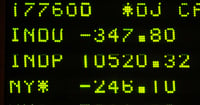
The massive stock sell off on Thursday may have been initially triggered by human error. But it appears that mechanized trading had a lot to do with the wild ride that followed. | <a href=http://www.investmentnews.com/selloff0506> Readers' rant: What's your take?</a>
Waddell & Reed Financial Inc., the mutual-fund manager started in 1937, said it didn't intend to disrupt markets on May 6 when the plunge in stocks temporarily erased more than $1 trillion of value.
Morgan Stanley, in its first profit report under Chief Executive Officer James Gorman, posted earnings that beat analysts' estimates as fixed-income trading revenue more than doubled from a year earlier.
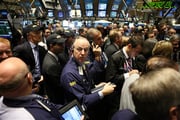
Stocks are surging after European leaders agreed to a nearly $1 trillion rescue plan to avoid a major debt crisis and the U.S. Federal Reserve said it would also provide loans overseas.
The leaders for major securities exchanges have agreed in principle to a uniform system of "circuit breakers" that would slow trading during periods of intense market volatility, Federal regulators said Monday.
U.S. regulators face pressure to show they have a grip on stock markets that are increasingly fragmented and dominated by computers after last week's plunge fueled lawmaker concerns about electronic trading.

Thursday: A nearly 1,000 point drop, followed by a 600 point gain. Friday: Swings of nearly 340 points, to finish with another triple-digit loss. Where it heads next week is anyone's guess. But one thing's for sure: Volatility is back.
One of the most manic days in the history of the world markets may have been the result of a typo made by a trader at Citigroup, according to a CNBC report
The value of Warren Buffett's options to buy Goldman Sachs Group Inc. shares dropped by $950 million after regulators sued the bank for misleading clients on the sale of securities tied to the subprime mortgage market.
