
Office address: 50 South La Salle Street, Chicago, IL 60603
Website: northerntrust.com/united-states
Year established: 1889
Company type: financial services
Employees: 23,000+ (global)
Expertise: wealth management, asset servicing, investment management, banking, trust and estate services, alternative assets, ESG investing, capital markets, family office services, technology solutions
Parent company: N/A
Key people: Michael O'Grady (CEO), Peter Cherecwich (COO), Kelley Conway (head of strategic change, data and digital), David Fox (CFO), Steven Fradkin (vice chair), Aengus Hallinan (chief risk officer), Michael Hunstad (president)
Financing status: corporation
Northern Trust is headquartered in Chicago and employs more than 23,000 people worldwide. The firm provides asset servicing, investment management, and wealth management for institutions, individuals, and families. It manages more than $1.7 trillion in assets as of 2025 and is recognized for its expertise and advanced technology.
Northern Trust was established in Chicago in 1889 by Byron Laflin Smith. He saw a need for a bank built on service, expertise, and integrity during a time of rapid change in American society. The bank opened six accounts on its first day and took in close to $138,000 in deposits!
In 1893, Northern Trust set up a branch at the World's Fair after the official depository failed, making it the first Illinois bank with a branch office. The bank soon opened a Foreign Department to serve international clients, which marked the start of its global outlook. By 1906, the firm moved into its permanent headquarters at 50 South La Salle Street.
Northern Trust introduced safe deposit boxes and became a top-ranked federal securities dealer in the early 1900s. The bank weathered the Panic of 1907 due to strong leadership and later established a charitable fund in 1909. It was also among the first US companies to offer employee benefits like free group life insurance and a pension plan, and it began offering lines of credit in 1912.
The firm supported the country during World War I by handling nearly $27 million in war bonds. In 1917, it became the first air-conditioned office building in Chicago. Northern Trust also:
The company adopted electronic check processing in 1960 and expanded overseas in 1969. It opened its first international office in London.
The firm continued to grow as it launched new investment products and supported social responsibility. In 2024, Northern Trust partnered with Greenlight Financial Technology, a fintech company, to help the children of high-net-worth clients learn financial literacy.
This platform gives families tools to teach kids about earning, saving, giving, and spending. This shows the company’s ongoing commitment to service and innovation.
Northern Trust’s offerings combine advanced technology, diverse investment strategies, and a strong culture of integrity:
Northern Trust has served clients worldwide for over 135 years with trusted expertise and service. The firm is known for its global reach, strong client focus, and advanced technology.
Northern Trust says that its culture brings together people from different teams and locations. The firm aims to create an inclusive workplace that encourages employee growth and involvement. Its values include:
According to the company, employees benefit from a culture built on service, expertise, and strong values. Reasons they give for working at Northern Trust include:
Northern Trust is also a founding member of Nicsa’s Diversity Project North America. The initiative promotes DEI as a business priority in asset and wealth management. It works to remove barriers and create fair opportunities across the industry.
Michael G. O'Grady is the chair and CEO of Northern Trust, leading its wealth, asset servicing, and banking businesses. Before joining the firm in 2011, he held senior roles at Bank of America Merrill Lynch and Merrill Lynch. O'Grady earned his business degree at the University of Notre Dame and his MBA from Harvard.
Senior leadership at Northern Trust guides the company with a focus on client needs:
Northern Trust’s leadership team maintains strong corporate governance and a client-focused approach. The company uses advanced technology to help clients reach their financial goals.
In 2025, the company made it clear that it plans to stay independent, even after reports of merger talks with Bank of New York Mellon. The firm said it remained focused on delivering long-term value for its clients and stakeholders. This commitment to independence helps Northern Trust keep control of its future and continue serving clients with stability and trust.
The firm helps clients and advisers understand new trends in the ETF market by sharing its expertise. Dave Abner, global head of ETFs and funds at Northern Trust Asset Management, explains how active ETFs and new strategies can offer more choices for investors. By leading these conversations and launching new products, the company supports innovation and helps clients adapt to changes like tokenization.
Amid concerns about recession, impeachment and trade wars, investors are pouring into defensive sectors — and sending prices higher.

One recent case alleges an employer didn't appropriately take into account index-fund tracking error.

A type of trust known as a GRAT allows for larger tax-free transfers when interest rates are low

Internal Revenue Service filings detail the investments of 21 trusts set up by the estates of Sam Walton, his widow Helen and son John.

This month's edition kicks off with the announcement that Orion Advisor Services is acquiring Advizr for $50M.

Plaintiffs claim the Northern Trust funds led to a 'swift and devastating blow' to participants' retirement savings.
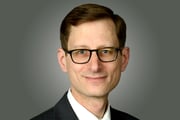
Robert Bergson of Northern Trust Asset Management embraces bottom-up stock picking and usually beats his peers.

Trend is seen as part marketing and part endorsement of ESG's investment benefits.

Uncertainty looms over how much opposition even a quarter-point cut will face and how much the U.S. economy is likely to slow.
Shannon Kennedy from Bank of New York Mellon Corp. will lead a team of more than 200 people.

The challenge is identifying which ESG products are leveraging meaningful data and analysis in a thoughtful way, consistent with the investor's philosophy.

Wealth managers share advice on solid governance structure that will withstand family fights over succession planning and investment decisions.
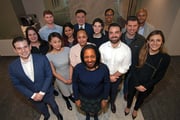
Unlocking the benefits starts with leaders adopting an inclusive mindset.

Gary Hirschberg's Aaron Wealth Advisors will partner with Dynasty Financial.
Mellody Hobson of Ariel Investments was among the speakers at the conference.
