
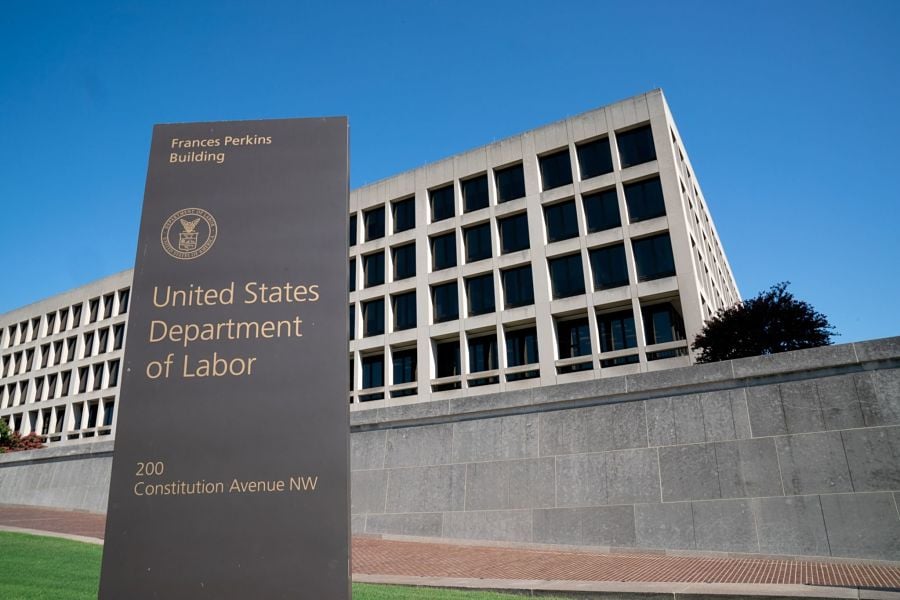
DOL investigations are resulting in the biggest 401(k) recoveries the agency has ever seen, even as the number of cases it closes has been declining.
The agency has been pursuing bigger investigations, part of an initiative started in 2013 to go after plan violations that affect a larger number of participants. The recent numbers suggest that the effort is paying off.
That is according to an analysis published late last week by the Government Accountability Office, which examined enforcement activities for employer-sponsored retirement and health plans by Department of Labor in fiscal 2020 compared with other years in its recent history.
Last year, the DOL recovered $3.1 billion, or roughly twice the amount it got for participants in 2018. In 2014, by comparison, there was just over half a billion dollars recovered.
The number of cases the regulator handles shows just how much it has shifted its focus to big recoveries. In 2014, it closed more than 4,000 civil cases, though that fell to fewer than 1,200 in 2020, with the majority of cases involving retirement plans. About 16% of cases in 2020 were criminal in nature, according to the GAO’s report.
Over six years, the money recovered went up fivefold, while the number of cases went down more than threefold.
“Enforcement continues to present risk to plan sponsors and other fiduciaries. Notably, enforcement did not recede over the past four years, but in fact increased, contrary to widespread concern and predictions,” wrote George Michael Gerstein, fiduciary governance group co-chair at Stradley Ronon Stevens & Young, in an email.
A long-term consequence of the pandemic could be a higher number of "missing" participants who lost their jobs and might be unaware of the 401(k) balances they have with former employers, necessitating more investigations, DOL workers told the GAO. Further, businesses that were forced by financial pressures to shutter permanently might have abandoned the retirement plans they sponsored, the report noted.
Part of the recent increase in recoveries could be due to the DOL launching investigations into record keepers, broker-dealers and potentially some RIAs, said Jason Roberts, CEO of the Pension Resource Institute.
“We’ve certainly seen fewer plan sponsor investigations,” he said. “There’s definitely more scrutiny of financial institutions.”
In 2013, there were few DOL investigations of financial services firms, although there have been about half a dozen launched so far this year, Roberts noted.
The agency has been casting a wide net, often asking record keepers for documents that appear to be a precursor to investigations, he said. The focus on financial services firms, rather than just plan sponsors, reflects a change in the regulator’s mission that occurred in 2016 when it started its “plan investment conflicts” enforcement project, he said.
If an investigation finds a service provider to be at fault, “the remedies are severe,” he said. If, for example, the DOL finds evidence of prohibited transactions — potentially affecting multiple plans — the investigated company might have to pay disgorgement with interest, a settlement penalty, compensation for losses and other fines, he said.
Broker-dealers and RIAs are also being asked for information about the plans they sponsor for their own employees, with the DOL looking for evidence of self-dealing, he noted.
The change in enforcement strategy is similar to sweeps that the SEC or Finra have conducted, and it has made some firms pay more attention to complying with the Employee Retirement Income Security Act, he said.
“The message would be, ‘maintain a focus on ERISA compliance, not just when there’s a new rule that comes out,’” he said.

Andrew Komarow pleaded guilty Thursday in federal court in Hartford to defrauding three financial services companies of close to $3.3 million.

Elsewhere, Cetera picks up a $210 million Connecticut team from MML, while Wells Fargo FiNet adds a San Diego family practice from LPL

“We needed to become a more agile and efficient organization,” said American Express CEO Stephen Squeri.

Examiners will scrutinize fee conflicts, complex products and super intelligence threats as broker-dealers face fresh Reg BI and AML reviews

New launches tackle succession planning, AI-driven email management and heir retention ahead of the great wealth transfer
Knighthead Life entered the market with a competitive MYGA. A strong launch earned advisor confidence and paved the way for FIAs.
As AI makes financial information more accessible than ever, Lana Hock explains why human judgment, trust, and empathy remain the qualities clients value most in a financial advisor

