
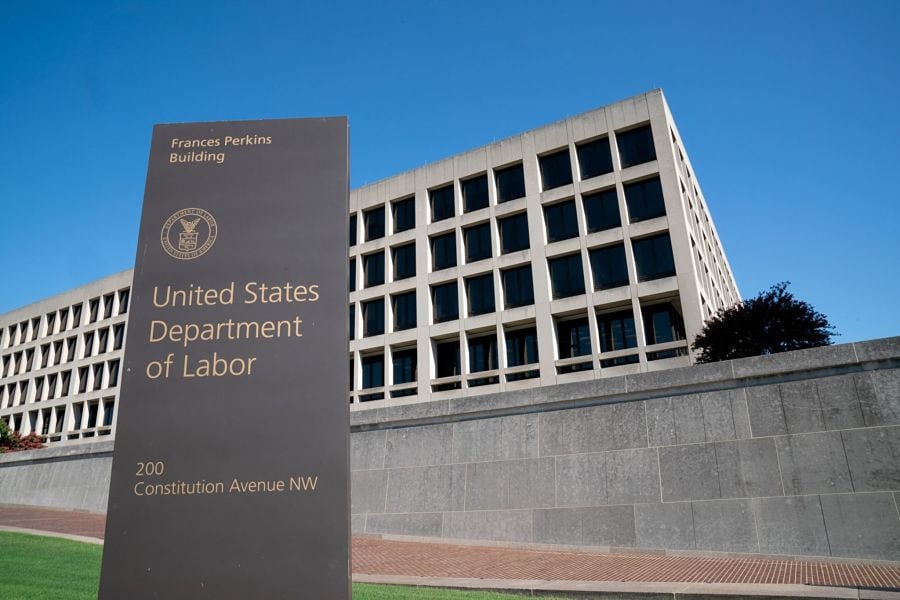
The Department of Labor released a final regulation Tuesday to reform investment advice rules for retirement accounts, but the measure may be short-lived because it’s coming out within weeks of the Biden administration taking power.
It provides exemptions under federal retirement law — the Employee Retirement Income Security Act — that would allow fiduciaries to receive compensation for advice that would otherwise be prohibited, such as commissions, 12b-1 payments and revenue sharing, as long as they act in a retirement savers’ best interests.
The effective date of the rule is 60 days after it is published in the Federal Register, which could occur in a few days. That window ensures the measure won’t go into effect until after President-elect Joe Biden is inaugurated on Jan. 20.
The Biden DOL would have an opportunity to delay to death a rule that has drawn strong criticism from Democrats and investor advocates.
Brad Campbell was DOL assistant secretary and head of the Employee Benefits Security Administration during the George W. Bush administration. He said the agency released an investment-advice rule that didn’t go into effect until after the Obama administration took office.
The Obama DOL delayed the rule’s effective date twice, took public comments on the rule and then withdrew it based on the comments. Campbell said the same thing could happen to the just-released fiduciary rule.
“We’ve seen this movie before,” said Campbell, a partner at Faegre Drinker Biddle & Reath. “If they follow the Obama administration’s playbook, it should be a relatively straight-forward exercise for the delay and ultimate withdrawal of rules that have not yet gone into effect before Inauguration Day.”
The Trump DOL fiduciary rule replaces a more stringent regulation that was promulgated during the Obama administration but was vacated by a federal appeals court in 2018.
Under the rule, financial advisers to a retirement plan or someone with an individual retirement account would have flexibility in compensation methods as long as they act in the best interest of their clients, charge reasonable compensation and don’t make misleading statements.
The DOL rule is aligned with the Securities and Exchange Commission’s broker advice standard, Regulation Best Interest, so that advisers who comply with Reg BI also comply with the DOL rule.
“The final exemption would allow a wide range of investment advice and services to ERISA plans and IRA investors and ensure that retirement investors receiving advice under the exemption get advice that is in their best interest,” Jeanne Klinfelter Wilson, acting assistant DOL secretary for EBSA, told reporters Tuesday.
The exemption would apply to rollovers from company-sponsored retirement plans, such as 401(k)s, to IRAs as long as all elements of a five-part test for determining who is a fiduciary are met.
The rubric, established in 1975 and replaced by the Obama administration fiduciary rule, was reinstated in conjunction with the Trump DOL fiduciary regulation. The measure received some pushback from the financial industry because firms and lobbyists said the preamble to the rule interpreted the five-part test too broadly.
A senior DOL official told reporters the final fiduciary rule is largely the same as the proposal that was released in June.
"The exemption is a step forward as it will encourage a variety of investment advice approaches and it will provide retirement investors with the services they seek," Kenneth E. Bentsen Jr., chief executive of the Securities Industry and Financial Markets Association, said in a statement. "We appreciate that the Department has sought to align this new class exemption with the SEC’s Regulation Best Interest, which the industry is working diligently to implement.”

Meanwhile, DPL Financial Partners adds two annuity executives and Prime Capital Financial hires a Mid-Atlantic retirement plan consultant

Andrew Komarow pleaded guilty Thursday in federal court in Hartford to defrauding three financial services companies of close to $3.3 million.

Elsewhere, Cetera picks up a $210 million Connecticut team from MML, while Wells Fargo FiNet adds a San Diego family practice from LPL

Celebrity endorsements, $500M in claimed assets, and a state regulator stepping in.

“We needed to become a more agile and efficient organization,” said American Express CEO Stephen Squeri.
Knighthead Life entered the market with a competitive MYGA. A strong launch earned advisor confidence and paved the way for FIAs.
As AI makes financial information more accessible than ever, Lana Hock explains why human judgment, trust, and empathy remain the qualities clients value most in a financial advisor

