
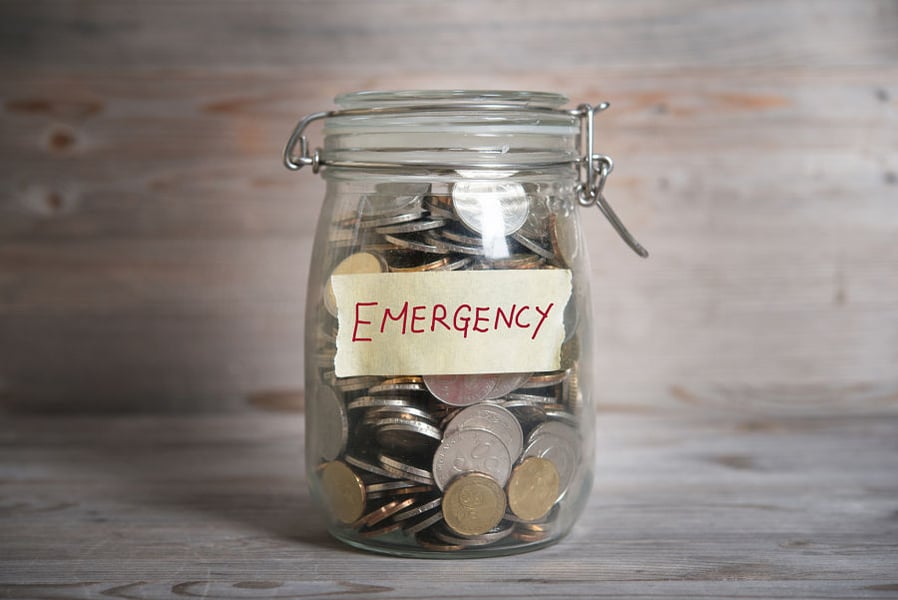
Would you share an emergency savings account with strangers?
That is a central question in an ongoing experiment conducted by BlackRock-backed nonprofit Commonwealth, which recently published promising findings about collective emergency savings. The answer, particularly for low- and moderate-income households, most often is “yes.”
Working with fintech firm Esusu, Commonwealth set up eight groups of three to four people who each contributed a preset amount ranging from $5 to $75 each month to the accounts between December 2019 and January 2021.
The results showed that people saved more, spent less and felt more secure financially than they did prior to participating, Commonwealth noted.
“Most of us can just relate to it from our own lives. Saving money is hard. And the less you have to work with, the harder it is,” said Timothy Flacke, executive director of Commonwealth. “We are more isolated around our finances than probably any other topic.”
The benefits of social support are clear, he said.
“This pooled approach allows you to more quickly have access to a pool of funds,” he said. Collective accounts represent “a potential of untapped strength for all of us who want to connect with others who have a similar goal.”
Commonwealth recruited participants who said they felt unprepared for financial emergencies, and the group oversampled for women of color. Some groups included friends and family, while others were strangers.
In order to make a withdrawal to cover emergency expenses, people had to contact the rest of group, which voted within 24 hours to approve or deny the requests. The funds were released within three to five days.
Before joining the pilot program, most participants saved less than $100 per month, and about half did not have at least $400 in savings. Relatedly, survey data from the Federal Reserve show that more than a third of Americans lack savings to cover an unexpected $400 expense, and that rate is considerably higher among Black and women-led households, according to Commonwealth.
The yearlong experiment showed that 93% of participants contributed regularly to the group emergency accounts, and they reported saving at higher levels than they did previously. People credited automatic deposits and social pressures and motivation as the factors that led them to save more. There were at least three withdrawals taken from the accounts, at a total of $595, which participants used for rent, car repair and an unexpected small-business expense, Commonwealth reported. Overall, the groups accumulated $5845 in savings at the end of the year.
About 70% showed a higher level of financial wellbeing after a year, as measured by the Consumer Financial Protection Bureau’s metrics, the report noted.
Next, Commonwealth is planning to more closely examine how comfortable people are asking for withdrawals from the accounts or approving others’ requests for them, said director Gosia Tomaszewska, who leads the organization’s lab team. The larger test will make clearer what types of emergencies qualify for withdrawals and could help answer the question, “As people accumulate more funds, are they more willing to help others?” Tomaszewska said.
“Trust is an important thing,” she said. “The original savings circles and collective savings are all based on trust.”
In November, Commonwealth surveyed 150 people, oversampling for low-income, middle-income, Black people and women. It found that more than three-quarters were interested in collective emergency savings, with as much as 93% of Black households with less than $50,000 in income saying they would likely participate. Most people said they would want to save with between one and five others, and they said they would prefer to do so with family and friends.
401(k) APPLICATION
Collective emergency savings have a lot of potential at the workplace, Flacke said.
Coworkers already have a rapport, which could make them good candidates, and being able to opt in to emergency savings arrangements could help address some of the privacy or human resources concerns.
For employers, the benefits could be a more financially secure workforce and a way to help address inequality, Flacke said. But it could also mean fewer instances of hardship withdrawals from 401(k)s, he said.
“One of the perennial issues is this thorny question of, do you approve the hardship [request]?” he said. “Once you have a group, there is another option on the table for how that gets resolved.”

Daejon Love and Taylor Chan's $1.3 million romance fraud scheme exposes how AI search engines can be manipulated by fabricated online identities

“It was a third party scam,” said the attorney representing the claimants.

Meanwhile, &Partners draws another Commonwealth practice, and Wealthcare welcomes a $550 million planning practice in the Northeast.

Palo Alto AI platform recruits RIA and fintech leaders as industry data show AI adoption reshaping advisor staffing.

Meanwhile, Raymond James, Wedbush, and LPL recruited veteran advisors from across Texas, North Carolina, and California.
Northern Trust’s Ken Lassner shows advisors how to convert volatility into after-tax portfolio gains
Dan Biagini of American Equity says the steady decline of pensions, longer lifespans and a reset in interest rates are rewriting how advisors build retirement income

