
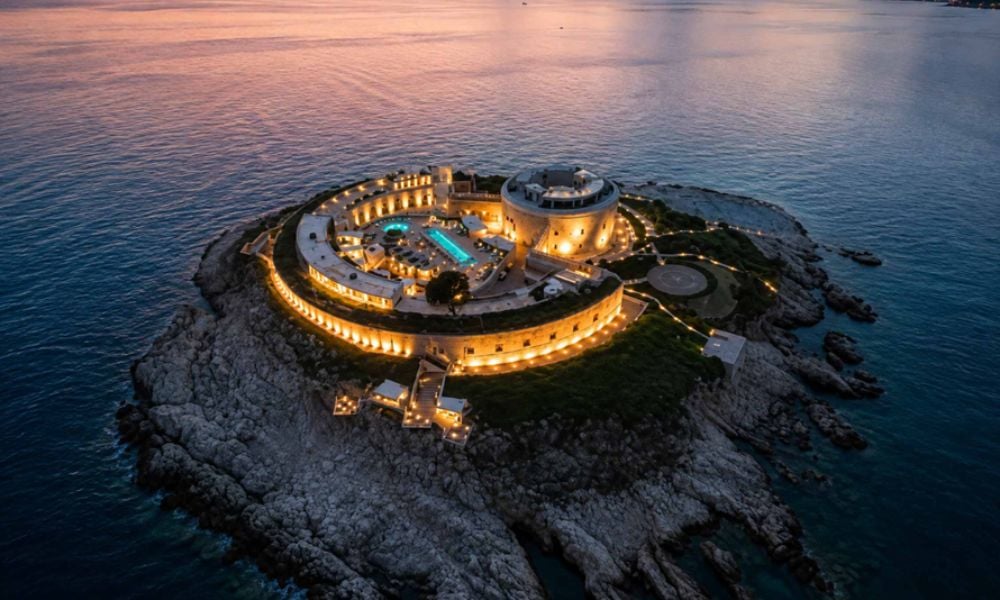
When Stevan Katić became mayor of Herceg Novi, the resort town where Montenegro's Bay of Kotor meets the open Adriatic, he inherited a local economy hollowed out by years of failed privatizations. Nearly a decade later, he has a very different story to tell, and he is telling it to international investors.
Katić says he turned down offers of bigger jobs to stay in his hometown. Local voters appear to appreciate the commitment: the municipal assembly has returned him for a third term as mayor.
In an interview with Investment News, Katić describes a town ready for global hotel brands, medical tourists and visitors twelve months a year, and a visit to Montenegro can definitely see why some liken it to the Italian lakes, or a Balkan Monaco.
Katić understands hospitality well – having worked in the family business before entering politics – and his timing is good. Montenegro is aiming to become the European Union's 28th member in 2028, and more wealthy Americans are establishing residency abroad, often as a hedge rather than a tax play.
Montenegro is the furthest along of the EU's current candidates, at least on paper. It has opened all 33 negotiating chapters, and by mid-June EU officials said 16 had been provisionally closed. Two more closed in July, bringing the count to 18, with the government aiming to wrap up talks by the end of this year.
Brussels has signaled its approval of that pace. In April, EU ambassadors agreed to set up a working group to begin drafting Montenegro's accession treaty, and officials in Brussels regard it as the most advanced candidate.
For Katić, the prize is scale. Access to a market of roughly 450 million consumers, he argues, is a major development opportunity for a small economy, along with EU funds, stronger institutions and better living standards for residents.
Herceg Novi stands to gain more than most. It sits on the border with Croatia, and Katić expects EU integration to ease the long summer waits at border crossings that frustrate visitors from Western Europe. Passport-free travel through the Schengen zone is a separate step that can take longer: Croatia joined the EU in 2013 and Schengen a decade later. But the direction of travel is clear.
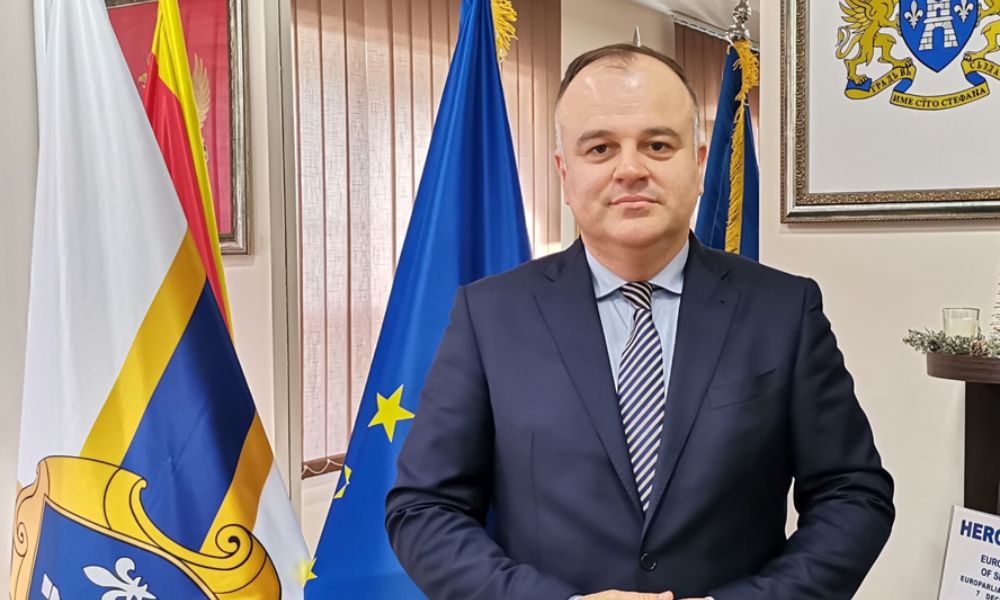
Stevan Katić, mayor of Herceg Novi
The mayor's best exhibit sits just down the coast. Portonovi, a resort-and-marina development on a former army barracks site, is home to the first One&Only hotel in Europe. According to Montenegro's government, the hotel opened on May 1, 2021, with 113 rooms and 10 branded villas, under a lease that committed the developer to €258 million in investment over its first eight years.
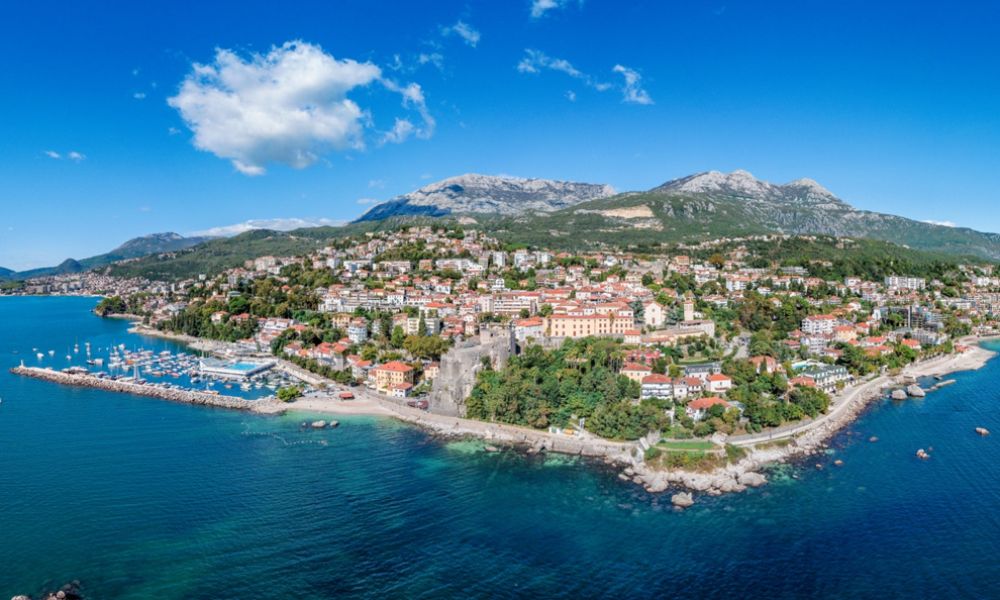
Katić points to Portonovi and the newer Lazure hotel and marina complex as proof that Herceg Novi can compete for the world's most demanding travelers, and he wants more global hotel groups to follow. Under his leadership, he says, the town has attracted more than €120 million in investment, rebuilt infrastructure and returned to the top of the region for overnight stays by foreign tourists.
It is a notable reversal which he can certainly take a lot of credit for. Back in 2021, Katić told Montenegro's deputy prime minister that three decades of botched privatizations, from the Bijela shipyard to repeated attempts to sell the Igalo health institute, had left the town badly behind its coastal neighbors.
Today he is selling far more than beaches. Mount Orjen, about half an hour inland, offers hiking and eco-tourism outside peak season. In the seaside district of Igalo, the Dr. Simo Milošević Institute, known for its therapeutic mud and specialist staff, gives the town a ready-made base for medical tourism. Katić also cites a calendar of more than 15 long-running festivals such as Roots Revival, historic fortresses that double as summer stages, and dozens of churches and monasteries that draw religious visitors.
He is equally clear about what investors need in return: "legal certainty, transparent procedures, efficient administration and a stable regulatory framework." Improving the business climate, he says, is one of his top priorities, alongside protecting the town's natural and cultural heritage.
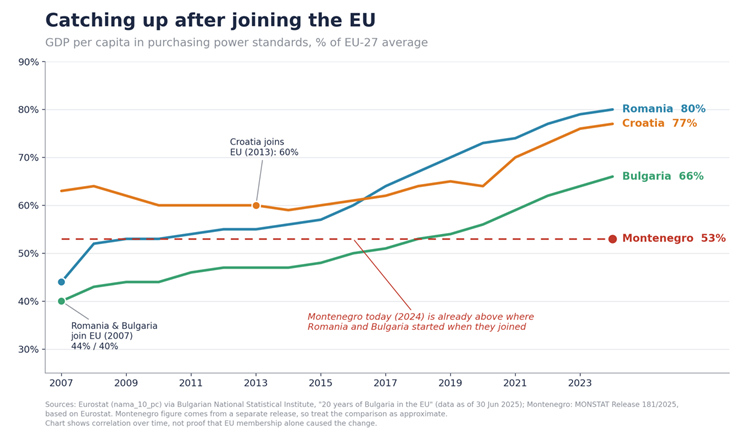
Montenegro is small, with about 623,500 people and 2024 GDP of €7.6 billion, according to the OECD. But it is the most economically advanced of the six Western Balkan economies, with income per person at about 53.5% of the EU average on a purchasing-power basis.
The country has used the euro since 2002, which spares European visitors and investors any currency conversion. The World Bank expects growth of around 3% a year through 2028 and calls EU accession the main anchor for policy, while noting that a small, open, tourism-driven economy remains exposed to outside shocks.
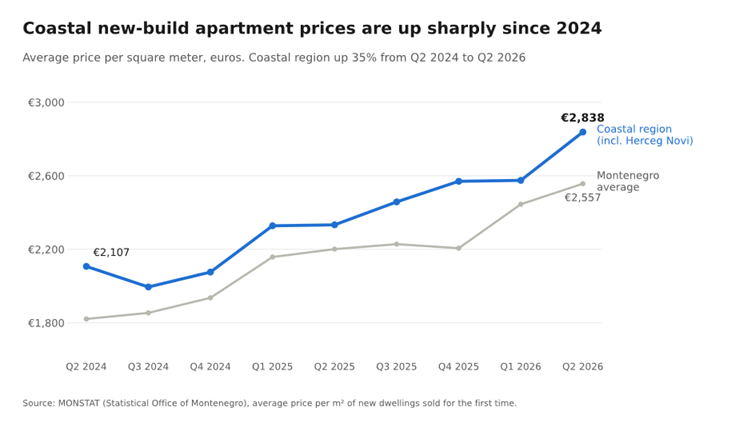
Property is where much of the foreign money is aiming for. Newly built apartments on the coast, a statistical region that includes Herceg Novi, sold for an average of €2,838 per square meter in the second quarter of 2026, according to MONSTAT, Montenegro's statistics office. That works out to roughly €264 per square foot.
The climb has been steep. The same coastal measure stood at €2,333 a year earlier and €2,107 two years earlier, a gain of about 35% in two years. MONSTAT's series covers only first-time sales of new homes, so the mix of projects sold in a given quarter can move the average.
Foreign buyers are a big part of the story. Non-residents put about €497 million into Montenegrin real estate in 2025, according to preliminary central bank data, close to half of the €1.02 billion in total foreign direct investment the country attracted that year.
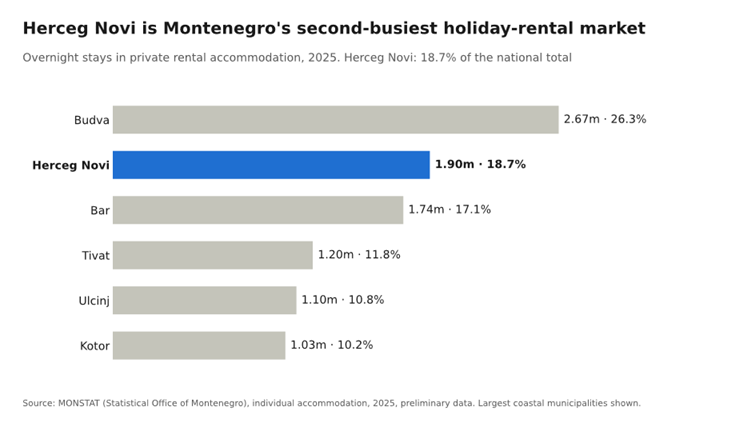
Demand from renters backs up the mayor's pitch. In 2025, private holiday rentals in Herceg Novi — rooms, apartments and houses rather than hotels — logged about 1.9 million overnight stays from 214,399 arrivals, according to preliminary MONSTAT data. That is nearly a fifth of the national total and second only to Budva.
Americans are still a small but visible slice of that traffic, with 16,291 U.S. arrivals in private rentals across Montenegro last year.
Montenegro has also been bringing its rules into line with Brussels. Its citizenship-by-investment program closed on Dec. 31, 2022 as part of that alignment, a sign that the country is choosing EU standards over quick capital.
For globally minded clients, Herceg Novi offers something increasingly rare: a Mediterranean coastline in a country on the cusp of EU membership, led locally by a mayor actively courting long-term investors. Advisors can add real value by helping clients plan it properly.
A home on the Bay of Kotor is a euro-denominated, relatively illiquid asset, so it belongs in the same conversation as currency exposure, cash-flow needs and estate planning. Clients drawn by the accession story should treat 2028 as a target that ultimately rests with Brussels.
The paperwork is manageable with planning. A Montenegrin bank account used to pay builders or collect rent counts toward the IRS's FBAR rules, which require a filing when a U.S. person's foreign accounts together top $10,000 at any point in the year. Clients seeking a European base should look at residency options, since the citizenship-by-investment route has closed.
Families who do want to hold assets overseas have plenty of company: Bernstein's head of global families wealth strategies walked InvestmentNews through how, why and where U.S. families are booking assets abroad.
Katić, for his part, is sure of his town's appeal. He describes Herceg Novi, with a history stretching back nearly 650 years, as modern "yet a city with a soul," and says that anyone who visits wants to come back. If Montenegro delivers in Brussels over the next 18 months, more investors may be inclined to agree.

Consolidators handled 53% of deals through September as smaller sellers stalled amid market volatility, DeVoe & Company finds.

Shook Research has a new name and brand, Veritant, and will continue its coveted rankings of financial advisors.

The Supernova-powered lending line follows a Flourish Cash rollout as the insurer pushes private-bank-style tools to its 6,000-plus advisors

New Escalent research finds younger, more diverse DC plan participants are open to rollovers - but increasingly prefer outside firms.

UBS finds millionaire investors are more optimistic than before 2024 but are actively repositioning portfolios ahead of November 3.
Knighthead Life entered the market with a competitive MYGA. A strong launch earned advisor confidence and paved the way for FIAs.
As AI makes financial information more accessible than ever, Lana Hock explains why human judgment, trust, and empathy remain the qualities clients value most in a financial advisor

