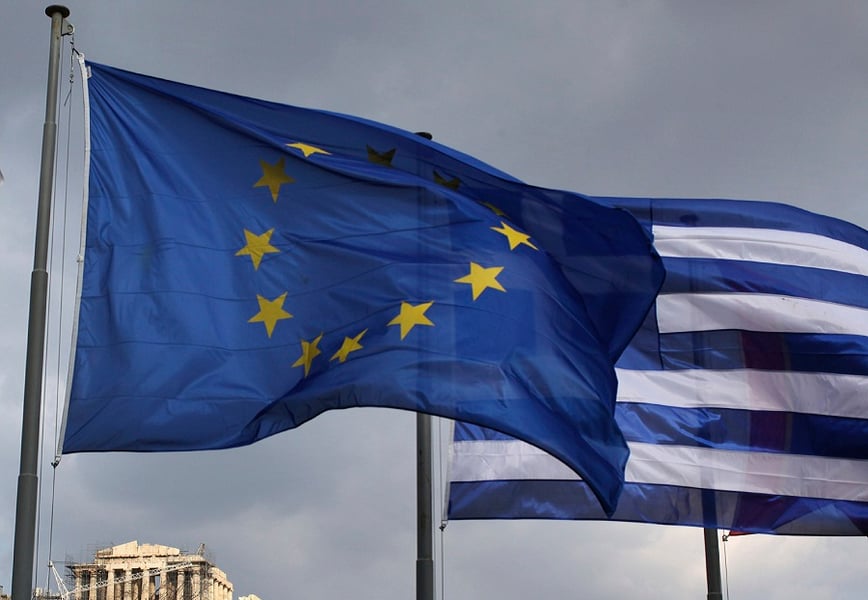
If you weren't already exhausted by the constant stream of headlines regarding Greece's inability to meet its financial obligations, you should be now. After more than five years of negotiations, deals, posturing and extensions, the situation in Greece seems to be coming to a head. I hesitate to use the word “crisis” because unless you're living there and feeling the depressionary pain, this is really a fringe story. What I find interesting is that we are finally seeing all parties involved dig their heels in to play tough.
This isn't another Lehman Brothers. I am not worried about contagion as with subprime mortgages in 2007. I don't fear counterparty risk as with
AIG. Greece's creditors are at the top of the food chain, where bailouts aren't needed.
I won't rehash the past five years, but I have written many times that Greece has actually been in default more than it has been current with its obligations over its long history.
This is cultural more than financial. For example, Greek citizens have a history of unprosecuted tax evasion. It's accepted as business as usual. Their socialist system simply does not work. You can't have a full pension retirement age of 57 when life expectancies continue to grow and your country has no means to pay those people.
TWO BIG ANNOUNCEMENTS
Over the weekend, two significant announcements were released. First, the Greek government scheduled a referendum for July 5 on whether to accept the new “deal” offered by its creditors.
This is a very bold and fascinating move by Athens, essentially abdicating the decision to its citizens, who have protested the deals in mass. They reject austerity. They reject raising taxes. They reject raising the retirement age. They reject pension cuts and reform. What they want is old-fashioned business as usual, which has about as much a chance of happening as I do of becoming 6 feet tall! I am currently 5-foot-8.
Besides the referendum, the eurozone finance ministers refused to a one-month payment extension and the European Central Bank announced that it would not increase emergency liquidity measures for the Greek banks, essentially forcing their hands by saying enough is enough without further concessions. As you might expect, this caused an immediate run on the banks and potential collapse of the entire banking system. And, as you might expect, the Greek government then shut down the banks at least until Thursday to stem the tide (not) and begin to put capital controls in place on withdrawals.
So, what we have is a very-high-stakes games of chicken between Greece and the Troika — that being the ECB, International Monetary Fund and European Union. Greece remains in a lose-lose situation. Continue to accept austerity measures and remain in a deflationary depression — which is a bit redundant — or tell the Troika to go pound sand, default on everything, leave the euro and issue drachmas, sending the country into some type of modern-day inflationary spiral in which importation of goods would grind to a complete halt.
NEITHER OPTION APPEALING
Neither option seems appealing, but if I had to choose, I would take the latter, somewhat like Iceland did six years ago, except it had its own currency. The stock market collapsed by 90%, along with the banking system and economy. However, five years later, the world was already loaning Iceland money again and the recovery was brisk.
The Troika fears Greece exiting the euro because it sets the stage for other, much larger and more economically and financially important countries to leave, such as Portugal, Spain and even Italy. That's a story for later this decade.
Paul Schatz is president of Heritage Capital.