
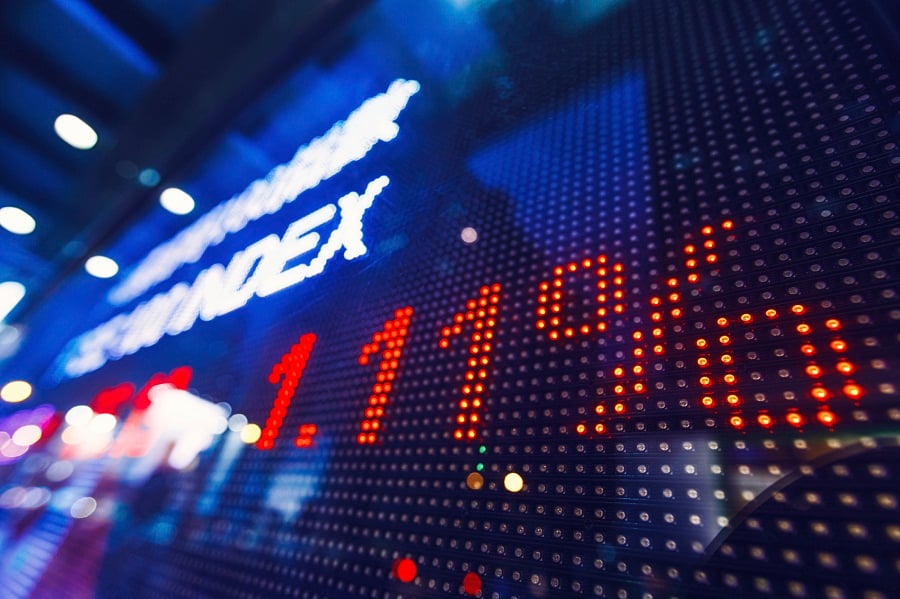
Advisers to the world’s wealthiest people are urging clients to pounce on potential bargains after U.S. stock markets registered their worst four-day performance since the depths of the 2008 financial crisis.
“While we are not trying to call the bottom of the market, past experience suggests this is a good time to invest in U.S. stocks for investors with a time horizon of several months or more,” Mark Haefele, chief investment officer at UBS Global Wealth Management, said in a note Thursday as the continuing spread of the coronavirus shook investors’ faith in the endurance of the longest bull market in history.
Anastasia Amoroso, global investment specialist at JPMorgan Private Bank, expects “a near-term bounce off extremely oversold levels.” She’s advising some clients to look to the options market in anticipation of a “snapback” driven by soothing words from the administration or the central bank. Ms. Amoroso also suggests selectively adding to U.S. and China tech, health care and electric vehicles, for those looking out six months and beyond.
Wilmington Trust investment chief Tony Roth also sees a longer-term opportunity — though it’s predicated on potential economic pain in coming years.
“For clients that are qualified, investing in private markets, in opportunities that take advantage of stressed companies, distressed opportunities and bankruptcies is very compelling right now,” he said. “We will see a lot of stressed companies come up for sale in the next 12 months.”
In a separate note Thursday, Mr. Haefele advised clients to focus on oversold sectors, including U.S. consumer discretionary and communications.
Digital content providers such as those that offer streaming services, as well as e-commerce retailers, “are likely to prove to be more defensive, and potentially even beneficiaries of more time being spent at home,” he wrote.
So far, this week’s rout has erased a combined $344 billion from the fortunes of the world’s 500 richest people, including $111 billion on Thursday alone. The S&P 500 Index and Dow Jones Industrial Average have both dropped more than 10% since markets opened Monday. The last time either benchmark had a worse four-day stretch was November 2008.
The carnage extended beyond equities. Junk-bond investors pulled $4.2 billion during the week ended Wednesday, according to data compiled by Refinitiv Lipper, one of the biggest withdrawals ever.

Goldman Sachs retirement survey finds 83% want guaranteed income, while the annuities providing that income increasingly hold private credit.

The AI meeting assistant's Advisor Intelligence plugin turns client conversation data into annual reviews, tax scans and attrition alerts.
Chuck Roberts and Stifel have been facing scrutiny due to sales of structured products and structured notes.
Among other updates, the proposals would let advisors to regulated funds earn performance fees and allow interval funds to offer monthly repurchases.

What will financial advice look like 20 years from now? Evan Vladem explores how AI may transform wealth management while reinforcing the enduring value of human guidance, trust, and empathy.
As AI makes financial information more accessible than ever, Lana Hock explains why human judgment, trust, and empathy remain the qualities clients value most in a financial advisor
Northern Trust’s Ken Lassner shows advisors how to convert volatility into after-tax portfolio gains

