
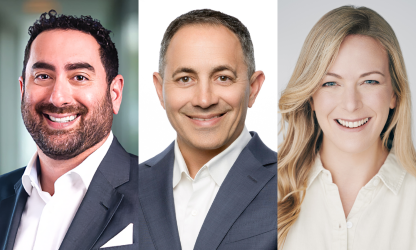
With Anthropic's initial public offering expected as early as next month, financial advisors are fielding a surge of questions from clients holding concentrated positions in artificial intelligence companies – whether as employees, early investors, or through private market exposure. The consensus among advisors interviewed: the planning work that protects a once-in-a-lifetime wealth event has to start well before the opening bell, not after.
Concentrated stock risk hides behind strong fundamentals
Cameron Rogers, partner at Angeles Wealth Management, says the assumption she sees again and again is that a winning stock only moves in one direction. The data, she argues, should give anyone pause. In a recent concentrated stock study, J.P. Morgan found that the companies that suffered catastrophic declines – a 70% or more drop from peak with no recovery – mostly didn't look risky at their peak price: over half were profitable, most carried modest debt and reasonable valuations, and Wall Street had them rated "strong buy."
"In other words, you can't count on seeing the fall coming. So the first conversation I have isn't about selling, it's about deciding ahead of time how much of your family's future you're comfortable resting on one name, then building a rules-based way to diversify such as a 10b5-1, staged selling, or other hedging, so emotion isn't making the call. The clients who come through this well love the company and still right-size the position," Rogers said.
Rogers notes that waiting until after an IPO to plan isn't the strategy it once was, since companies are staying private far longer and liquidity often arrives earlier through company-run tender offers well before a public listing. "What people leave on the table by waiting is the structural planning. Pre-wealth event is the window to move low-basis shares into a trust or gifting vehicle, start the clock early on things like long-term capital gains, and have a diversification plan drafted. Almost all of it gets harder once a wealth event is triggered," she said.
Tax and lock-up planning can't wait for the bell
Gabriel Shahin, founder and principal at Falcon Wealth, tells clients that AI private-market valuations can be highly volatile – paper wealth isn't real cash until it's monetized. "The biggest mistake investors make is treating expected IPO proceeds as a guaranteed slam dunk. You need to manage that concentration risk early and start planning for the potential future tax problem before the liquidity event actually happens. If you wait until after the stock starts trading publicly and volatility hits, you might find yourself with a huge tax bill on paper gains or, even worse, caught holding an over-concentrated position if the market swings downward during the lock-up period," Shahin said.
For clients with eight- or nine-figure paydays on the horizon, Shahin recommends estate planning, valuation discounts, and trust structures well in advance, along with a look at private secondary markets if company rules allow it. "The risk of waiting until after the IPO is that you're stuck in a standard 180-day lock-up period where you can't sell, leaving you completely exposed to public market fluctuations while the clock ticks down," he said.
Alex Shahidi, co-CIO and senior managing director at Evoke, a division of MAI Capital Management, frames the IPO as a starting point rather than a finish line. "Too often, investors may mistake a successful investment for a diversified portfolio and allow a single position to dominate their financial future. A common mistake is letting recent success create overconfidence, causing investors to underestimate concentration risk and delay difficult decisions. In my experience, the goal should not be to stay rich on paper, but to convert concentrated wealth into resilient wealth," Shahidi said.
Diversifying beyond the two or three AI headliners
For clients without direct exposure to Anthropic or OpenAI but caught up in the broader AI boom, Rogers advises looking past the headline names to where the technology is actually transforming other industries. "That's where the durable opportunity lives: the companies, often in less glamorous corners, that are using AI to fundamentally change their cost structure, their products, or their competitive position, but aren't yet being priced as 'AI stocks,'" she said.
Shahin points clients toward established, cash-generating companies such as Google, Nvidia, Meta, Oracle, or SpaceX for AI exposure without fresh-IPO risk, noting the concentration risk already building in portfolios tied to the AI trade. Shahidi, meanwhile, cautions against chasing a single winner: "The goal is not to identify one winner but to build a portfolio that can participate if AI succeeds while remaining resilient if current expectations prove too optimistic."

The deal deepens the Kansas-based RIA giant's push into institutional consulting after a year of acquisitions spanning insurance, retirement and cross-border wealth work.

From M&A matchmaking to embedded advisor intelligence, third annual awards spotlights AI governance and data unity over feature-heavy platforms.

New AssetMark research shows AI has moved from experiment to expectation and firms that lag on capabilities risk losing advisors.

Three advisors focused on retirement income distribution leave Wells Fargo for LPL's broker-dealer and RIA platforms.

Investors bet on AI-driven portfolio automation as advisory firms grapple with time-consuming manual work and rising demand for personalization.
Northern Trust’s Ken Lassner shows advisors how to convert volatility into after-tax portfolio gains
Dan Biagini of American Equity says the steady decline of pensions, longer lifespans and a reset in interest rates are rewriting how advisors build retirement income

