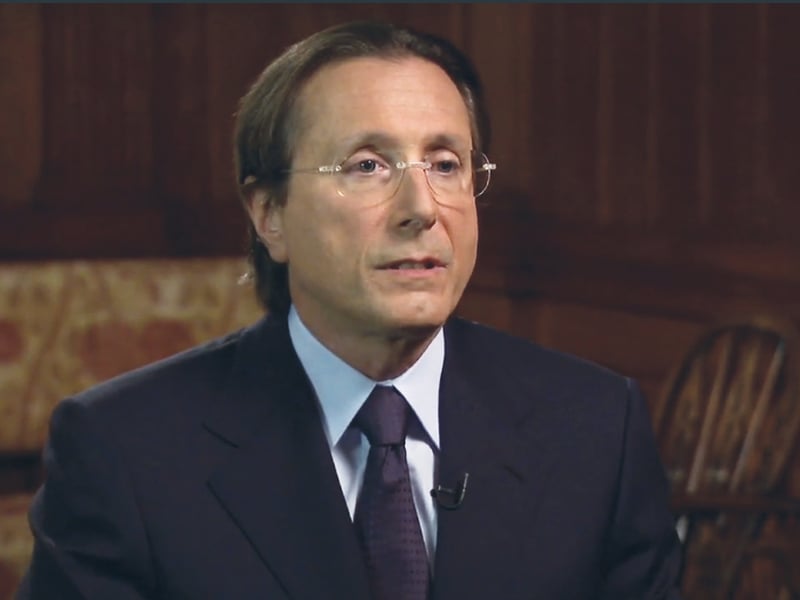

Berkowitz's Fairholme Fund beating its peers amid rising volatility

Berkowitz's Fairholme Fund beating its peers amid rising volatility
Big gains in Sears, St. Joe help $5.9 billion fund avoid heavy losses as stocks drop.
SEP 01, 2015
Bruce Berkowitz's Fairholme Fund, known for its big swings in performance, rode out the recent volatility in the stock market better than any of its peers. The $5.1 billion fund lost 2.9% in the month ended Sept. 1, the best among 560 U.S. equity funds with at least $1 billion in assets, according to data compiled by Bloomberg. The S&P 500 Index fell 9% in the same period. Mr. Berkowitz, 57, runs a concentrated portfolio, which makes his fund prone to wide changes in performance over short stretches. He has repeatedly told investors that his stock picks will move in and out of favor, and that volatility in the markets is not something to worry about. (More: Bruce Berkowitz sticks to contrarian guns as investors exit Fairholme Fund) “His portfolio is very concentrated and it doesn't look anything like the market as a whole,” said Kevin McDevitt, an analyst with Morningstar Inc. “The result is his performance is completely untethered from the market.” Fairholme Fund in the past month benefited from its holdings of retailer Sears Holdings Corp., which gained 21%, and St. Joe Co., a real estate firm that climbed 7.2%. Sears accounted for 11% of the fund's holdings as of May 31, and St. Joe was 6.6%. CASH PROVIDED CUSHION The fund held 14% of its assets in cash as of May 31, a regulatory filing showed, which provided an additional cushion as stock prices fell. The holdings helped offset losses from its two biggest positions. Fairholme Fund had 29% of its assets in American International Group Inc., whose shares fell 8.4% in the month, and 19% in Bank of America Corp., whose stock slumped 13%. Fairholme trailed more than 99% of peers in 2011, beat 99% in 2012 and then lagged behind 97% in 2014, according to data compiled by Bloomberg. This year, it's ahead of 97% of rivals. Since the fund was created at the end of 1999, it has returned 11% a year, compared with an annual gain of 3.9% for the S&P 500. A message to Mr. Berkowitz wasn't immediately returned.

Latest News

House passes bipartisan bill to shield seniors from investment fraud

Financial services trade groups back new authority letting mutual funds pause suspicious redemptions from vulnerable investors

Texas man says SEC and fund could make him pay twice

A $141M judgment and a federal asset freeze collide over one shrinking pool

Osaic executives Kristy Britt and Greg Cornick to leave

The firm's CFO and EVP of Wealth Management Solutions are the latest executives to exit the broker-dealer.

Estate planning becomes a client retention issue for financial advisors, survey finds

Clients are saying they would consider switching advisors if another professional offered estate planning services, according to a new Trust & Will survey.

Candidly adds AI agents for Trump Accounts, workplace benefits

CEO Laurel Taylor says the fintech's composable AI stack helps workers optimize dollars across Trump Accounts, 529s, 401(k)s, and other employee benefits.

SPONSORED Who builds the income when the pension disappears?

Dan Biagini of American Equity says the steady decline of pensions, longer lifespans and a reset in interest rates are rewriting how advisors build retirement income

SPONSORED Why direct indexing stopped being optional

Direct indexing is on pace to outgrow ETFs and mutual funds. Northern Trust's Ken Lassner explains why the advisors who get it wish they had started sooner.