
Biggs sees pretty big drop in large-caps dead ahead

Biggs sees pretty big drop in large-caps dead ahead
Expecting up to 7% correction in S&P 500
APR 25, 2012
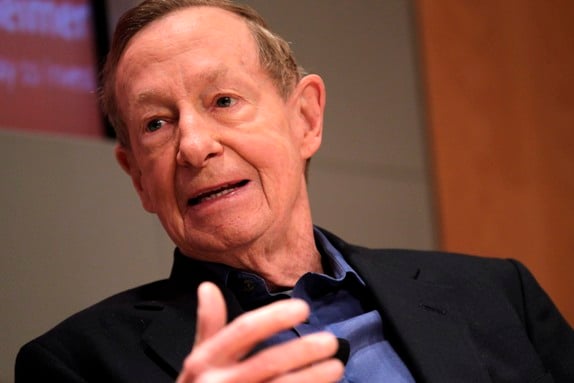
The Standard & Poor's 500 Index may fall as much as 7 percent because of economic weakness in Europe, according to hedge fund managerBarton Biggs. “I may want to take a little risk off,” Biggs, founder of Traxis Partners LP, said on Bloomberg Television's “In the Loop” with Betty Liu. “I'm looking for a 5 to 7 percent correction as the most likely possibility.” Biggs, the founder of Traxis Partners LP, said March 20 that his net-long position in stocks, a gauge of bullish versus bearish investments, was about 90 percent, up from 65 percent in January. His optimism fluctuated along with the market, with at least eight changes to the long component in the past six months, according to interviews with Bloomberg. “I am cutting back a little, and I'm tempted to cut back some more,” Biggs said today. Equities are “going higher over the course of the next few months, but in the short run here we'll have a little pause.” The S&P 500 rallied 12 percent in the first three months of the year, its best first quarter since 1998, amid signs the U.S. economy was strengthening and European leaders were making progress to stem the region's debt crisis. The benchmark gauge for U.S. equities retreated 1.4 percent in the previous two days as minutes from the Federal Reserve's last policy meeting damped speculation about additional stimulus. Europe is in a deepening recession, according to Biggs, who cited German industrial output figures that fell 1.3 percent in February, more than economists' forecasts. “At the same, the heat is really on Spain,” he said. Spanish Prime Minister Mariano Rajoy said yesterday the nation faces “extreme difficulty,” raising the likelihood the euro region's fourth-largest economy may need international aid. Spanish bonds and European equities have fallen for three straight days. Biggs said on Dec. 12 that he was investing in U.S. and Asian stocks. He said at the time that equities might rise or fall 20 percent because of concern about budget negotiations and Europe. He said in February that his net-long position in stocks is about 75 percent, up from 65 percent in the prior month. --Bloomberg News--

Latest News

Mesirow acquires part of flexPATH in second retirement deal of 2026

Chicago-based Mesirow Fiduciary Solutions adds flexPATH's plan-level outsourced fiduciary book, boosting its retirement market reach to $164 billion.

Advisor moves: LPL lands $350M veteran advisor duo in Florida

Also, Raymond James's employee advisor channel adds breakaways from Wells Fargo and Stifel, while UBS welcomes an ex-Morgan Stanley duo in Indiana.

SEC accuses crypto firm founder of running $425 million Ponzi scheme

It promised guaranteed principal and 10% monthly returns. The SEC says it invested nothing.

MassMutual Ascend tops $2 billion in RIA annuity sales as advisors warm to income products

Ten years after entering the fee-based annuity market, MassMutual Ascend says nearly half its lifetime sales came in the past two years alone – but barriers remain among fee-only advisors.

Fintech bytes: Wealth tech firms target advisor productivity with new integrations

Amplify, WealthReach, Zeplyn and Zocks have unveiled partnerships aimed at automating portfolio management, content creation, account opening, and client communication.

SPONSORED Direct indexing webinar targets tax-loss harvesting amid market swings

Northern Trust’s Ken Lassner shows advisors how to convert volatility into after-tax portfolio gains

SPONSORED Who builds the income when the pension disappears?

Dan Biagini of American Equity says the steady decline of pensions, longer lifespans and a reset in interest rates are rewriting how advisors build retirement income