
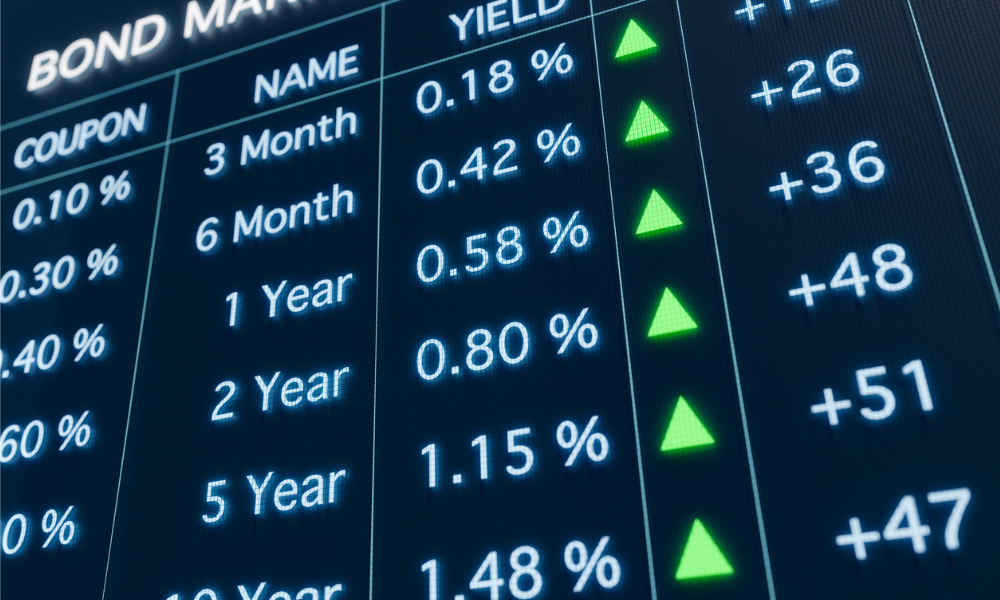
Bonds are looking attractive right now and are set to be a shining light in 2024, according to a new outlook from portfolio managers at Pimco.
Erin Browne, Emmanuel Sharef, and Geraldine Sundstrom have shared their Asset Allocation Outlook with InvestmentNews and their belief that bonds have rarely been as attractive as they appear today.
“We strongly favor fixed income in multi-asset portfolios. Given current valuations and an outlook for challenging economic growth and diminishing inflation, we believe bonds have rarely appeared more compelling than equities,” the portfolio managers state.
Digging deeper, duration offers attractive value at current yields — especially medium-term U.S. — and the investment manager holds overweight allocations to U.S. bonds but also Canada, UK, Australia, and Europe. Mortgage-backed assets and select securitized bonds are in favor in the credit space.
The outlook calls for the end to rate hiking and for inflation to ease, but that does not mean that all is well with a moderate risk of recession in several developed economies.
The traditional inverse relationship between stocks and bonds is set to return, the portfolio managers believe, with the potential for contraction in some economies as fiscal support ends and monetary policies take effect after a typical lag.
With high valuations in the equities market, the portfolio managers believe that investors could be facing disappointment based on forward earnings expectations.
Given the potential for weaker-than-expected earnings in sluggish economies, and overvaluation, the outlook reflects a cautious neutral stance for equities by Pimco’s asset experts, with quality and relative value opportunities in focus.
The report says that equity investors appear more optimistic about the economy than corporate credit investors and are expecting a reacceleration of the S&P500 rather than a slowdown.
“We’re concerned about a potential disconnect between our macro outlook and these equity earnings estimates and valuations. It reinforces our caution on the asset class,” the portfolio mangers warn.
Overall, despite the macro and geopolitical risks, the portfolio managers see a likely return to more conventional behavior for both stocks and bonds in 2024, albeit with the potential for further disruptive influences which require portfolio flexibility.
“Looking across asset classes, we believe bonds stand out for their strong prospects in the baseline macro outlook as well as for their resilience, diversification, and especially valuation. Given the risks to an expensive equity market, the case for an allocation to high quality fixed income is compelling,” the portfolio managers conclude.
The outlook has echoes of a report released this week by CoreData revealing that more than three quarters of U.S. institutional investors expect higher rates to remain for at least the next 12 months, boosting the case for fixed-income investments.

Goldman Sachs retirement survey finds 83% want guaranteed income, while the annuities providing that income increasingly hold private credit.

The AI meeting assistant's Advisor Intelligence plugin turns client conversation data into annual reviews, tax scans and attrition alerts.

Chuck Roberts and Stifel have been facing scrutiny due to sales of structured products and structured notes.

Among other updates, the proposals would let advisors to regulated funds earn performance fees and allow interval funds to offer monthly repurchases.

What will financial advice look like 20 years from now? Evan Vladem explores how AI may transform wealth management while reinforcing the enduring value of human guidance, trust, and empathy.
As AI makes financial information more accessible than ever, Lana Hock explains why human judgment, trust, and empathy remain the qualities clients value most in a financial advisor
Northern Trust’s Ken Lassner shows advisors how to convert volatility into after-tax portfolio gains

