
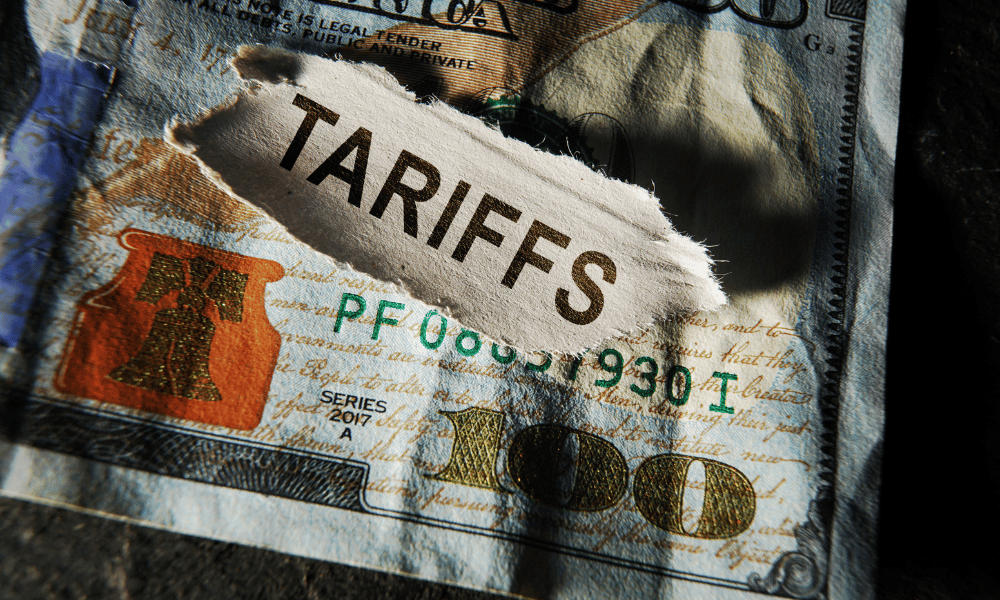
Canada's counter-tariffs on hundreds of American goods kicked in at 12:01 a.m. on Tuesday, September 8, 2026, marking a significant new phase in the trade dispute between the two countries and drawing fresh warnings from President Donald Trump about further escalation.
The levies, announced by the Department of Finance Canada on August 25, 2026, apply rates of 15, 25, and 50 percent to 629 tariff line items covering approximately $27.6 billion in annual US imports. The move mirrors the dollar-for-dollar approach Ottawa adopted in response to US Section 338 and Section 232 tariffs, which imposed a 50 percent duty on $27.6 billion of Canadian goods effective August 22, 2026, according to the Department of Finance Canada.
Sectors targeted include steel and aluminum, dairy, appliances, agricultural equipment, pulp and paper, plastics, cosmetics, and electronics industries whose equities and supply chains span both sides of the border.
The targeted goods amount to nearly 6 percent of annual US exports to Canada, according to US Census Bureau data for 2025. In the first half of 2026, the US exported $175.8 billion in goods to Canada - the second-biggest export trading partner after Mexico - accounting for 14 percent of all US exports, according to the Census Bureau.
The 50 percent band covers steel, aluminum, concentrated dairy products, plastics, paper and pulp products, and cosmetics, while the 25 percent band captures cheese, major household appliances such as refrigerators and washing machines, and softwood lumber. Clothing, footwear, and a range of consumer goods also fall under the new measures.
The Canadian government has been explicit about the trigger. As a result of the United States' decision to impose a 50 percent tariff on $27.6 billion of Canadian goods effective August 22, 2026, the Government of Canada matched the US Section 338 tariffs, dollar for dollar.
Negotiations between Ottawa and Washington collapsed late in August after Canadian Prime Minister Mark Carney suspended talks and directed trade officials back to Ottawa.
"In recent days, the United States proposed new terms that were uneconomic, unfair, and undermined the net benefits for Canada, and called into question the reliability of any deal," Carney told reporters. "In short, they asked too much, and they offered too little."
Trump has repeatedly warned of a forceful response if the Canadian tariffs were to take hold. On Monday, the president threatened to bar the sale of planes made by Canada-based Bombardier unless the manufacturer agreed to shift production to the US.
He has also vowed to raise tariffs on Canadian-made cars and auto parts from 25 to 50 percent beginning in January 2027, posting on social media that Canada is "among the worst Nations in the World to deal with."
Carney, for his part, has not signaled any willingness to back down. "When the Americans stop doing memes, stop throwing shade and stop trying to be tough, and start being serious about having those discussions, we can have those discussions," the prime minister told reporters last week.
For US wealth managers and financial planners, the practical question is not whether the tariffs will create economic friction because they already have. The question is how long the standoff endures and which sectors absorb the most damage.
Duties on imports from Canada, Mexico, and China have already triggered market volatility and forced investors to reconsider portfolio allocations, according to InvestmentNews coverage of the broader tariff landscape for RIAs.
Atsi Sheth, chief credit officer at Moody's Ratings, told CNBC that uncertainty remains the prevailing condition: "Expect much more of this uncertainty for some time to come."
The auto sector deserves particular attention. Parts manufacturing for vehicles sold in both countries involves multiple cross-border transits during production, making cost modeling complex and margin pressure difficult to contain if tariffs persist into the new year. InvestmentNews has reported that the failure to reach a new agreement is expected to hit US firms and could outlast the current political cycle, with expert analysis suggesting advisors reconsider cross-border supply chain exposure in client portfolios.
For equity and multi-asset portfolios, the combination of hard tariff deadlines, possible further retaliation, and lingering legal uncertainty raises the odds of repeated bursts of volatility rather than a single, one-off market adjustment, as InvestmentNews observed in the context of earlier tariff escalation across multiple trading partners.
The next scheduled pressure point is January 2027, when the threatened 50 percent auto tariff could take effect - giving advisors a finite window to review cross-border exposure and reposition where needed.

Meanwhile, DPL Financial Partners adds two annuity executives and Prime Capital Financial hires a Mid-Atlantic retirement plan consultant

Andrew Komarow pleaded guilty Thursday in federal court in Hartford to defrauding three financial services companies of close to $3.3 million.

Elsewhere, Cetera picks up a $210 million Connecticut team from MML, while Wells Fargo FiNet adds a San Diego family practice from LPL

Celebrity endorsements, $500M in claimed assets, and a state regulator stepping in.

“We needed to become a more agile and efficient organization,” said American Express CEO Stephen Squeri.
Knighthead Life entered the market with a competitive MYGA. A strong launch earned advisor confidence and paved the way for FIAs.
As AI makes financial information more accessible than ever, Lana Hock explains why human judgment, trust, and empathy remain the qualities clients value most in a financial advisor

