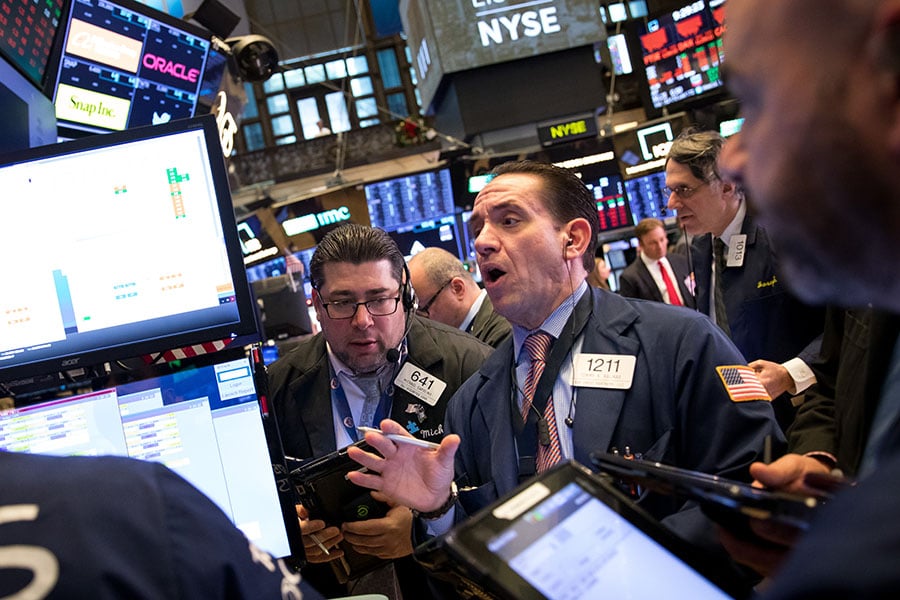
There was no single headline, no one trigger that sent U.S. stocks into a free-fall Tuesday afternoon. Instead, the rout that lopped 800 points off the Dow Jones Industrial Average (799.36 points to be exact) had no shortage of explanations among Wall Street traders.
Among the culprits cited:
• The supposed trade truce between China and the U.S. began to look more like a vague agreement to do nothing concrete. A Sunday night rally in S&P 500 futures that topped 2 percent got wiped out by midday Tuesday.
• The first inversion of any portion of the
Treasury yield curve in more than a decade awoke the specter of a
recession, while the relentless flattening of the slope elsewhere sent financial shares careening to the worst day since February. On Monday, JPMorgan Asset Management said cash will likely outperform equities.
• Technical levels buckled, then broke. The 50-day average in the S&P 500 was first to go, then the 200-day got obliterated. "There was some forced selling as we got to important technical levels," Tom Essaye, a former Merrill Lynch trader, said. "It wasn't a specific event that caused it, it's just been building all morning."
• Angst that the housing market is ill resurfaced. Toll Brothers, one of the high-end builders, posted results that pointed to softening fundamentals.
• Momentum names from Square to Advanced Micro plunged the most. Apple didn't help. Another iPhone supplier cut forecasts after the close Monday, the latest in a string of cautious pre-announcements that suggest the tech giant faces slowing sales.
• Geopolitics lingered in the background, with NATO and the U.S. Secretary of State issuing concerns about Russia's compliance with the treaty on nuclear forces.
• The never-ending Brexit negotiations joined the list of worries after the U.K prime minister's government was found in contempt of Parliament after refusing to release the attorney general's legal advice on the divorce, raising prospects for a potential "hard" exit
• Forced selling added to the woes. According to Charlie McElligott, cross-asset strategist at Nomura Securities, trend-following quant funds are in the process of shedding over $50 billion in notional exposure to U.S. equities on Tuesday.
• JPMorgan Chief Executive Jamie Dimon said at an investor conference that he saw the fourth-quarter trading environment as flat, adding to woes in the financials.