
After years in which a handful of mega-cap technology names carried the S&P 500, market leadership is showing signs of broadening – and financial advisors are being asked to decide how much of that shift to chase through ETFs.
The debate isn't about abandoning the winners that built portfolios' gains over the past three years. It's about identifying where earnings, valuations and capital spending are starting to widen out, and how much of that opportunity should be captured through broad, passive exposure versus more targeted or actively managed funds.
Earnings breadth is the signal to watch
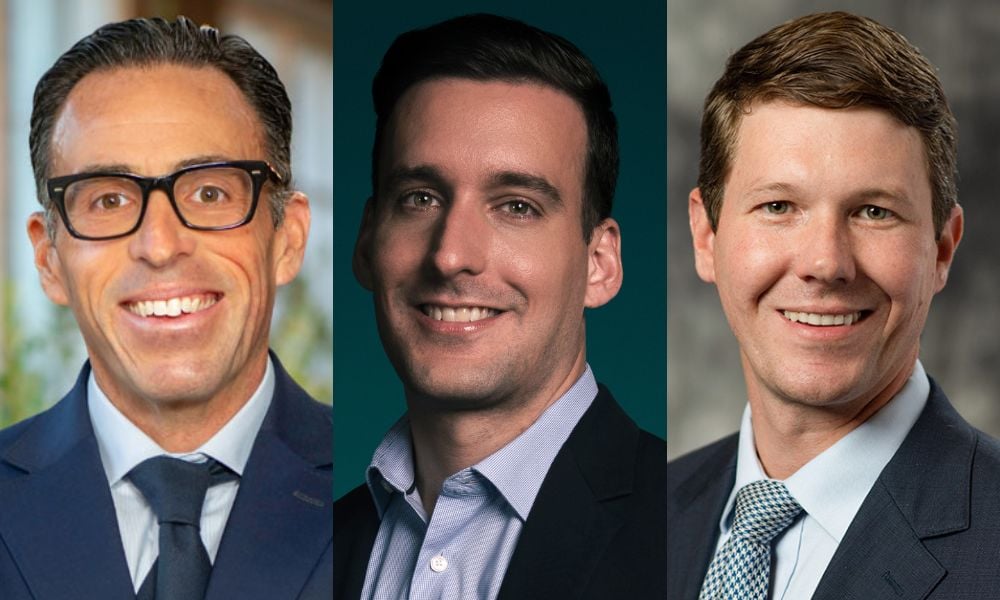
For Phil DeAngelo, managing director at Focused Wealth Management, the starting point is earnings. "Earnings are the mother's milk of stocks," he said, and what matters now is whether growth is spreading past the mega-cap names that have dominated index returns.
"From there we're looking at relative valuations and where capital spending is flowing. We're already seeing compelling setups in areas like equal-weight and small- and mid-cap companies, but I don't view that as a rotation out of technology. It's a broadening of opportunity," DeAngelo said.
Pedro Palandrani, head of product research and development at Global X ETFs, is tracking the same dynamic through margins. Forward profit margins for the S&P 493 – the index excluding its largest constituents – have climbed steadily off their post-2022 lows toward roughly 14%, according to Palandrani, "the kind of broadening in earnings power that historically precedes a broadening in leadership." Mega-caps, he noted, still command a premium, with around 31% forward margins backing valuations near 23 times earnings, "so this isn't about the leaders faltering; it's about the opportunity set widening beneath them."
That thesis has some external backing. S&P Dow Jones Indices found that more than 60% of S&P 500 constituents outperformed the index in both June and July 2026, coinciding with the S&P 500 equal-weight index outpacing its cap-weighted counterpart by 19% year-to-date in the technology sector – a breadth reading well above the narrow, concentration-driven markets of 2023 through 2025.
Where active management can earn its keep
Matt Barry, vice president of product management, sub-advisory research and ETF capital markets at Touchstone Investments, sees small-cap stocks showing improving fundamentals – stronger earnings and revenue growth – that could let them benefit disproportionately from broader participation. Developed international equities, he added, also offer an improving backdrop as European growth proves more resilient than expected, providing a complement to U.S. mega-cap exposure given their lower reliance on the AI investment theme.
"A key consideration is whether a broad-market ETF provides enough exposure to the opportunity an advisor wants to capture. If an advisor has conviction in small caps, emerging markets, or another segment that represents only a modest portion of a broad benchmark, a targeted ETF can be used to intentionally overweight that exposure," Barry said.
That same logic is shaping how advisors are already adjusting their books. Industry data shows RIAs added net new ETF positions across their portfolios through the first quarter of 2026, with real assets and active strategies among the categories gaining the most traction – a shift that dovetails with the broadening thesis advisors are now weighing.
On where active strategies fit, Palandrani draws the line at market efficiency. In emerging or fast-moving technologies, he said, picking eventual winners is genuinely difficult – an argument for passive thematic exposure that captures the full universe of companies tied to a trend rather than betting on individual names. "Active earns its keep in the corners of the market that are structurally less efficient, where local knowledge and selection actually move the needle," Palandrani said, pointing to markets like India and Brazil as examples.
Barry agreed active management has the most room to add value in areas of higher dispersion. "The opportunity for active management may be greater in areas where dispersion is higher, benchmarks are more concentrated, or fundamental differences among securities are more meaningful, including parts of the small-cap, international, emerging markets, and fixed income universes," he said, adding that advisors should assess whether a manager's portfolio is genuinely differentiated from its benchmark.
Building for a broader opportunity set
DeAngelo cautioned against turning diversification into a market-timing exercise. Broad ETFs should remain the core of a portfolio, he said, with targeted exposure added only where there's a meaningful valuation gap or a durable fundamental catalyst – equal-weight strategies being one way to participate in a broadening market without guessing which sector leads next.
That combination of broad and targeted exposure has become easier to execute as the ETF market itself has scaled. Assets in the wrapper have climbed toward the $21 trillion mark as the industry's infrastructure adapts to handle that scale, giving advisors more building blocks to combine passive core holdings with active or thematic satellite positions.
Flow data backs up that pairing. The Investment Company Institute reported that long-term index funds and ETFs took in $123.84 billion in July 2026, even as long-term active funds saw $31.06 billion in net outflows for the month – a split that hasn't stopped advisors from layering active strategies into specific corners of portfolios where dispersion is highest.
"In a broadening market, I think there's room for both: passive for the core and active where selectivity can actually earn its keep," DeAngelo said. It's a framework several of his peers are converging on, even as they debate exactly where the next leaders will emerge.

Meanwhile, DPL Financial Partners adds two annuity executives and Prime Capital Financial hires a Mid-Atlantic retirement plan consultant

Andrew Komarow pleaded guilty Thursday in federal court in Hartford to defrauding three financial services companies of close to $3.3 million.

Elsewhere, Cetera picks up a $210 million Connecticut team from MML, while Wells Fargo FiNet adds a San Diego family practice from LPL

Celebrity endorsements, $500M in claimed assets, and a state regulator stepping in.

“We needed to become a more agile and efficient organization,” said American Express CEO Stephen Squeri.
Knighthead Life entered the market with a competitive MYGA. A strong launch earned advisor confidence and paved the way for FIAs.
As AI makes financial information more accessible than ever, Lana Hock explains why human judgment, trust, and empathy remain the qualities clients value most in a financial advisor

