
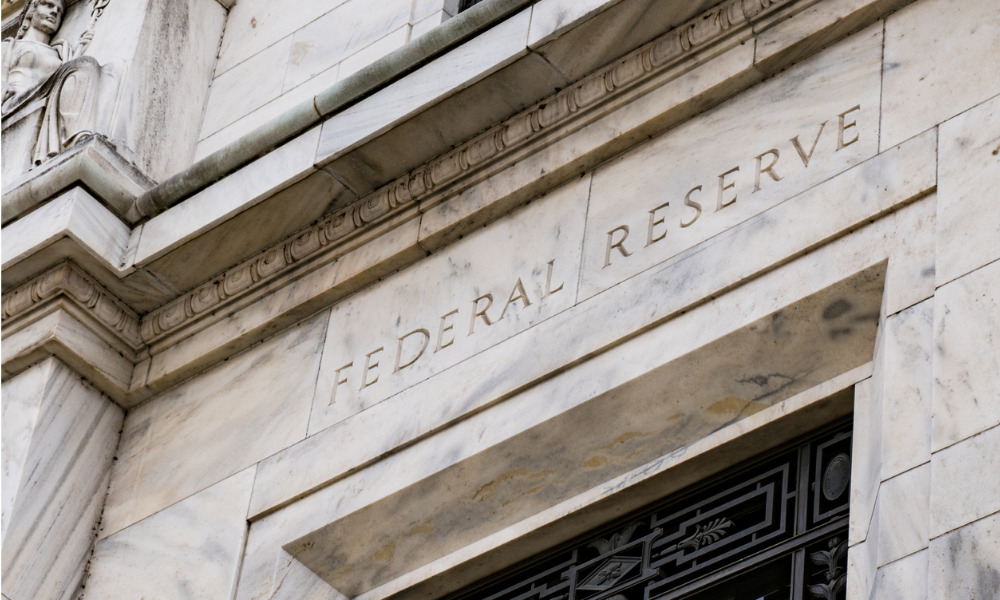
The Federal Reserve’s latest meeting minutes underscore a central tension now shaping monetary policy: officials are increasingly split on whether interest rates should fall, or potentially rise, depending on how inflation evolves.
Minutes from the Federal Open Market Committee’s March 17–18 meeting show policymakers held rates steady at 3.50% to 3.75% while emphasizing heightened uncertainty tied to global developments and inflation dynamics.
Fed officials indicated that inflation remains above target and progress toward the 2% goal has been uneven, prompting a more cautious stance on future policy moves.
While many participants still expect inflation to gradually cool, the minutes highlight concern that price pressures could prove more persistent than previously anticipated—particularly if external shocks continue to filter through the economy.
That uncertainty is forcing policymakers to reassess how quickly, or even whether, they can pivot toward rate cuts.
Notably, the minutes point to a widening divergence within the committee. Some officials suggested that if inflation fails to moderate, maintaining current rates, or even tightening further, may be necessary.
Others emphasized downside risks to growth and employment, arguing that weakening economic conditions could justify easing policy later this year and this divergence reflects a more complex policy backdrop than advisors have faced in recent cycles, where directionality was clearer.
The Fed reinforced that future decisions will hinge heavily on incoming data, with policymakers closely monitoring inflation trends, labor market conditions, and global developments.
“The Committee will carefully assess incoming data, the evolving outlook, and the balance of risks,” the minutes noted.
That approach signals a shift toward a more reactive policy stance, rather than a pre-committed path.
For investors, the implications are significant:
The broader message is that the Fed is balancing competing risks on both sides of its mandate (price stability and employment) without a clear resolution in sight. As policymakers navigate that tension, advisors should prepare clients for a prolonged period of policy ambiguity, where flexibility and diversification take on heightened importance.

Retiring RIA seller David Laidlaw alleges the Carnegie valued his stake on $11.7 million EBITA while pitching potential buyers on $21.3 million.

New tool gives RIAs and family offices AI help vetting private market deals, with some users reportedly halving review time.

Investors got projected returns dressed up as real ones, SEC says

Parents must still act to get the $1,000 federal seed and employer contributions, giving financial advisors a role in the rollout.

FINRA booted Rudy Anguiano from the industry for “conversion - the intentional and unauthorized taking of another person’s property.”
As AI makes financial information more accessible than ever, Lana Hock explains why human judgment, trust, and empathy remain the qualities clients value most in a financial advisor
Northern Trust’s Ken Lassner shows advisors how to convert volatility into after-tax portfolio gains

