

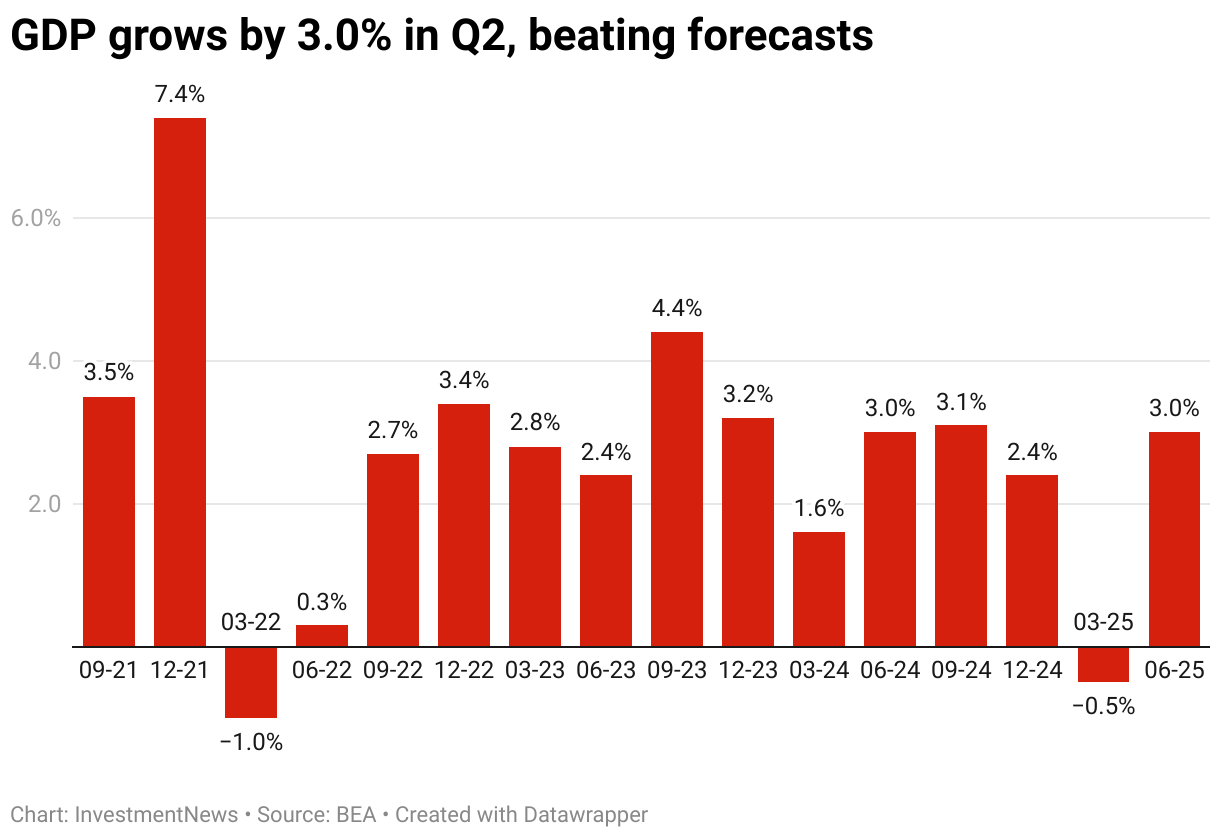
Real gross domestic product (GDP) increased at an annual rate of 3.0% in the second quarter of 2025, according to the advance estimate, as released by the US Bureau of Economic Analysis (BEA). The 3.0% was a significant jump from Q1, which ended up at -0.5%, the first quarter of contraction since the first quarter of 2022 (-1.0%). GDP's increase in the first quarter surpassed analyst forecasts of 2.3% annualized rate, according to Marketwatch.
This rebound was driven by a sharp drop in imports and a modest rise in consumer spending, which reversed the first quarter’s 0.5% decline. Despite ongoing trade tensions and tariff uncertainty, the data showed resilience across key sectors, with inflation indicators easing slightly but remaining above the Federal Reserve’s target.
While headline GDP growth was strong, underlying indicators showed signs of slowing. Final sales to private domestic purchasers rose just 1.2%, the weakest pace since late 2022, and residential investment fell 4.6%, reflecting pressure on the housing market. Government spending also declined, with federal outlays down 3.7%, though state and local expenditures rose. The Fed is expected to hold rates steady at its meeting later today, maintaining the current 4.25%-4.5% range.
"This report is unlikely to shift the Federal Reserve’s stance. With inflation remaining elevated and growth uneven, the Fed will likely maintain current policy and wait for more consistent signals before considering rate cuts. For investors, this reinforces the importance of managing risk and focusing on fundamentals, rather than reacting to headline numbers," Gina Bolvin, president of Bolvin Wealth Management Group, wrote to InvestmentNews.
Eric Teal, chief investment officer at Comerica Wealth Management, noted the impact of the tariffs earlier in the year may be offset by the One Big Beautiful Bill Act (OBBBA):
"The tariff threats pulled forward consumption in the second quarter. However, we anticipate the benefits from the OBBBA will offset most declines related to higher tariffs. However, we are closely monitoring real rates given the U.S. debt levels and the fact that the full effects of tariff policy have yet to be realized," Teal wrote to InvestmentNews.

Salespeople at the firm often went beyond the matching algorithm to recommend network advisors on its Zoe Wealth platform, according to the regulator.

The Protect College Sports Act would cap school payments and codify NIL rights, with implications for advisors guiding young athletes.

"I know the number that I want to be able to retire on, and now I just want out," says Wilmington Trust's Marguerite Weese, describing a common refrain among business-owner clients.

Bessemer and Brown Brothers Harriman veteran Robert Ludricks III and private markets specialist Olof Akesson join the ultra-high-net-worth push on the East Coast.

765 investors were promised 260% annual returns on truck leases
As AI makes financial information more accessible than ever, Lana Hock explains why human judgment, trust, and empathy remain the qualities clients value most in a financial advisor
Northern Trust’s Ken Lassner shows advisors how to convert volatility into after-tax portfolio gains

