
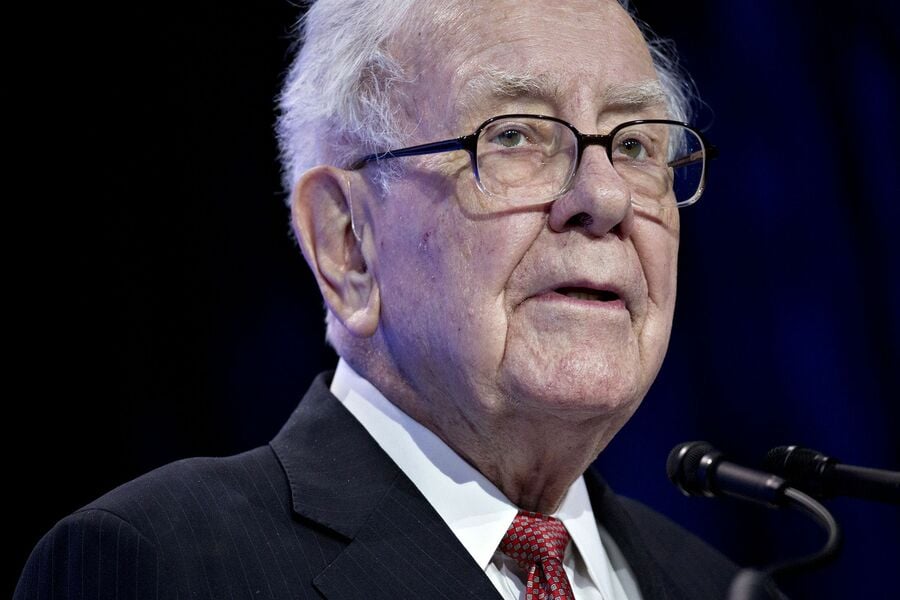
For more than half a century, Warren Buffett’s Berkshire Hathaway has been the gold standard for American investors — a blend of disciplined value investing, fortress-like insurance operations and steady compounding that most money managers could only envy. Now, as Mr. Buffett prepares to hand the chief executive’s title to Greg Abel at year’s end, Wall Street is beginning to ask a once-unthinkable question: has Berkshire’s best run already passed?
This week, analysts at Keefe, Bruyette & Woods (KBW) downgraded Berkshire Hathaway to underperform, a rare move for a company that has long enjoyed near-universal respect. The firm lowered its price target for the conglomerate’s Class A shares to US$700,000, warning that “many things [are] moving in the wrong direction.”
Their note cited a mix of near-term and structural pressures: falling interest rates, softening insurance profits, slower growth at Burlington Northern Santa Fe, and the gradual phase-out of renewable energy tax credits that once buoyed Berkshire Hathaway Energy. More significantly, they pointed to what they described as “Berkshire’s historically unique succession risk,” a nod to the uncertainty facing the company as Mr. Buffett – 95 years old and synonymous with its identity – steps back from daily leadership.
Insurance has always been the core of Berkshire Hathaway’s success. The premiums collected by its subsidiaries — from GEICO to its global reinsurance group — form the “float” that powers Mr. Buffett’s investments across stocks and businesses. That float totaled roughly US$171 billion last year, generating US$11 billion in underwriting profit.
But KBW expects that performance to moderate. GEICO, once Berkshire’s most consistent profit driver, has cut auto rates and increased advertising to regain market share from Progressive and State Farm. Those moves, analysts warned, will raise the share of premiums consumed by claims costs after two years of improvement.
At the same time, Berkshire Hathaway Reinsurance Group faces softer demand after a quiet hurricane season. “We think insurance profitability could weaken further,” KBW wrote, highlighting a decline in second-quarter underwriting results.
Falling short-term interest rates compound the problem: Berkshire’s US$344 billion cash and Treasury portfolio will now earn less, limiting one of its most reliable income streams.
The pressures extend beyond insurance. Burlington Northern Santa Fe’s freight volumes are tied to global trade flows and have been hit by tariff uncertainty. Berkshire Hathaway Energy may see its returns erode as US tax policy reduces renewable-energy incentives. Together, KBW said, these trends suggest “a period of lower earnings visibility” for the group.
Still, for many investors – particularly registered investment advisers (RIAs) who hold Berkshire as a long-term core position – the real issue is confidence, not cash flow. Berkshire remains one of the most financially secure companies in the world, but its identity has been inseparable from Mr. Buffett’s presence and decision-making.
Since Mr. Buffett announced his succession plan in May, Berkshire’s Class A shares have lagged the S&P 500 by nearly 30 percentage points and fallen about 10 percent from record highs. Analysts attribute part of that underperformance to the fading of the so-called “Buffett premium” — the extra valuation investors have long granted based on his reputation for prudent capital allocation.
KBW described Mr. Buffett’s reputation as “likely unrivaled,” and said limited disclosure about how decisions will be made after his transition “will probably deter investors once they can no longer rely on Mr. Buffett’s presence.”
For US RIAs and wealth managers, Berkshire Hathaway’s next act presents a delicate question. The conglomerate still offers what few public companies can: low leverage, vast liquidity and a diversified stream of earnings from insurance, manufacturing, utilities and transportation. It has served for decades as a proxy for high-quality US corporate ownership – an anchor position in portfolios designed around durability rather than short-term performance.
But the KBW downgrade is a reminder that even Berkshire is not immune to macroeconomic forces. A lower-rate environment could constrain returns on the group’s immense cash holdings; slower insurance growth may compress underwriting margins; and without the gravitational confidence of Mr. Buffett himself, market sentiment could stay muted until investors see a clear path under Mr. Abel’s leadership.
Berkshire is set to report third-quarter earnings on November 1, and investors will be watching for signs of how the company’s operating profit, cash position and capital deployment evolve as the transition approaches.
For now, the question is not whether Berkshire remains strong – it does – but whether it can continue to inspire the same faith it has under Mr. Buffett.
For advisers who have long treated Berkshire as a “forever stock,” that makes this moment both historic and uncertain. The world’s most famous value investor is finally stepping aside. The company he built will now have to prove it can compound value – and confidence – without him.

Retiring RIA seller David Laidlaw alleges the Carnegie valued his stake on $11.7 million EBITA while pitching potential buyers on $21.3 million.

New tool gives RIAs and family offices AI help vetting private market deals, with some users reportedly halving review time.

Investors got projected returns dressed up as real ones, SEC says

Parents must still act to get the $1,000 federal seed and employer contributions, giving financial advisors a role in the rollout.

FINRA booted Rudy Anguiano from the industry for “conversion - the intentional and unauthorized taking of another person’s property.”
As AI makes financial information more accessible than ever, Lana Hock explains why human judgment, trust, and empathy remain the qualities clients value most in a financial advisor
Northern Trust’s Ken Lassner shows advisors how to convert volatility into after-tax portfolio gains
