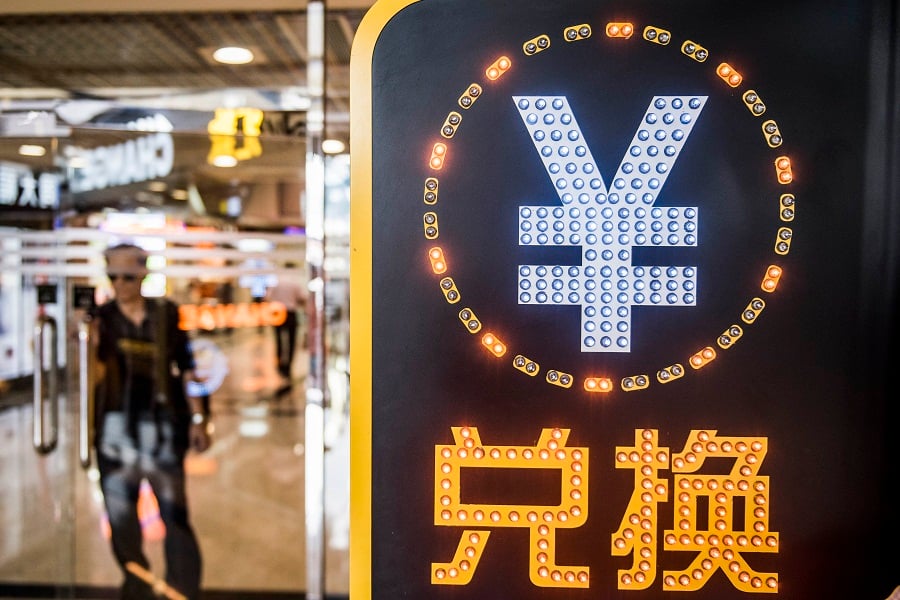
While the Chinese economy grew 7.0% in the second quarter, signs of slower growth in July and actions by the Chinese government to devalue the yuan have caused investor concerns. Many investors obtain direct exposure to China through diversified emerging market mutual funds and ETFs.
Chinese retail sales rose 10.5% in July from the year earlier, according to the National Bureau of Statistics, following June's 10.6% rise. Industrial output, meanwhile, grew an annualized 6.0% during the month, lower than the 6.8% increase in the previous month. In addition, fixed-asset investment, a key economic driver, expanded 11.2% in the first seven months of the year from the year-earlier period, compared with an 11.4% gain between January and June. These metrics, while still incredibly strong compared to most countries around the world, offer downside risks to the 7%-plus GDP growth investors have long expected.
CLOSE TO A BEAR MARKET
While the MSCI China index is down just 0.9% year to date, in the last three months it has declined 18%, close to a
bear market. In contrast, the MSCI India index is up 0.1% in the last three months and 1.0% thus far in 2015.
Vanguard FTSE Emerging Markets Stock index (VWO) is the largest emerging market ETF or mutual fund share class, with $44 billion in assets. VWO recently had 28% of its assets invested in China, more than its investments in its next two largest countries combined, Taiwan (14%) and India (12%). The ETF, which tracks a FTSE Russell index, has a 0.15% expense ratio.
(More: 10 funds with high China exposure)
Meanwhile, iShares MSCI Emerging Markets (EEM), which has $24 billion in assets, is a little more diversified at the country level than VWO. Chinese equities comprised 24% of its assets, while South Korea (14%) and Taiwan (12%) are next. The ETF, which tracks an MSCI index, has a 0.68% expense ratio. The smaller yet increasingly popular iShares Core MSCI Emerging Markets (IEMG), which tracks a more multicap index, has a 0.18% expense ratio. All three emerging market ETFs have negative technical indicators, according S&P Capital IQ ETF research.
Since iShares and Vanguard track indices from different providers, their exposure is tied to what that provider considers a developed or an emerging market. Since 2009, FTSE has classified South Korea as a developed market, based in part on the country's relatively strong economic position. Meanwhile, in 2014 MSCI removed South Korea from its list of countries under review for reclassification to a developed market from an emerging market.
This first became meaningful for fund investors in mid-2013, when Vanguard switched the index behind VWO away from MSCI and to FTSE, and the performance records of EEM and VWO began to diverge. In 2014, VWO lost 0.1%, while EEM declined 3.9%. Year to date through Aug. 15, VWO's 7.0% decrease was less than EEM's 8.9%.
The distinction between EEM and VWO will soon grow wider as FTSE treats China A-shares differently in its emerging market indexes.
TRANSITIONING
In June, Vanguard announced that it will soon begin transitioning to a new FTSE index that ultimately will scale up to a 5.6% weighing in China A-shares that would be separate from the existing 28% stake in China H shares. China-A tend to be issued more by local companies and the shares are only available to qualified foreign investors through regulated systems. In late 2014, China began providing additional yet limited access to this market, though there are quotas and regulatory approval for asset managers. As of mid-August, Vanguard had not announced when it would begin gradually adding in A-shares.
(More: Advisers say China drop isn't done yet, but calm clients on the downslide)
Meanwhile, MSCI announced in June that it is not yet ready to include China A-shares in its two MSCI Emerging Markets indexes. MSCI cited ongoing efforts needed to improve its institutional clients' access to the market. The MSCI China A Shares index is down 18% in the last three months, falling even further than the traditional Chinese market.
ACTIVE FUNDS HAVE MORE CONTROL
Though passive index-based funds such as the above ETFs and Vanguard Emerging Markets Index Fund (VEIEX) are at the mercy of the index's weighting in a country such as China, active mutual funds are not. Management can choose to over- or underweight a country based on fundamental and valuation attributes.
For example, Fidelity Emerging Markets Fund (FEMKX), an actively managed fund that uses MSCI as its benchmark, had 16% of its assets in China and 13% in India at the end of June. In commentary on the fund's website, Fidelity said that it was underweighted to China because the fund does not own a trio of large-cap China-based banks that are all top-10 securities in the index. Manager Sammy Simnegar and his team have concerns about the high numbers of nonperforming loans that Fidelity believes are held by Chinese banks, as well as the headwinds to loan growth posed by the decelerating Chinese economy. FEMKX rose 3.9% in 2014 and is down just 6.0% year to date. Its 1.1% expense ratio, while above ETF alternatives, is below the Lipper mutual fund peer average of 1.6%.
(More: China's stock market free fall has only just begun)
We think investors should continue to use emerging market equity exposure to diversify their portfolios.
However, since all countries are not the same, investors need to understand the country exposure of the emerging market ETFs and mutual funds in their portfolio.
This piece was originally posted on MarketScope Advisor
Todd Rosenbluth is director of ETF research at S&P Capital IQ. Follow him on Twitter: @ToddSPCAPIQ