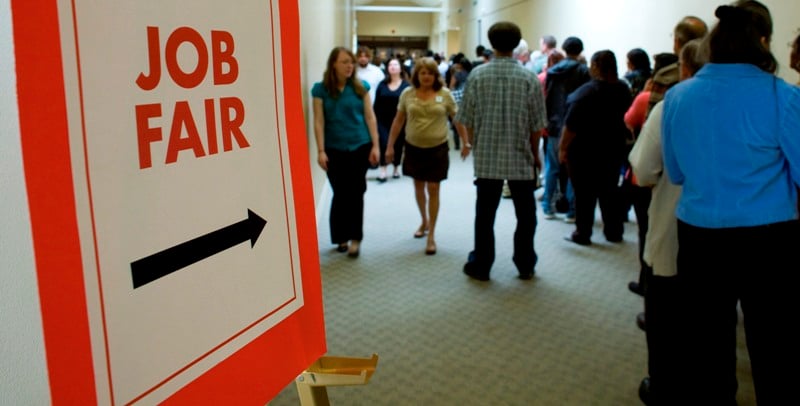
American employers in May added the smallest number of workers in a year and the unemployment rate unexpectedly increased as job-seekers re-entered the workforce, further evidence that the labor-market recovery is stalling.
Payrolls climbed by 69,000 last month, less than the most- pessimistic forecast in a Bloomberg News survey, after a revised 77,000 gain in April that was smaller than initially estimated, Labor Department figures showed today in Washington. The median estimate called for a 150,000 May advance. The jobless rate rose to 8.2 percent from 8.1 percent, while hours worked declined.
U.S. stock futures fell, after the worst monthly drop in the Standard & Poor's 500 Index since September, as employers added the smallest number of workers in a year, the unemployment rate increased and manufacturing output shrank in Europe and slowed in China.
Alcoa Inc., Caterpillar Inc. and
Bank of America Corp. dropped at least 2 percent to pace losses among the largest companies. Wynn Resorts Ltd., MGM Resorts International and Las Vegas Sands Corp. slumped more than 3 percent as Macau casino gambling revenue grew at the slowest pace since July 2009. Facebook Inc. slid 3 percent after yesterday posting the biggest rally since its initial public offering last month.
S&P 500 futures expiring in June lost 2 percent to 1,282.90 at 8:50 a.m. New York time. Dow Jones Industrial Average futures slid 197 points, or 1.6 percent, to 12,186.
“Yuck, this is really not good,” said Michael Mullaney, who helps manage $9.5 billion as chief investment officer at Fiduciary Trust in Boston. He spoke in a phone interview. “The overall jobs report is bad. We've got weak economic figures on a worldwide basis. We're at a very precarious point right now as far as investors' psyche is concerned.”
Equity futures slumped as the jobs report showed a looming
recession in the euro area and slower growth in China and Brazil are starting to take a toll on the U.S. Payrolls climbed by 69,000 last month, less than the most-pessimistic forecast in a Bloomberg News survey, after a revised 77,000 gain in April that was smaller than initially estimated. The median estimate called for a 150,000 May advance. The jobless rate rose to 8.2 percent from 8.1 percent, while hours worked declined.
Bigger job and wage gains are needed to jumpstart a self- sustaining increase in hiring and consumer spending that will boost the expansion. At the same time, a looming
recession in the euro area and slower growth in China and Brazil may prompt American companies to reduce headcount until they see more evidence the U.S. economy isn't faltering.
“The robust employment growth at the start of the year has clearly waned,” Ellen Zentner, a senior U.S. economist at Nomura Securities International Inc. in New York, said before the report. “Hiring plans may have been put on hold amidst an increasingly uncertain outlook.”
Estimates of the 87 economists surveyed ranged from increases of 75,000 to 195,000 after a previously reported 115,000 rise in April. Revisions subtracted a total of 49,000 jobs to payrolls in March and April.
The figures follow data earlier today showing the global economy is struggling as Europe's sovereign-debt crisis roils financial markets. A measure of manufacturing in the 17-nation euro fell to a three-year low, while measures of the industry in China, India, South Korea and Taiwan also weakened.
Presidential Election
The jobs data also come five months before Americans head to the polls to either re-elect President Barack Obama or choose presumptive Republican nominee Mitt Romney, who has said White House policies have prevented a stronger economic recovery.
The unemployment rate was forecast to hold at 8.1 percent, according to the survey median. Estimates in the Bloomberg survey ranged from 8 percent to 8.2 percent. Unemployment has exceeded 8 percent since February 2009, the longest such stretch since monthly records began in 1948.
The participation rate, which indicates the share of working-age people in the labor force, rose to 63.8 percent from 63.6 percent.
Private payrolls, which exclude government agencies, rose 82,000 after a revised gain of 87,000. They were projected to rise by 164,000, the survey showed.
Weakening Europe
“The U.S. economy is recovering but at a stubbornly slow pace,” Carl Camden, president and chief financial officer at staffing provider Kelly Services Inc., said on a May 9 conference call. “Weakening European economies have shaken confidence here in the U.S. business, consumers and investors remain cautious.” Still, with demand increasing for skilled workers, “we remain optimistic about 2012,” he said.
Factory employment increased by 12,000, less than the survey forecast of a 15,000 increase.
General Motors Co. is among companies boosting payrolls. The world's biggest automaker said last month it will add 600 employees to a second shift at an assembly plant in Lansing, Michigan, according to the Detroit News.
Employment at service-providers increased 84,000 in May. Construction companies cut 28,000 jobs, the most in two years, and retailers boosted payrolls by 2,300.
“I have been searching relentlessly and I can't find anything,” said Dexter Favors, 57, of Atlanta. Favors has been out of work for three years, though his wife is employed. “It is kind of rough right now because she is pulling the load.”
Looking for Work
Favors, who worked last as a grocery store department manager and is an Air Force veteran, said he has put out around 80 applications for work and continues to search.
Government payrolls declined by 13,000.
Average hourly earnings increased 0.1 percent, today's report showed. Compared with May of last year, earnings climbed 1.7 percent, the smallest increase since December 2010.
The average work week for all workers fell to 34.4 hours from 34.5 hours.
The so-called underemployment rate -- which includes part- time workers who'd prefer a full-time position and people who want work but have given up looking -- increased to 14.8 percent from 14.5 percent.
The report also showed an increase in long-term unemployed Americans. The number of people unemployed for 27 weeks or more rose as a percentage of all jobless, to 42.8 percent from 41.3 percent.
First Quarter
Faster economic growth would help lay the groundwork for more hiring. Gross domestic product climbed at a 1.9 percent annual rate from January through March, down from a 2.2 percent prior estimate, reflecting smaller gains in inventories and bigger government cutbacks, according to revised Commerce Department figures released yesterday. The report also showed corporate profits rose at the slowest pace in more than three years and smaller wage gains at the end of 2011.
The pace of growth has been “disappointing” and “the headwinds retarding recovery are well known,”
Federal Reserve Bank of New York President William C. Dudley said this week. He reiterated that he expects growth of about 2.4 percent over the next four quarters and said Europe's sovereign debt crisis poses a downside risk to the outlook.
Today's figures may put more pressure on the Fed to take further steps to boost the economy after their current maturity extension program, known as Operation Twist, expires at the end of June.
--Bloomberg--